What happened before the breakthrough? Explore documented setbacks, useful support, and the next attempt. Each story includes sources and reflections on what its experience can teach us.
Showing 1–24 of 28 published stories
Generated symbolic illustration. It does not depict Edna Adan, either hospital, or a historical event. Generated symbolic illustration; not documentary evidence.
Edna Adan Ismail's first hospital project was lost amid conflict, so she started again in Hargeisa, where a whole community helped her build it.
After a big loss, a new start can grow strong when many people share the work.
Edna Adan Ismail, a trained midwife, began building a maternity hospital in Mogadishu. It was never finished. The project was lost amid conflict, along with more than $150,000 of her own money, she said. Years later, she started again in Hargeisa, Somaliland. The government gave land, merchants gave materials, the city brought sand, and workers gave their time. People living abroad raised money. The hospital opened on 9 March 2002 and grew into a place that trains new health workers.
Read how one loss became a hospital built by many hands.
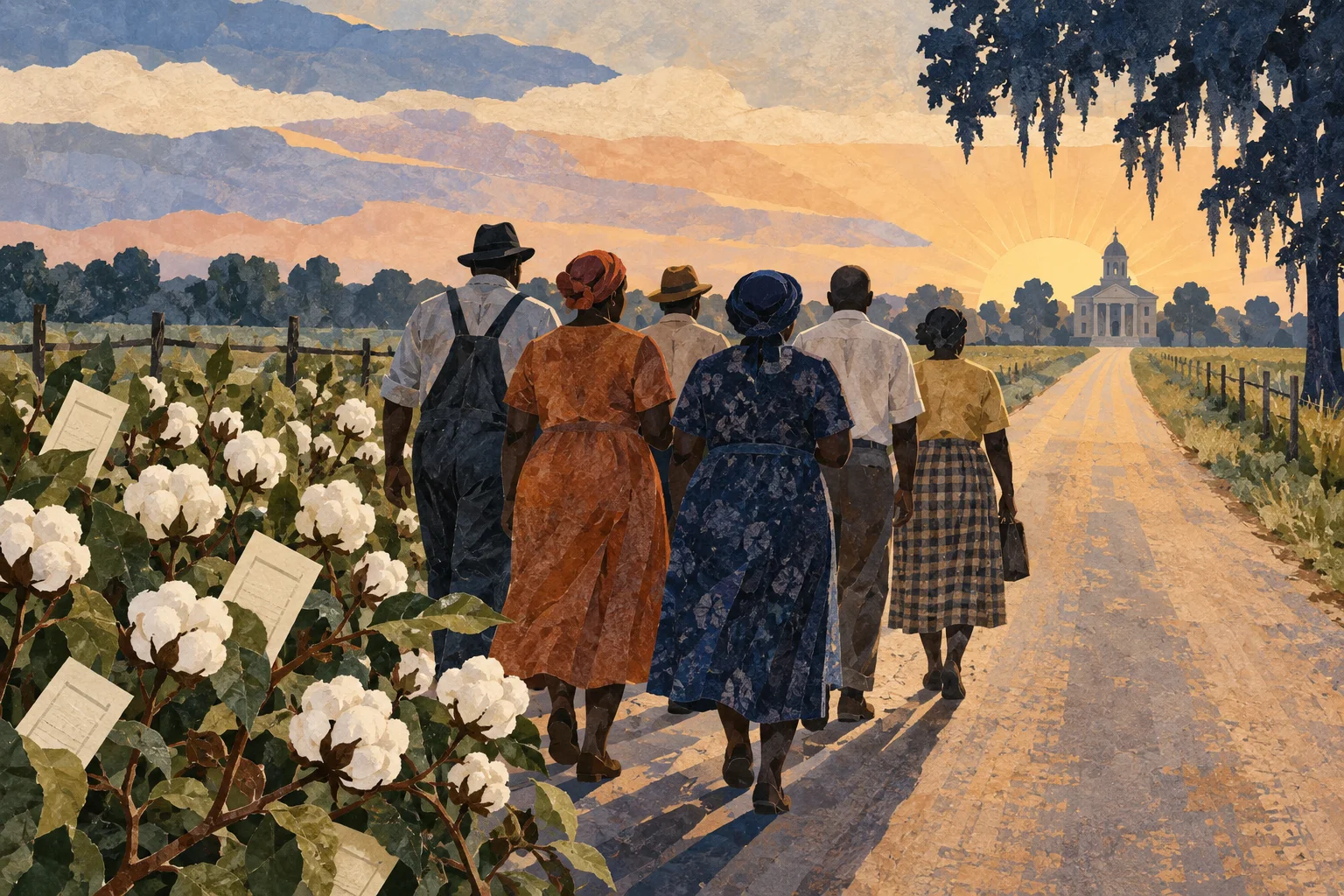
Read the story →Generated symbolic illustration of neighbors walking together through the Mississippi Delta toward a courthouse. It is not a photograph of Hamer, her neighbors, or the 1962 trip. Generated symbolic illustration; not documentary evidence.
In 1962, Fannie Lou Hamer was forced off the plantation where she lived for trying to register to vote, and her choice grew into years of shared organizing.
Standing up for yourself can grow into lasting change when others stand with you.
On August 31, 1962, Fannie Lou Hamer rode with neighbours to a courthouse in Indianola to register to vote. Officials let only two people take the test. Back home, her employer told her to take back her registration or leave the plantation where she worked and lived. She refused and left that same night. Organisers invited her to train and work with them. In 1964, she told a national committee, "I tried to register for myself."
Read how one hard choice became years of work shared with many others.
Read the story →Generated editorial illustration; not a photograph or reconstruction of an actual Falcon 1 launch. Generated editorial illustration; not a photograph of Falcon 1.
After three Falcon 1 rockets failed, Gwynne Shotwell and the SpaceX team kept explaining, planning and pitching, and the fourth flight reached orbit in 2008.
Before you decide what a failure says about you, find out what it says about the attempt.
SpaceX's first three Falcon 1 rockets failed to reach orbit. After the third failure, Gwynne Shotwell went to Scotland to explain it to customers. In a Glasgow hotel, she later said, she also worked on a NASA proposal by phone. A NASA report later traced the third failure to a timing problem with a new engine. On September 28, 2008, the fourth Falcon 1 reached orbit. Later that year, NASA gave SpaceX a large supply contract.
Read how a team kept doing the next useful job while the outcome was still unknown.
Read the story →Generated editorial illustration, not a photograph of Hidilyn Diaz or a reconstruction of her gym. Disclose as generated editorial illustration; do not depict it as Diaz’s actual gym.
After a failed Olympic lift and a knee injury, Hidilyn Diaz leaned on coaches, specialists and a purpose bigger than herself on her way to Olympic gold.
A setback feels lighter when you let others help and find a reason that includes other people.
At the 2012 London Olympics, Hidilyn Diaz missed a lift and finished without a total. In 2014, she hurt her knee, missed the Asian Games, lost her coach and nearly lost her place on the national team. She later said she felt useless. But coaches comforted her, and a team of specialists helped her prepare. She also built a gym for children in her hometown who wanted to lift. In 2021, she won Olympic gold in Tokyo.
Read how one athlete came back with many people beside her.
Read the story →AI-generated editorial still life. The lab objects and sketches are illustrative, not historical evidence. AI-generated editorial still life; not a historical lab scene or evidence.
Katalin Karikó spent years on an idea that struggled to win grants, and colleagues, a partner and a growing team helped turn it into Nobel Prize-winning work.
A hard question moves forward when you break it into smaller tests and let the right people join you.
Katalin Karikó spent years asking if messenger RNA, or mRNA, could tell cells to make useful proteins. She says she applied for at least one grant every month for two years and got none. Two colleagues helped her stay at her university. In 1997, she met Drew Weissman, and they worked on the problem together. Their 2005 paper was a lab finding, not a vaccine. In 2023, they shared the Nobel Prize.
Read how one stubborn question found its team.
[Read the article and sources](Read the full article)
Read the story →Generated symbolic editorial artwork; it does not depict Mae Jemison, Stanford or a documented classroom. Disclose as generated editorial illustration.
Mae Jemison felt unwelcome in some Stanford classes until one professor's teamwork rule helped her join in, on a path that later led her to space.
A small change in how people work together can give someone a real way in.
When Mae Jemison started at Stanford, she sat near the front, eager to answer questions. She later said some professors did not seem glad to have her there, and she slowly moved farther back. Then professor Channing Robertson made students in his class work with lab partners. Jemison said it was her first real chance to work with others in her department. She went on to study medicine, serve as a Peace Corps doctor, and fly in space in 1992.
Read how one classroom choice made room for her to take part.
Read the story →Generated editorial still life. It is not a photograph of Sara Blakely, her home, or an actual product-development session. Disclose as generated editorial artwork; do not describe as documentary photography.
When hosiery makers did not respond to her calls, Sara Blakely kept her day job, changed her approach, and found a mill owner willing to help build her first footless hosiery.
When one route keeps saying no, keep the goal and try a different way to reach the right person.
In 1998, Sara Blakely cut the feet off a pair of hosiery to wear under trousers. The look worked, but the fabric rolled up her legs. For months, she says, her calls to hosiery mills got no useful answer. So she kept her fax-machine sales job, took a week off, and drove to mills in North Carolina. No one said yes on the spot. About two weeks after she got home, a mill owner called and agreed to help.
Read how a changed approach and helpful people turned an idea into a product.
Read the story →Generated editorial artwork; not a photograph or reconstruction of the Kings’ home or writing room. Disclose as generated editorial illustration; do not describe as the Kings’ actual laundry room.
Stephen King gave up on the opening of Carrie, but his wife Tabitha rescued the pages, praised them and offered real help with the scene he was stuck on.
A trusted first reader can help you see that unfinished work is worth finishing.
Stephen King sold his first short story in 1967. He then taught English and wrote at night and on weekends, with two children and little money. When he started Carrie, he got stuck and threw the first pages in the wastebasket. He later said his wife, Tabitha, took them back out, told him they were good and offered to help with the scene he could not write. Doubleday accepted the book in 1973.
Read how years of practice and one honest reader helped a stuck writer find his next page.
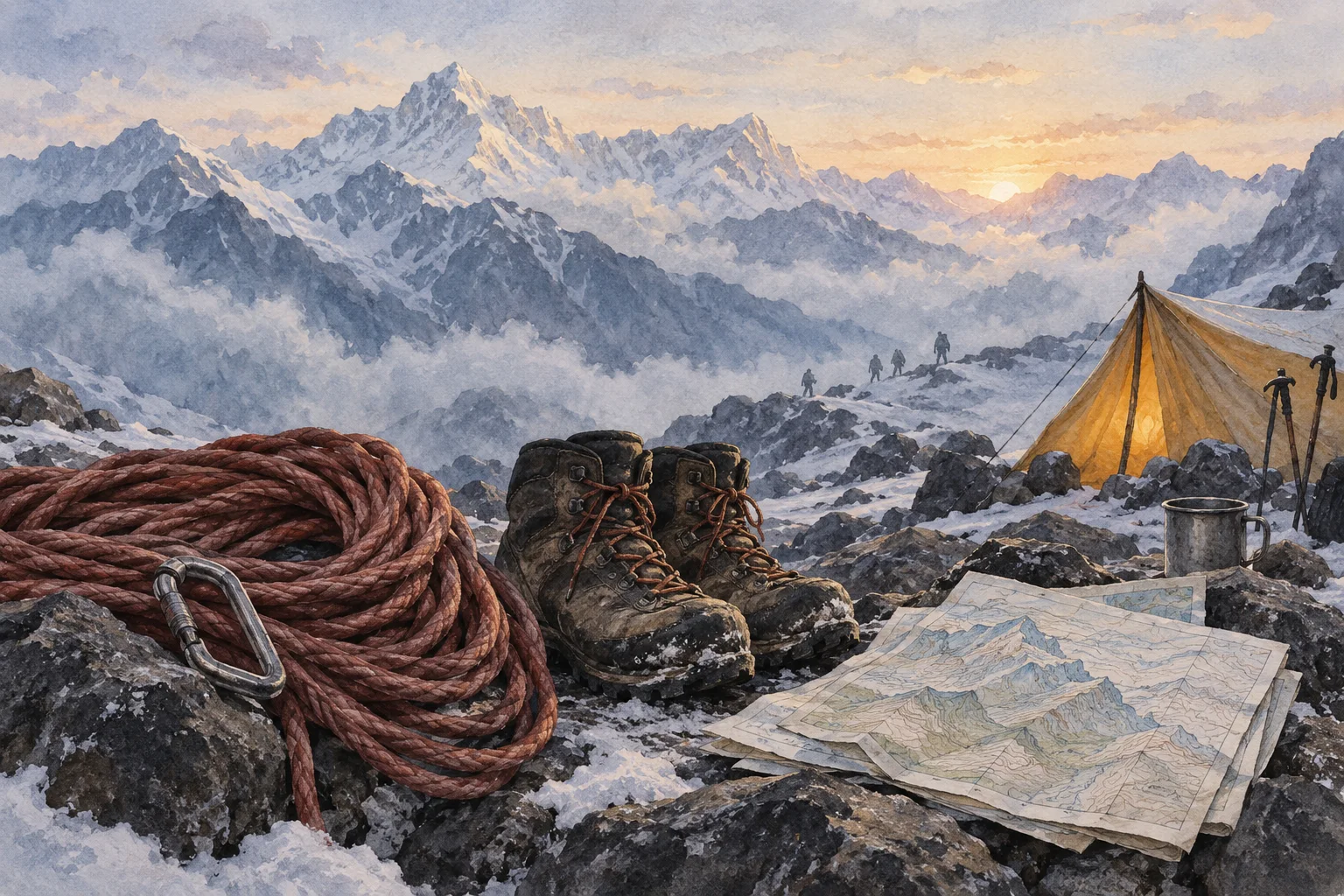
Read the story →Generated illustration of collective expedition preparation; it does not depict Tabei, the 1975 team, or a documented historical scene. Generated illustration; not a documentary image.
Junko Tabei's 1975 climb, the first ascent of Everest by a woman, grew out of years of club-building, practice climbs, fundraising, family help and the work of a large team.
Big goals become possible when many people each carry a part of the work.
In 1969, Junko Tabei and other women climbers formed their own club in Japan. They climbed Annapurna III in the Himalayas in 1970, then set their sights on Everest. Some possible backers called the plan impossible. Two Japanese media companies became sponsors, members paid their own share, and some washed windows after work to raise money. Tabei's sister cared for her young daughter. On 16 May 1975, Tabei reached the summit with Sherpa Ang Tsering, the first woman to do so.
Read how a team, not one climber, made this climb possible.
Read the story →Generated symbolic illustration, not a portrait or documentary reconstruction of Mary Seacole or the British Hotel. Generated symbolic illustration; not documentary evidence.
When official wartime routes stayed closed, Mary Seacole used her skills, a business partner and her own money to reach the Crimea, and she paid a real price for it.
When officials say no, you can still find your own way to use your skills.
Mary Seacole wanted to help during the Crimean War. In her 1857 memoir, she says she asked to join the official nursing plans and was turned away more than once. So she chose to go on her own responsibility. With business partner Thomas Day and help from a medical friend, she set up the British Hotel, a store where people could buy supplies and rest. When the war ended, she said, she came home financially ruined.
Read how she changed her plan, who helped her, and what it cost.
Read the story →AI-generated symbolic illustration, not a photograph, portrait of Makeba, real passport, United Nations document, or event reconstruction. AI-generated symbolic illustration; not documentary evidence.
A short trip abroad in 1960 turned into decades of exile for Miriam Makeba, yet she kept singing, spoke out against apartheid, and built her work with many helpers.
You can keep doing your work and using your voice, even far from home.
In 1960, South African singer Miriam Makeba went to the United States for what was meant to be a four-week visit. She later said a South African consul in Chicago stamped her passport invalid, so she could not return. Harry Belafonte had helped her enter the country, and others helped her find stages. In 1963, a UN official later recalled, activist Robert Resha persuaded her to speak at a UN hearing against apartheid. In 1966, she shared a Grammy with Belafonte.
Read how she kept working through about 31 years away from home.
Read the story →Generated symbolic still life; no person or historical event is depicted. Generated symbolic illustration; not a documentary image.
Egyptian doctor and writer Nawal El Saadawi turned what she learned from patients into books, then built a women's group with others that fought hard to survive.
One voice grows stronger when it joins with others.
Nawal El Saadawi later said relatives tried to arrange her marriage when she was ten, but her parents backed her schooling. She qualified as a doctor in 1955 and said her patients shaped her writing. She linked her book Women and Sex to losing a government job. In the early 1980s, she and others built the Arab Women's Solidarity Association. In 1991, the government ordered its Egyptian branch closed. More than a dozen lawyers volunteered to fight the order, but in 1992 a court refused to pause it.
Read how support carried her work forward, and where it reached its limits.
Read the story →Generated symbolic illustration; it does not depict Mutesi, Katwe in 2005, or a historical event. Generated symbolic illustration; not a documentary image.
A hungry girl from Katwe in Kampala followed her brother to a chess program, learned from a coach and other children, and found a way back to school.
Practical help, like a meal and a place to learn, can open the door to a whole new path.
Phiona Mutesi's schooling stopped early, and she later sold boiled maize. Her brother Brian went to a chess program at a church. She followed him, she said, because she was hungry. Coach Robert Katende ran the program, and a younger child named Gloria helped teach her the moves. Mutesi went on to win Uganda's junior girls title in 2007 and 2008. She said chess gave her a chance to return to school.
Read how many hands helped her make each move.
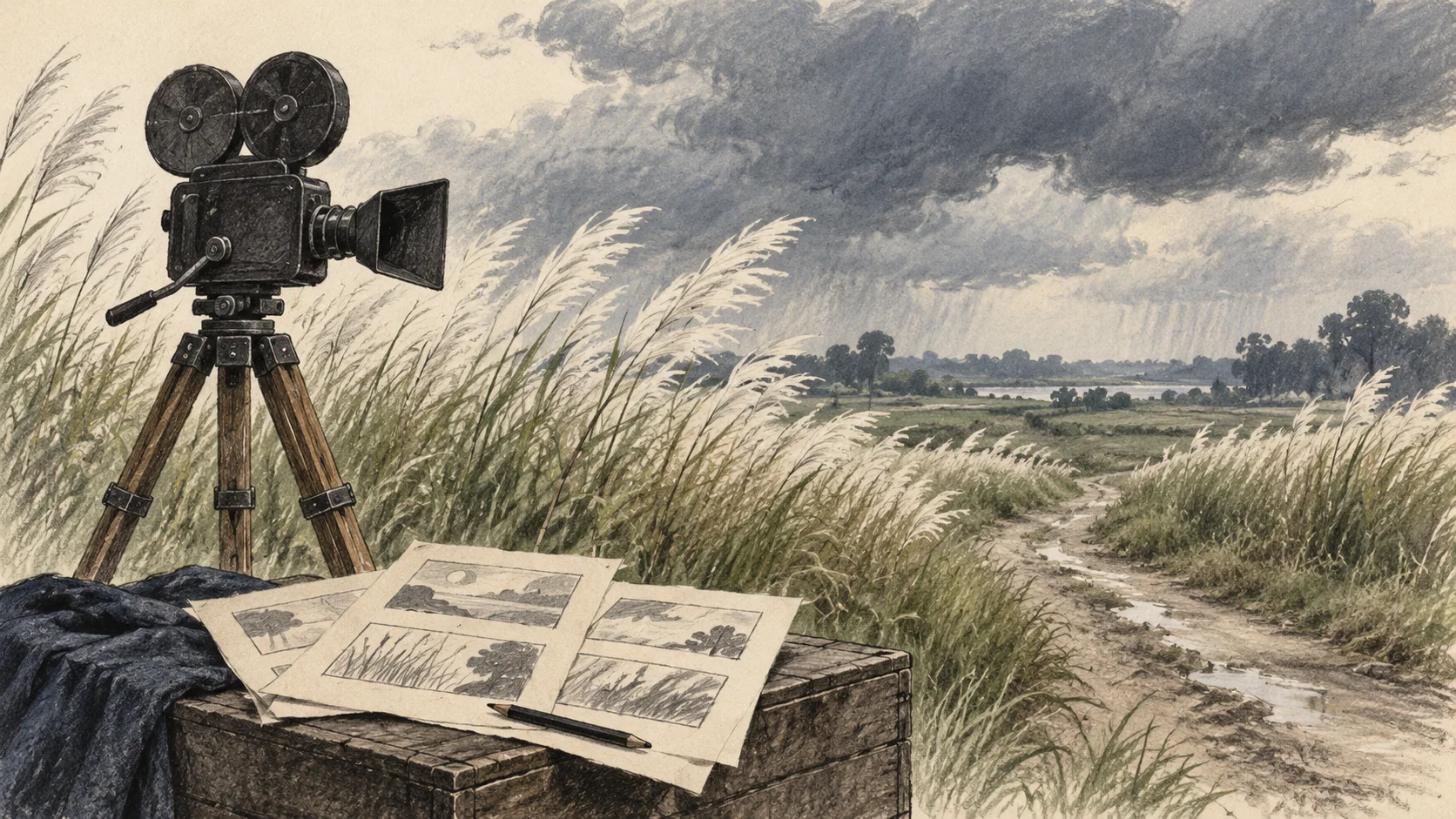
Read the story →Generated illustration; not a historical photograph, film still, or depiction of Ray or his crew. Generated illustration; not a historical photograph or film still.
Satyajit Ray kept his day job, put in his own family's money and worked with a small crew on Pather Panchali, and different helpers carried the film forward at each stage.
A stalled project can move again when you keep going with what you have and accept help one stage at a time.
Satyajit Ray spent about a year trying to find a producer for his first feature film, Pather Panchali. No one backed it quickly, so he started anyway. He kept his advertising job. He helped pay for early filming by borrowing against insurance, selling books and records, and using his wife's jewellery. Then the money ran out and filming stopped. Support from the West Bengal government helped the crew start again.
Read how a small crew and many helpers finished the film.
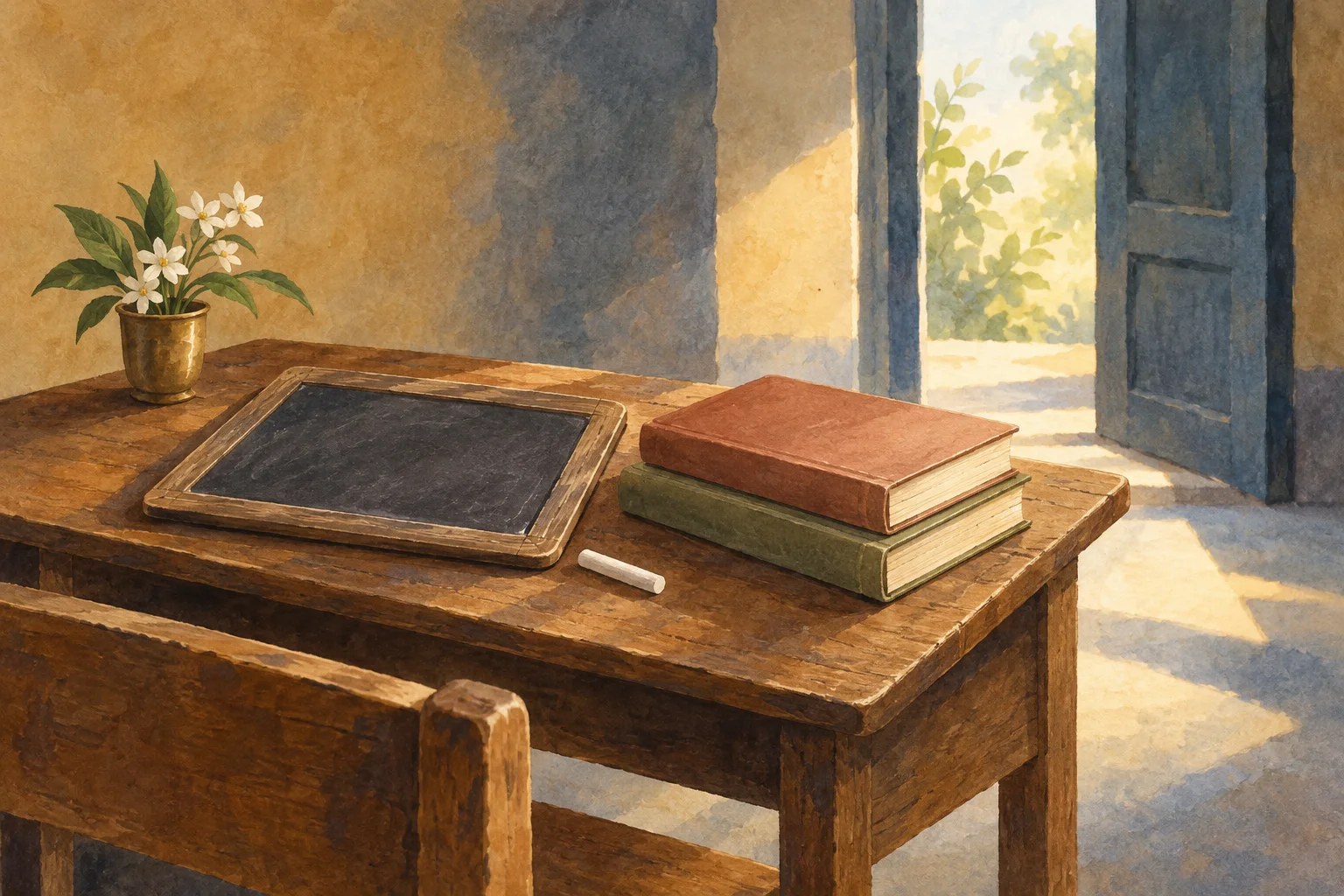
Read the story →Generated symbolic illustration of learning materials; not a portrait or reconstruction of a historical school. Generated symbolic illustration; not documentary evidence.
In 1840s Pune, Savitribai Phule trained to teach girls when no woman teacher was available, and friends, fellow teachers and students helped the work grow.
Big, hard work becomes possible when many people share it.
In 1840s Pune, Savitribai Phule and her husband, Jyotirao, wanted girls and lower-caste children to learn. One account says no female teacher was available, so Jyotirao asked Savitribai to teach. She trained with help from Jyotirao and two of his friends. Space was made for an early school, and Fatima Sheikh taught alongside her. In 1849, the couple had to leave home because of this work. Still, later accounts report more girls' schools in 1851. A student, Mukta Salve, later wrote: "So please work hard and study. Get educated."
Read how a whole circle of helpers made learning possible.
Read the story →Generated symbolic editorial illustration; not a historical map or reconstruction. Generated symbolic editorial illustration; not a historical map or reconstruction.
Before she became principal chief, Wilma Mankiller helped organize a water and housing project that Bell residents chose, shaped and built with Cherokee Nation support.
The best help starts by asking people what they need.
Before Wilma Mankiller became principal chief of the Cherokee Nation, she and community organizer Charlie Soap worked on a project in Bell. They started with a question. They asked residents what the community needed most, and residents chose water and housing. Residents elected a steering committee and gave their own labor. The Cherokee Nation brought resources and technical help. In a 1993 speech, Mankiller recalled a new water system, 20 repaired homes and 25 new homes using solar technology. Years later, the Cherokee Nation credited the community workers too.
Read how one community led its own project, with support behind it.
Read the story →Generated symbolic editorial illustration; it does not depict Ginsburg, an actual brief, or a documented historical scene. Generated symbolic editorial illustration; it does not depict Ginsburg, an actual brief, or a documented historical scene.
Shut out of many legal jobs, Ruth Bader Ginsburg found allies, wrote a key Supreme Court brief with a colleague and built a wider fight for equal rights.
Closed doors are easier to open when other people push with you.
Ruth Bader Ginsburg graduated tied for first at Columbia Law School. Still, she later recalled judges who would not hire a woman and job sheets marked "men only." A professor, Gerald Gunther, urged Judge Edmund Palmieri to hire her as a clerk, and he did. Years later, she and ACLU lawyer Mel Wulf wrote the brief in *Reed v. Reed*, while Sally Reed's own lawyer argued it. Ginsburg added two earlier women's-rights lawyers to the brief to honor their work. The Supreme Court ruled for Sally Reed.
Read how a team of allies helped open doors in law.
Read the story →Generated symbolic still-life of an open research notebook, two unmarked amber vials, a botanical leaf and laboratory glassware. It does not depict Tu, her team, or a historical experiment. Generated symbolic illustration; not documentary evidence.
When an early malaria extract gave mixed results in mice, Tu Youyou checked old sources, changed her method and helped move a large team effort forward.
When a good result will not repeat, treat it as a clue and ask why.
Tu Youyou led a herbal research group inside Project 523, a large Chinese effort against malaria. She later recalled that her group's first qinghao extract held back malaria parasites in mice. But when they repeated the tests, the results jumped around. She went back to old writings and found a fourth-century passage about soaking the plant in water. It made her question the heat used to make extracts, so her group changed its method. Sample 191 then worked well against the parasites in mice and monkeys. Many other teams carried the work further.
These were animal results, not patient results, and this is not medical advice.
Read the article and sources: Read the full article
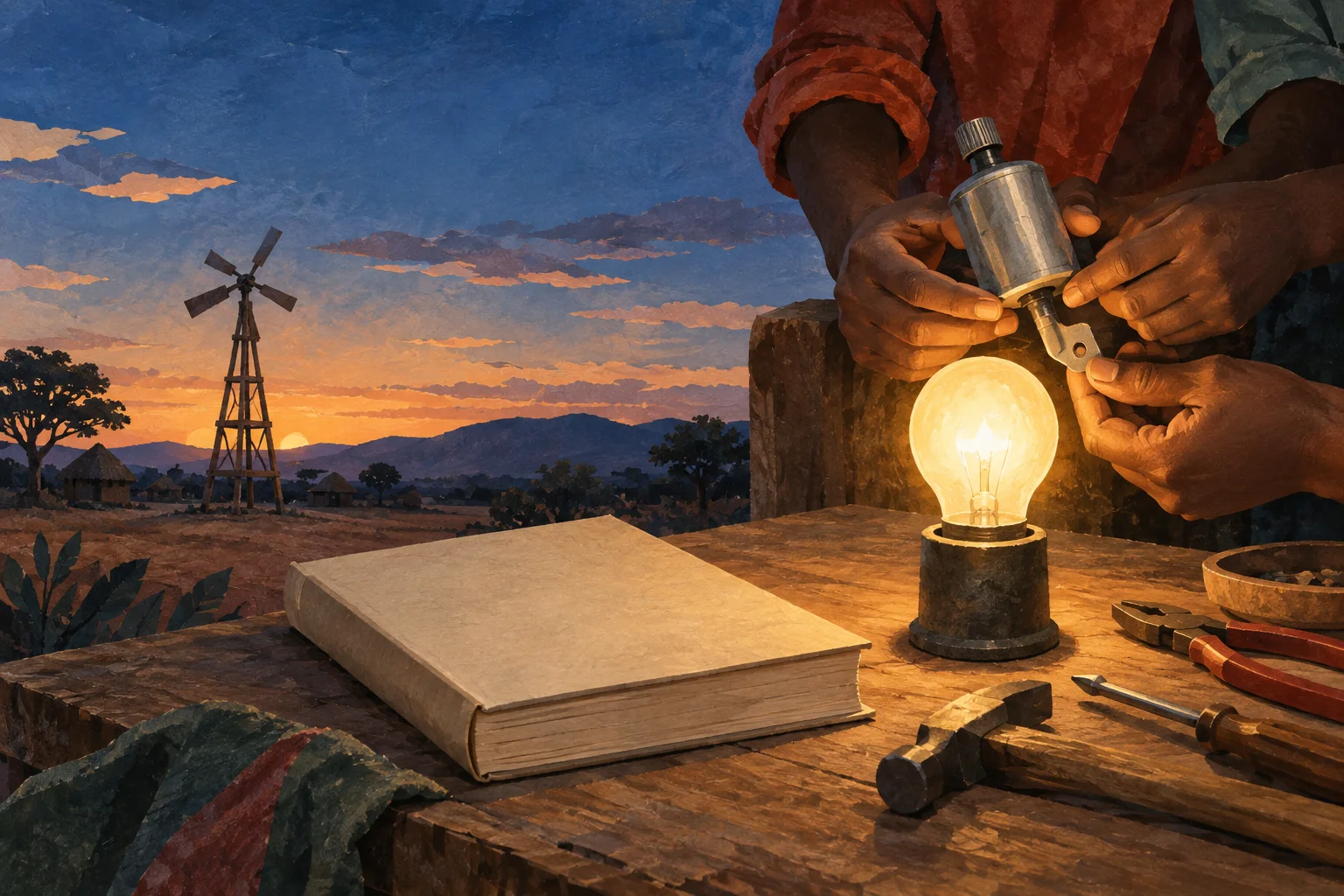
Read the story →Generated symbolic illustration of a generic book, motor, a pair of hands and a glowing bulb beside a distant windmill at dusk. It is not a documentary image of William Kamkwamba or his work. Generated symbolic illustration; not documentary evidence.
After school fees forced him out of class, William Kamkwamba learned at a library, built a windmill and kept improving it with family and a skilled team.
When one road to learning closes, find another one, and bring people along.
William Kamkwamba later said he left school at about fourteen because his parents could not pay the fees. He kept learning at a library, where a book with a picture of a windmill gave him an idea. He built one from bicycle and tractor parts. The first light was only the start. In 2007, he upgraded it with a team from National Solar and Power, his cousin Geoffrey and two colleagues who gave him a motor.
Read how a library, a cousin and a team of helpers kept his windmill turning.
Read the story →Generated symbolic editorial illustration; it does not depict Wangari Maathai, a documented village, or a historical scene. Generated symbolic editorial illustration; it does not depict Wangari Maathai, a documented village, or a historical scene.
Wangari Maathai's work began with rural women's daily needs in Kenya, and it grew through women's groups, protesters, mothers and allies who carried it forward.
Good work starts by listening to the people who live with the problem.
In Kenya, rural women told Wangari Maathai what they needed: firewood, clean water, food and income. She began encouraging them to plant trees, and the Green Belt Movement grew from there. Women's groups ran the tree nurseries. In 1989, when a tower was planned for Nairobi's Uhuru Park, many people spoke out, and officials called for the movement to be banned. Later, mothers of imprisoned young men asked Maathai for help, and she joined their protest.
Read how a movement grew from listening and many helping hands.
Read the story →AI-generated symbolic editorial illustration, not a photograph, architectural rendering, or reconstruction. It depicts no specific Hadid design or historical event. AI-generated symbolic illustration; not documentary evidence.
After her prize-winning Peak design stayed on paper, Zaha Hadid kept working, and a company's need for a fire station gave her team a first completed building.
Keep your work alive on paper, because a real chance can come from an unexpected need.
In 1983, architect Zaha Hadid won a design competition for the Peak in Hong Kong. It was never built. Later profiles say the developer went bankrupt, while Hadid said she did not know what went wrong. She kept teaching and designing. Years later, the company Vitra needed a fire station for its campus. Its leader, Rolf Fehlbaum, chose Hadid because he valued her drawings. With Patrik Schumacher and a design team, she completed it in 1993. It became her first completed building.
Read how a practical need opened the door to her first building.
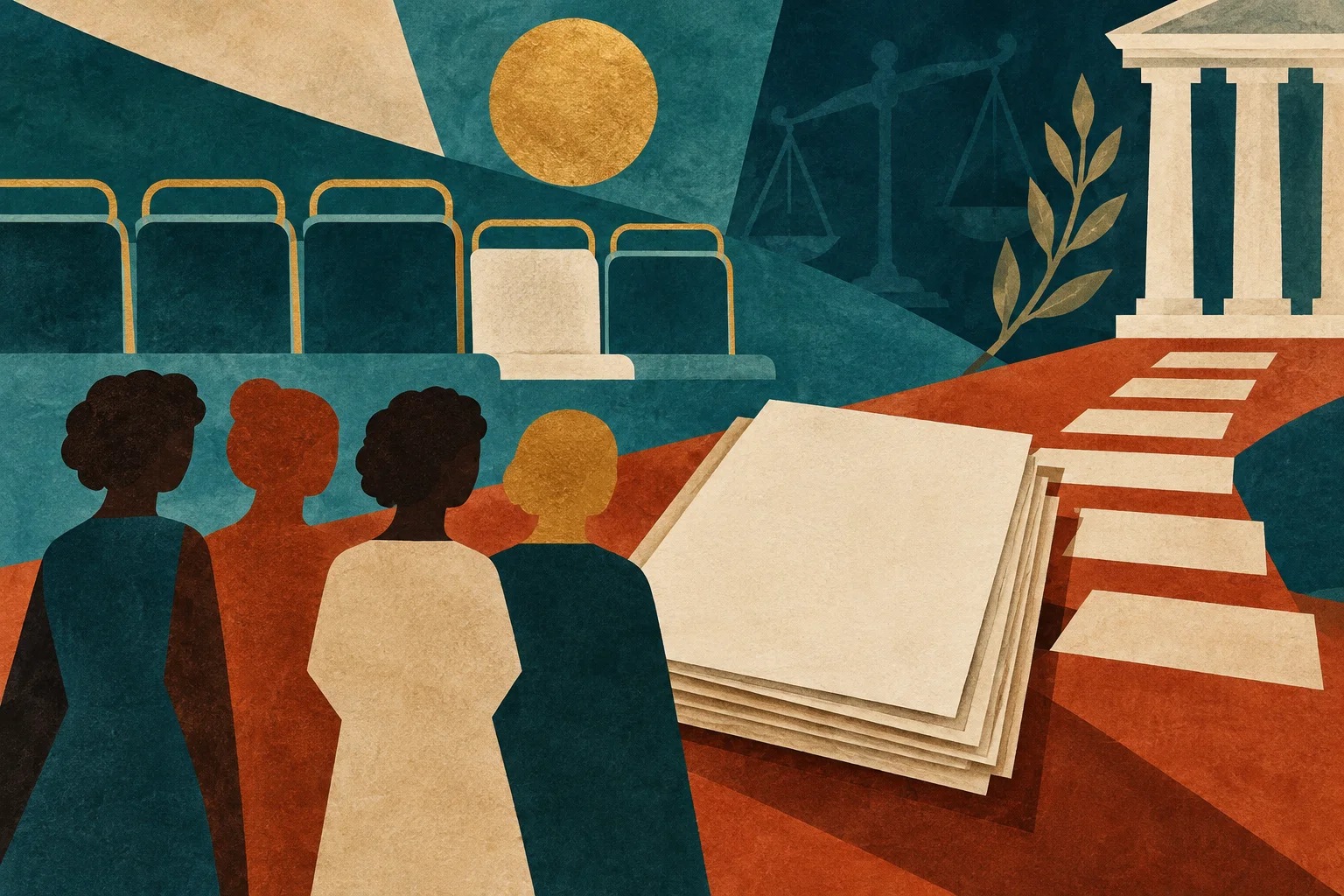
Read the story →Generated symbolic illustration. Four abstract figures, blank legal pages, a simplified bus-seat line and courthouse columns are imagined; this is not a depiction of Colvin, a real bus, an arrest, a courtroom or a historical document. Generated symbolic illustration; not documentary evidence.
Claudette Colvin's 1955 arrest did not start the Montgomery bus boycott, but she later joined three other women in the court case that ended bus segregation there.
A brave act can keep mattering long after the first moment, even without the spotlight.
On March 2, 1955, 15-year-old Claudette Colvin refused to give up her seat on a Montgomery bus and was arrested. Leaders chose not to build a protest around her case. The boycott began in December, after Rosa Parks's arrest. But in 1956, Colvin joined a federal court case against the bus segregation laws. One of the first five women withdrew after threats, and four stayed. Colvin testified, and the courts struck the laws down.
Her story shows how courage can keep counting alongside others.
Read the sourced story: Read the full article
Read the story →Generated symbolic illustration of a generic research rocket at a coastal launch rail. The rocket configuration, notebook, and setting are imagined; this is not an SLV-3 photograph, historical launch, or reconstruction. Generated symbolic illustration; not documentary evidence.
When India's first SLV-3 test flight failed in 1979, a caring colleague, an honest review and a leader who took the public blame helped the team try again.
After a public failure, honest review and real support help a team try again.
In August 1979, India's first SLV-3 test rocket failed to put its payload into orbit. A. P. J. Abdul Kalam later recalled how his colleague Brahm Prakash came to sit with him and share a meal. A committee reviewed what went wrong. Kalam said his leader, Satish Dhawan, faced the press and took responsibility. In July 1980, the team's second rocket put Rohini RS-1 in orbit, and Dhawan asked Kalam to share the good news.
It is a story about how a whole team found its way back.
Read the sourced story in the in-app feed: Read the full article
Read the story →Generated symbolic illustration. The piano, blank audition sheet, stage, and music stand are imagined; this is not a portrait or a depiction of an actual audition, home, club, or performance. Generated symbolic illustration; not documentary evidence.
Eunice Waymon trained to be a classical concert pianist, was refused by Curtis, kept studying and working, and carried that training into the music of Nina Simone.
A changed path does not erase the skills you have built.
Before she was Nina Simone, Eunice Waymon trained to be a classical concert pianist, with help from teachers and her family. Then the Curtis Institute of Music turned her down. She later said it hurt and that she believed race was the reason, though the records do not settle why. She kept taking private lessons and teaching. In 1954, a bar job asked her to sing as well as play, and she brought her classical training into her singing career.
Her story shows how the pianist stayed alive inside the singer.
Read the sourced story in the in-app feed: Read the full article