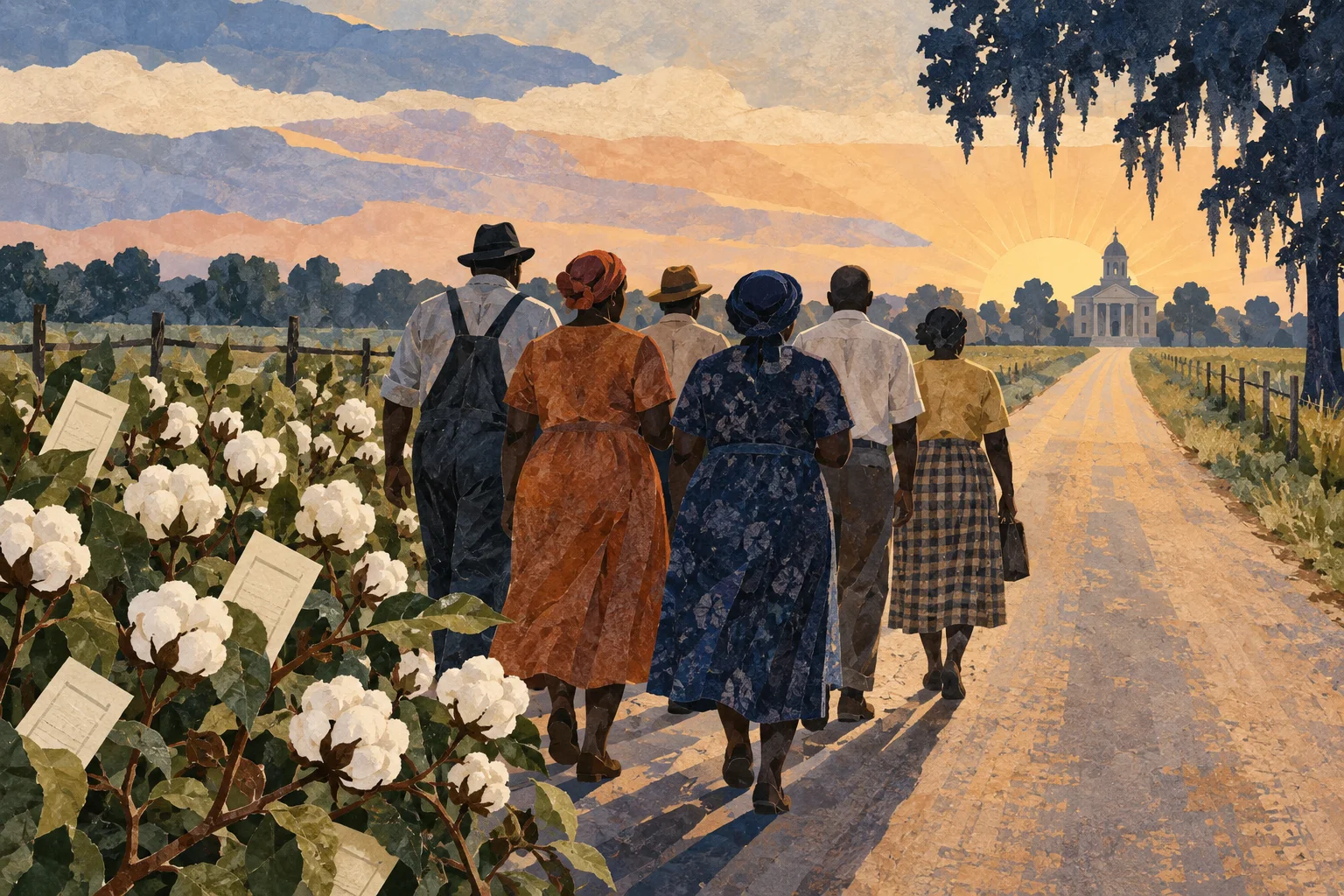
Wangari Maathai Listened to What Rural Women Needed. Then They Planted Trees Together.
Wangari Maathai's work began with rural women's daily needs in Kenya, and it grew through women's groups, protesters, mothers and allies who carried it forward.
The lesson
Good work starts by listening to the people who live with the problem.
- Ask people what they need before you offer a plan.
- Give local groups real roles and training, and pay them for their work.
- When others lead, stand with them and offer your skills.
The challenge
In Kenya, discussions held under the National Council of Women of Kenya brought Wangari Maathai together with rural women. They talked about what was missing in their daily lives.
They named practical needs: firewood, clean water, food and income. Maathai later said she began encouraging women to plant trees. It was one answer to problems the women had named themselves.
An introduction to a 2005 interview with her dates the start of the Green Belt Movement to 1977. The work began small and local. Women's groups learned to raise and care for young trees.
The problem
Over time, the work grew beyond trees. Maathai saw that the environment was tied to bigger questions. Who controls the land? Who gets to use public resources? Can people speak up when decisions affect them?
Those questions came to a head in a public fight. In 1989, a high-rise tower was proposed for Uhuru Park, a public park in Nairobi. Reports said a four-story statue of President Daniel arap Moi would stand on the outside. The project would have taken over public parkland.
The pushback against her was strong. Officials criticized Maathai and called for the Green Belt Movement to be banned. Human rights reports later said the movement's office was closed on short notice.
Speaking up now carried real risk.
What they did
Maathai did not face this alone, and she did not act alone. Many people spoke out against the tower. News reports from 1989 describe letters to newspapers, criticism from architects, newspaper editorials and public comments.
Help also came from far away. Maathai later said that international networks and donors listened to local people. She said that mattered more than her own protest. Foreign investors later pulled out of the project.
Then came a second struggle, led by other women. Maathai recalled that toward the end of 1991, mothers of imprisoned young men came to her. They wanted their sons released, and they asked for her help. She said she served as their interpreter and joined them.
The mothers took the risk of protesting in public themselves. In early March 1992, Amnesty International reported that women were on a hunger strike for the release of political prisoners. It said there was a march on March 2 to support them. It said police beat demonstrators on March 3.
Human rights groups later reported that Maathai was beaten, arrested and taken to hospital. Then she went back and joined the women again.
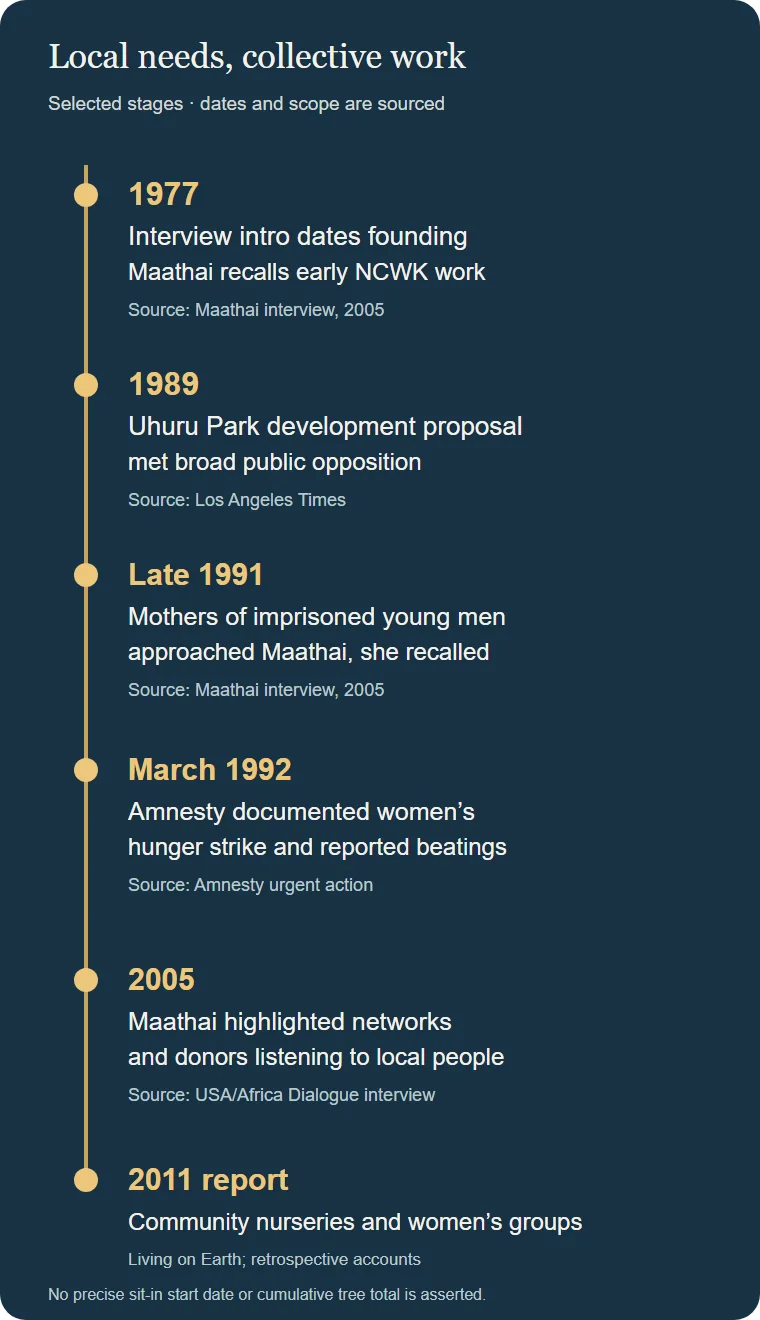
Key dates in the shared work. The records give no exact start date for the mothers' protest.
What happened next
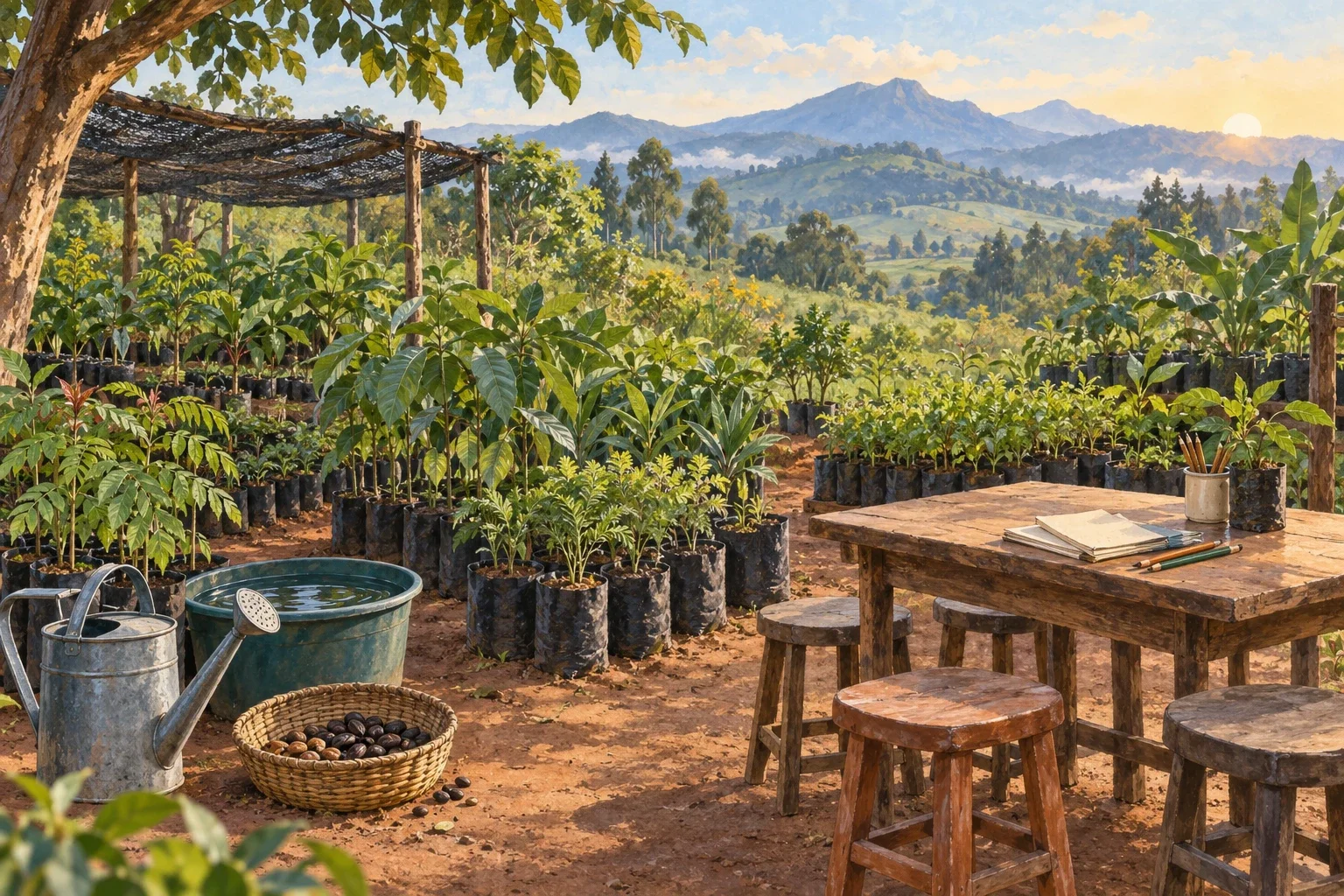
The tree work kept going in villages. Later radio reports describe how it worked. Women's groups ran tree nurseries, places where young trees are grown. They got training and seedlings. They also received small payments for their work.
That design mattered. It linked caring for the land with earning an income. It also kept the work in local hands, so it was never only about one leader.
The movement grew into teaching people about their rights and about public life. It connected trees to bigger questions about land and fair decisions.
Maathai herself pushed back on the idea that she led a "one-woman charge." She pointed to networks, donors and local voices instead.
This story inspires because of where it began. It began with women naming what they needed. Women built the nurseries. Mothers started their own protest. Many others, from architects to donors, helped widen the work.
Reports differ on some details, like the tower's height and how many trees were planted, so those numbers are left out here. And no amount of effort could promise how things would turn out. But the work showed what people can do when they listen first and act together.
Try this today
- Ask one person you want to help: "What would make your day easier?" Write down their answer before you suggest anything.
- Think of a group project you are part of. Spend 10 minutes listing who does what, and where someone could take on a bigger role.
- Find one cause led by someone else. Offer one specific skill you could give, like writing, translating or organizing.
Whose needs have you been guessing at, when you could simply ask?
Sources for this story: S02, S03, S05, S06, S07, S08. Full list below.
Join the conversation
Vote in the community poll and see the latest results from Armored Kitten on Telegram.