Wilma Mankiller and Charlie Soap Asked Bell What It Needed. Then the Community Built It.
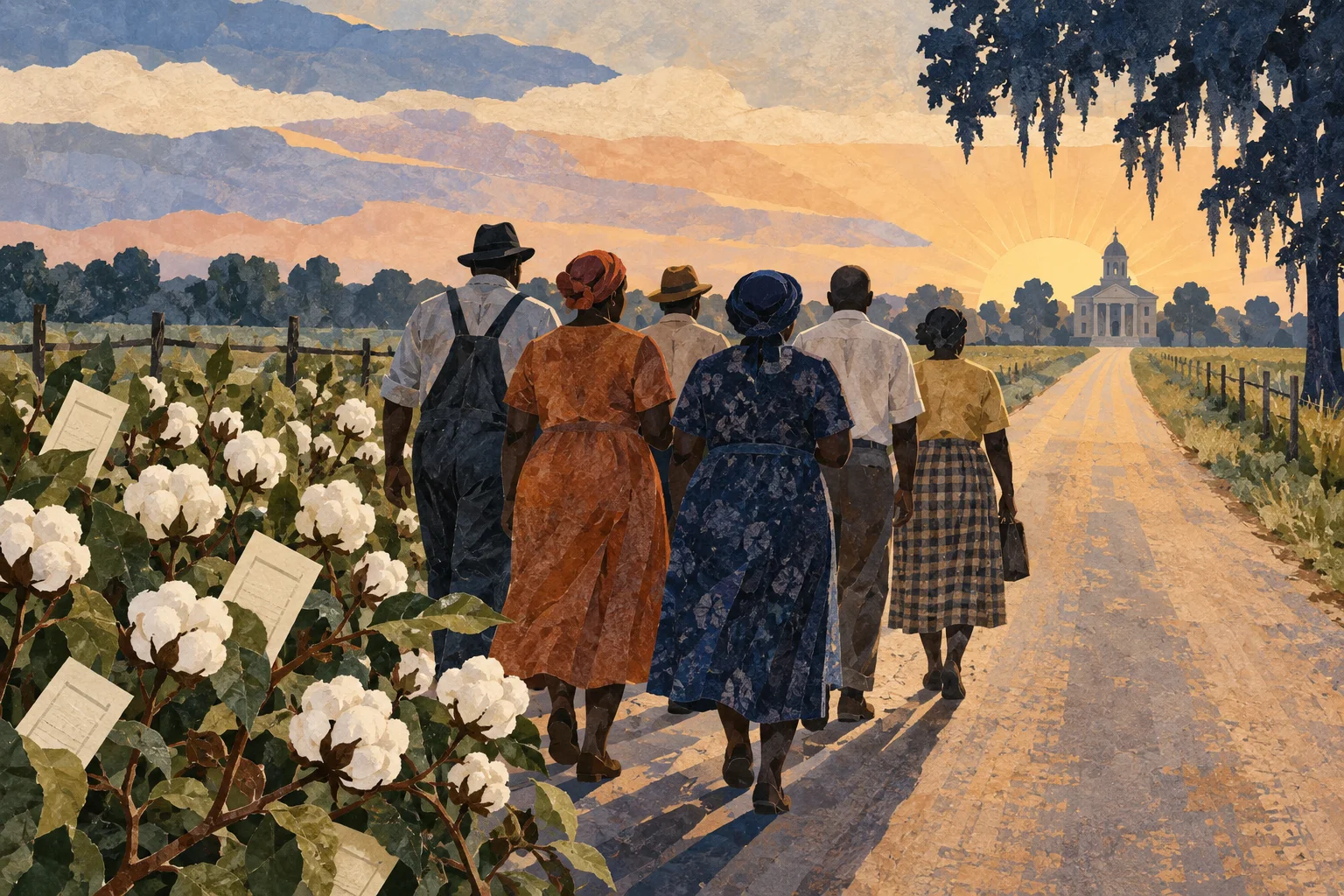
Before she became principal chief, Wilma Mankiller helped organize a water and housing project that Bell residents chose, shaped and built with Cherokee Nation support.
The lesson
The best help starts by asking people what they need.
- Let the people closest to a problem choose the first goal.
- Bring skills and resources to support their plan, not to replace it.
- Share the credit with everyone who did the work.
The challenge
Wilma Mankiller later became principal chief of the Cherokee Nation. Before that, she worked on a project in a community called Bell.
Her path there took time. The Oklahoma Historical Society says that two years after her 1974 divorce, she and her daughters moved to eastern Oklahoma. She later said she began working for the Cherokee Nation in 1977.
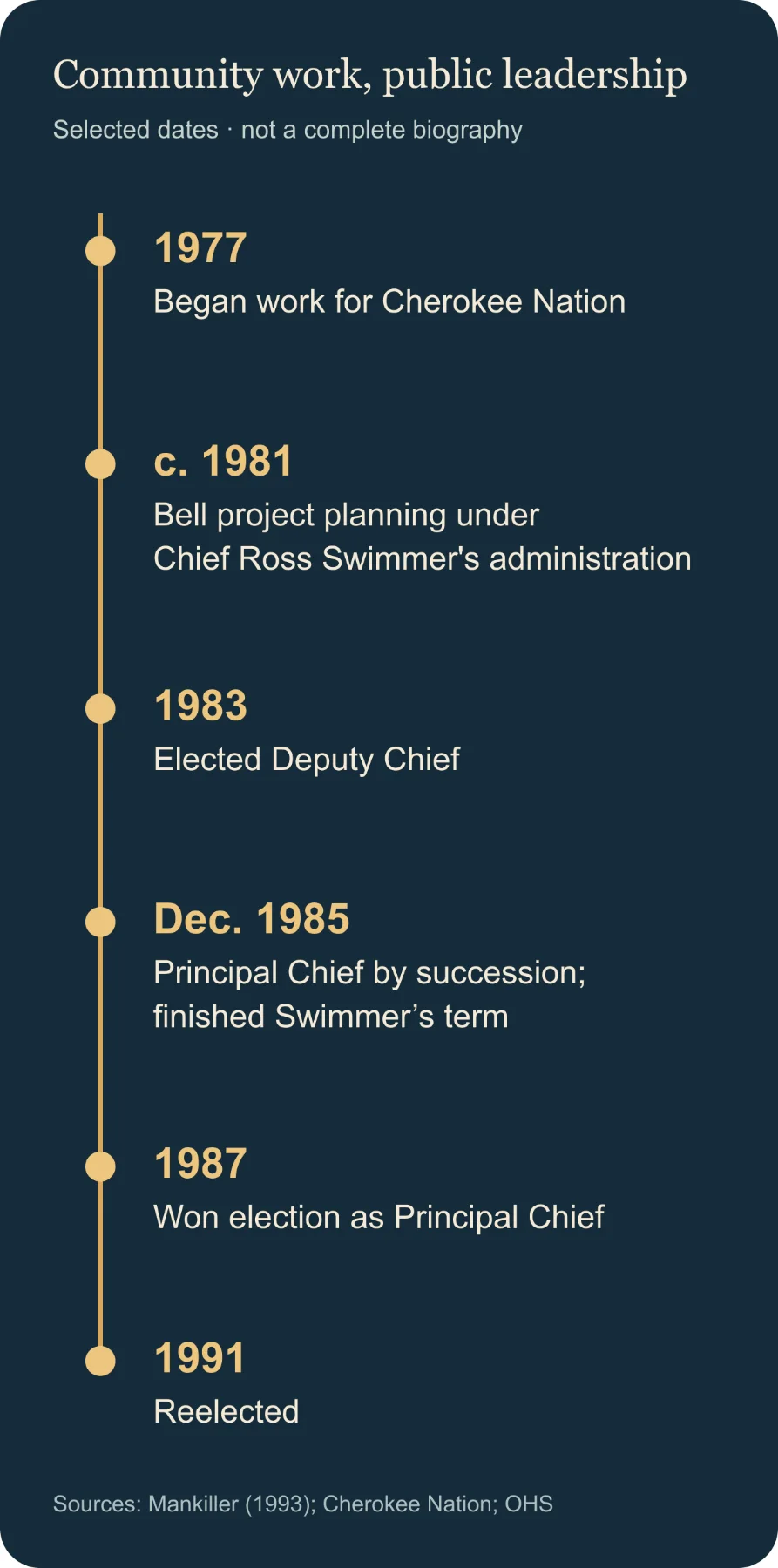
Key dates in Mankiller's path. Becoming chief in 1985 to finish a term was not the same as winning the 1987 election.
The Bell work grew out of a Cherokee Nation self-help project. It began while Ross Swimmer was chief. Mankiller later recalled that Swimmer supported it. She worked on it with Charlie Soap, a community organizer.
The problem
Bell residents needed water and housing. Those were the needs they named themselves.
A project like this can go wrong in two ways. An official can arrive with a plan and try to "rescue" a place. Then the people who live there have no say. Or "self-help" can turn into leaving residents to solve a big public need alone.
Either way, the work might not fit the community. The Bell project took a different path.
What they did
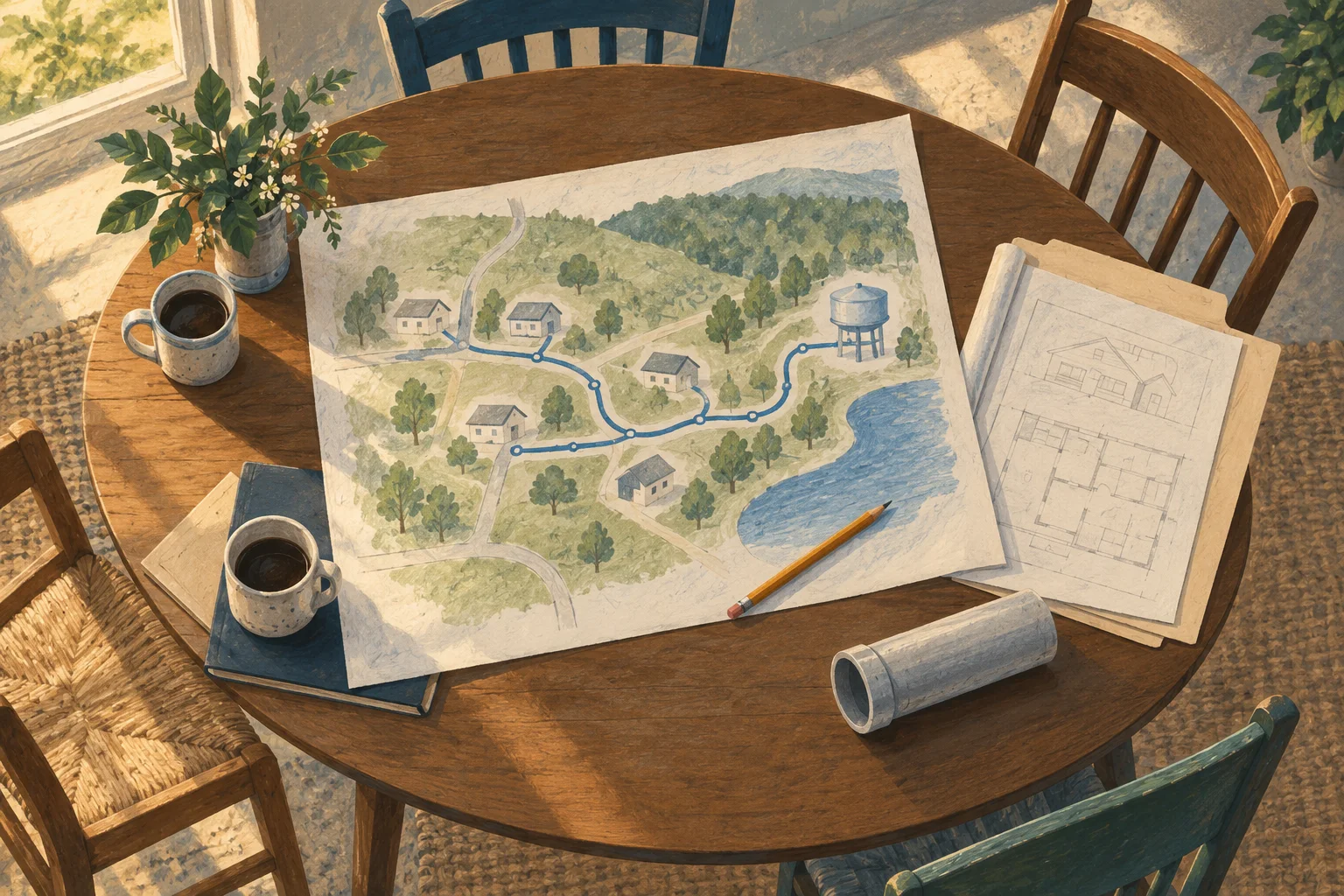
They started with a simple question for Bell residents: what does the community need most? In Mankiller's later account, residents chose water and housing.
Next, the community set up a way to make decisions. Residents elected a steering committee, a small group that helped decide how the work would go. That gave local people a real voice, not just a thank-you at the end.
Then everyone took a part of the job:
- Bell residents gave their own labor as volunteers.
- The Cherokee Nation brought resources and technical help.
- Materials came in to support the plan.
- Mankiller and Soap helped organize the work and keep it moving.
Mankiller put it simply in her 1993 account. Residents would help build what they needed. The Cherokee Nation would bring the resources and expert help. No one group did it alone.
What happened next
In a 1993 speech, about ten years after the project began, Mankiller recalled the results. She said residents built a water system. They repaired 20 homes and built 25 new homes using solar technology. These numbers come from her own memory. No original project record was found to check them.
The sources also disagree on how long the water line was. One says 16 miles and another says 18, so the exact length is unknown.
Mankiller's path in leadership kept growing. In 1983, she was elected deputy chief. She later recalled that some people opposed her because they did not want a woman in that role. She said Charlie Soap and members of her family supported her.
In December 1985, Swimmer resigned. Mankiller became principal chief to finish the rest of his term. Voters then elected her principal chief in 1987 and reelected her in 1991.
Years later, the Cherokee Nation described the Bell water line as planned by Mankiller and Soap under Swimmer. It also gave credit to the community workers. That matters. The credit went back to the people who did the work.
This story inspires because of how the work was shared. Local people chose the goal. A committee gave them a voice. Experts and materials supported the plan. Neighbors built it with their own hands.
There is no full budget or long-term study of the Bell project. And no single method works in every place. But Bell shows a clear way to begin: ask the people who live with a problem what should change.
Try this today
- Think of someone you want to help. Before you offer a plan, ask them one question: "What do you need most right now?"
- Pick one shared task at home or work. Write down who will decide, who will do the work and what support is ready. It takes five minutes.
- Thank one person whose work often goes unseen. Tell them exactly what they did.
Whose needs could you ask about this week, instead of guessing?
Sources for this story: S01, S02, S03, S04, S05, S06, S07. Full list below.
Join the conversation
Vote in the community poll and see the latest results from Armored Kitten on Telegram.