Some achievements begin with a shared need and depend on people doing different kinds of work. These stories examine the organizing, relationships, and institutions behind collective efforts. They recognize partial gains and unresolved problems alongside accomplishments, and ask what it takes to build with a community rather than speak for it.
A question to explore: What helped a community turn a shared need into sustained work?
Showing 1–5 of 5 published stories
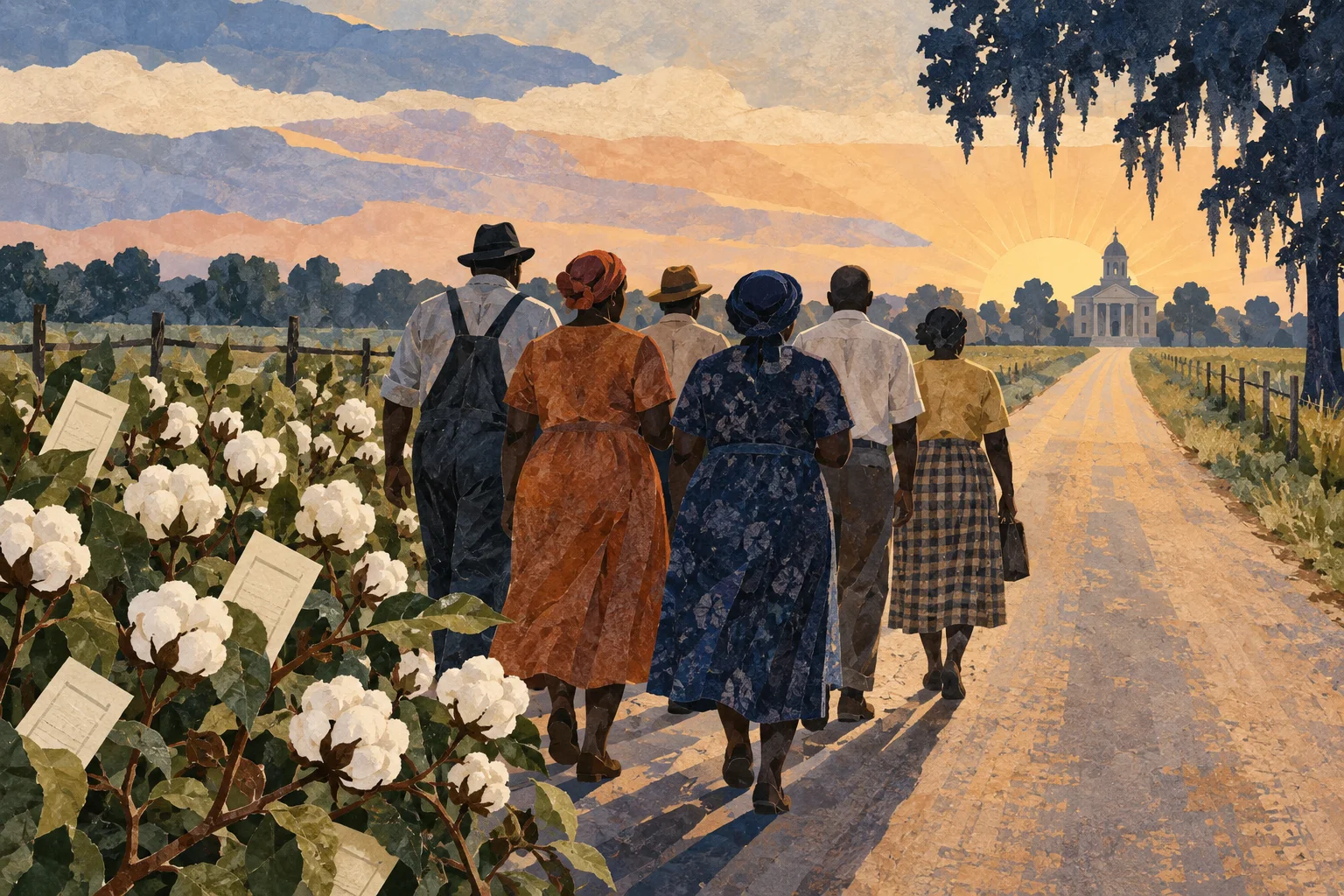
Generated symbolic illustration of neighbors walking together through the Mississippi Delta toward a courthouse. It is not a photograph of Hamer, her neighbors, or the 1962 trip. Generated symbolic illustration; not documentary evidence.
In 1962, Fannie Lou Hamer was forced off the plantation where she lived for trying to register to vote, and her choice grew into years of shared organizing.
Standing up for yourself can grow into lasting change when others stand with you.
On August 31, 1962, Fannie Lou Hamer rode with neighbours to a courthouse in Indianola to register to vote. Officials let only two people take the test. Back home, her employer told her to take back her registration or leave the plantation where she worked and lived. She refused and left that same night. Organisers invited her to train and work with them. In 1964, she told a national committee, "I tried to register for myself."
Read how one hard choice became years of work shared with many others.
Read the story →Generated symbolic editorial illustration; not a historical map or reconstruction. Generated symbolic editorial illustration; not a historical map or reconstruction.
Before she became principal chief, Wilma Mankiller helped organize a water and housing project that Bell residents chose, shaped and built with Cherokee Nation support.
The best help starts by asking people what they need.
Before Wilma Mankiller became principal chief of the Cherokee Nation, she and community organizer Charlie Soap worked on a project in Bell. They started with a question. They asked residents what the community needed most, and residents chose water and housing. Residents elected a steering committee and gave their own labor. The Cherokee Nation brought resources and technical help. In a 1993 speech, Mankiller recalled a new water system, 20 repaired homes and 25 new homes using solar technology. Years later, the Cherokee Nation credited the community workers too.
Read how one community led its own project, with support behind it.
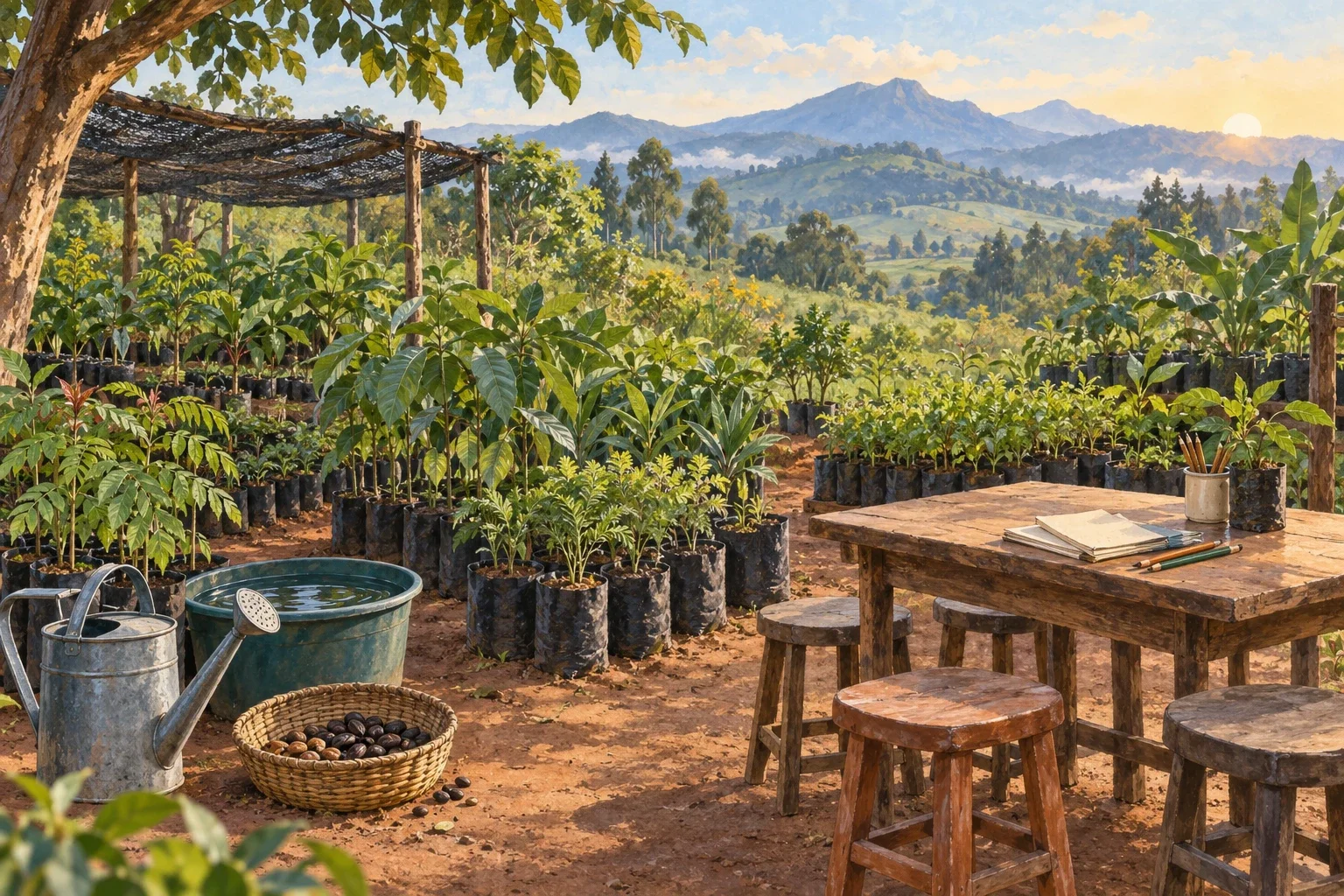
Read the story →Generated symbolic editorial illustration; it does not depict Wangari Maathai, a documented village, or a historical scene. Generated symbolic editorial illustration; it does not depict Wangari Maathai, a documented village, or a historical scene.
Wangari Maathai's work began with rural women's daily needs in Kenya, and it grew through women's groups, protesters, mothers and allies who carried it forward.
Good work starts by listening to the people who live with the problem.
In Kenya, rural women told Wangari Maathai what they needed: firewood, clean water, food and income. She began encouraging them to plant trees, and the Green Belt Movement grew from there. Women's groups ran the tree nurseries. In 1989, when a tower was planned for Nairobi's Uhuru Park, many people spoke out, and officials called for the movement to be banned. Later, mothers of imprisoned young men asked Maathai for help, and she joined their protest.
Read how a movement grew from listening and many helping hands.
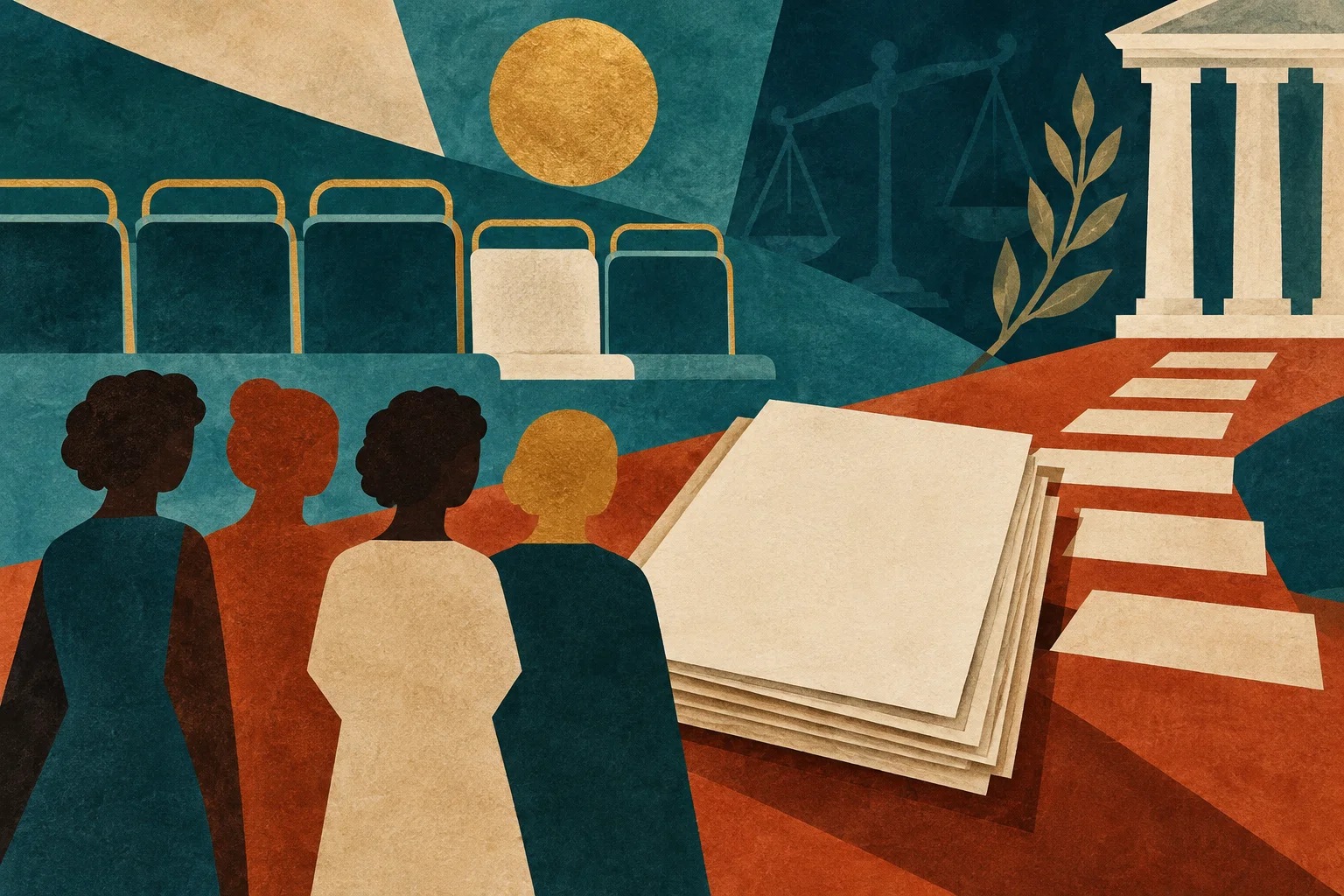
Read the story →Generated symbolic illustration. Four abstract figures, blank legal pages, a simplified bus-seat line and courthouse columns are imagined; this is not a depiction of Colvin, a real bus, an arrest, a courtroom or a historical document. Generated symbolic illustration; not documentary evidence.
Claudette Colvin's 1955 arrest did not start the Montgomery bus boycott, but she later joined three other women in the court case that ended bus segregation there.
A brave act can keep mattering long after the first moment, even without the spotlight.
On March 2, 1955, 15-year-old Claudette Colvin refused to give up her seat on a Montgomery bus and was arrested. Leaders chose not to build a protest around her case. The boycott began in December, after Rosa Parks's arrest. But in 1956, Colvin joined a federal court case against the bus segregation laws. One of the first five women withdrew after threats, and four stayed. Colvin testified, and the courts struck the laws down.
Her story shows how courage can keep counting alongside others.
Read the sourced story: Read the full article
Read the story →Generated symbolic editorial illustration, not a photograph or historical reconstruction. It does not depict Freire, identifiable participants, or a documented Angicos classroom. Generated symbolic editorial illustration; not a photograph or historical reconstruction.
Angicos completed its 1963 literacy pilot through local language, shared preparation, and reflection. First and last class dates differ from its April 2 closing ceremony; a proposed national program was revoked in 1964.
Angicos offers a more careful kind of inspiration than a miracle story. Its first regular class began January 24, and its last class met March 16; April 2 was the closing ceremony. A retrospective chronology separately reports 380 people at the January inauguration and 300 considered literate in an April evaluation, without showing whether the counts describe the same people. Coordinators and learners shaped the work together. A proposed national program followed, then was revoked after the coup. Their story honors preparation, local knowledge, and shared effort, while leaving room for a hard truth: commitment can make meaningful work possible, but it cannot guarantee that institutions or political conditions will let that work continue.