Scientific persistence and the work behind discovery
Scientific work can involve results that do not repeat, explanations that need revision, and tools or support that take time to find. These stories follow particular episodes and the people who contributed to them. They distinguish what the evidence established from what was still uncertain, and invite reflection on careful work rather than instant breakthroughs.
A question to explore: What helped researchers keep asking useful questions when the work became difficult?
Showing 1–6 of 6 published stories
AI-generated editorial still life. The lab objects and sketches are illustrative, not historical evidence. AI-generated editorial still life; not a historical lab scene or evidence.
Katalin Karikó spent years on an idea that struggled to win grants, and colleagues, a partner and a growing team helped turn it into Nobel Prize-winning work.
A hard question moves forward when you break it into smaller tests and let the right people join you.
Katalin Karikó spent years asking if messenger RNA, or mRNA, could tell cells to make useful proteins. She says she applied for at least one grant every month for two years and got none. Two colleagues helped her stay at her university. In 1997, she met Drew Weissman, and they worked on the problem together. Their 2005 paper was a lab finding, not a vaccine. In 2023, they shared the Nobel Prize.
Read how one stubborn question found its team.
[Read the article and sources](Read the full article)
Read the story →Generated symbolic editorial artwork; it does not depict Mae Jemison, Stanford or a documented classroom. Disclose as generated editorial illustration.
Mae Jemison felt unwelcome in some Stanford classes until one professor's teamwork rule helped her join in, on a path that later led her to space.
A small change in how people work together can give someone a real way in.
When Mae Jemison started at Stanford, she sat near the front, eager to answer questions. She later said some professors did not seem glad to have her there, and she slowly moved farther back. Then professor Channing Robertson made students in his class work with lab partners. Jemison said it was her first real chance to work with others in her department. She went on to study medicine, serve as a Peace Corps doctor, and fly in space in 1992.
Read how one classroom choice made room for her to take part.
Read the story →Generated symbolic still-life of an open research notebook, two unmarked amber vials, a botanical leaf and laboratory glassware. It does not depict Tu, her team, or a historical experiment. Generated symbolic illustration; not documentary evidence.
When an early malaria extract gave mixed results in mice, Tu Youyou checked old sources, changed her method and helped move a large team effort forward.
When a good result will not repeat, treat it as a clue and ask why.
Tu Youyou led a herbal research group inside Project 523, a large Chinese effort against malaria. She later recalled that her group's first qinghao extract held back malaria parasites in mice. But when they repeated the tests, the results jumped around. She went back to old writings and found a fourth-century passage about soaking the plant in water. It made her question the heat used to make extracts, so her group changed its method. Sample 191 then worked well against the parasites in mice and monkeys. Many other teams carried the work further.
These were animal results, not patient results, and this is not medical advice.
Read the article and sources: Read the full article
Read the story →Generated symbolic illustration of a generic book, motor, a pair of hands and a glowing bulb beside a distant windmill at dusk. It is not a documentary image of William Kamkwamba or his work. Generated symbolic illustration; not documentary evidence.
After school fees forced him out of class, William Kamkwamba learned at a library, built a windmill and kept improving it with family and a skilled team.
When one road to learning closes, find another one, and bring people along.
William Kamkwamba later said he left school at about fourteen because his parents could not pay the fees. He kept learning at a library, where a book with a picture of a windmill gave him an idea. He built one from bicycle and tractor parts. The first light was only the start. In 2007, he upgraded it with a team from National Solar and Power, his cousin Geoffrey and two colleagues who gave him a motor.
Read how a library, a cousin and a team of helpers kept his windmill turning.
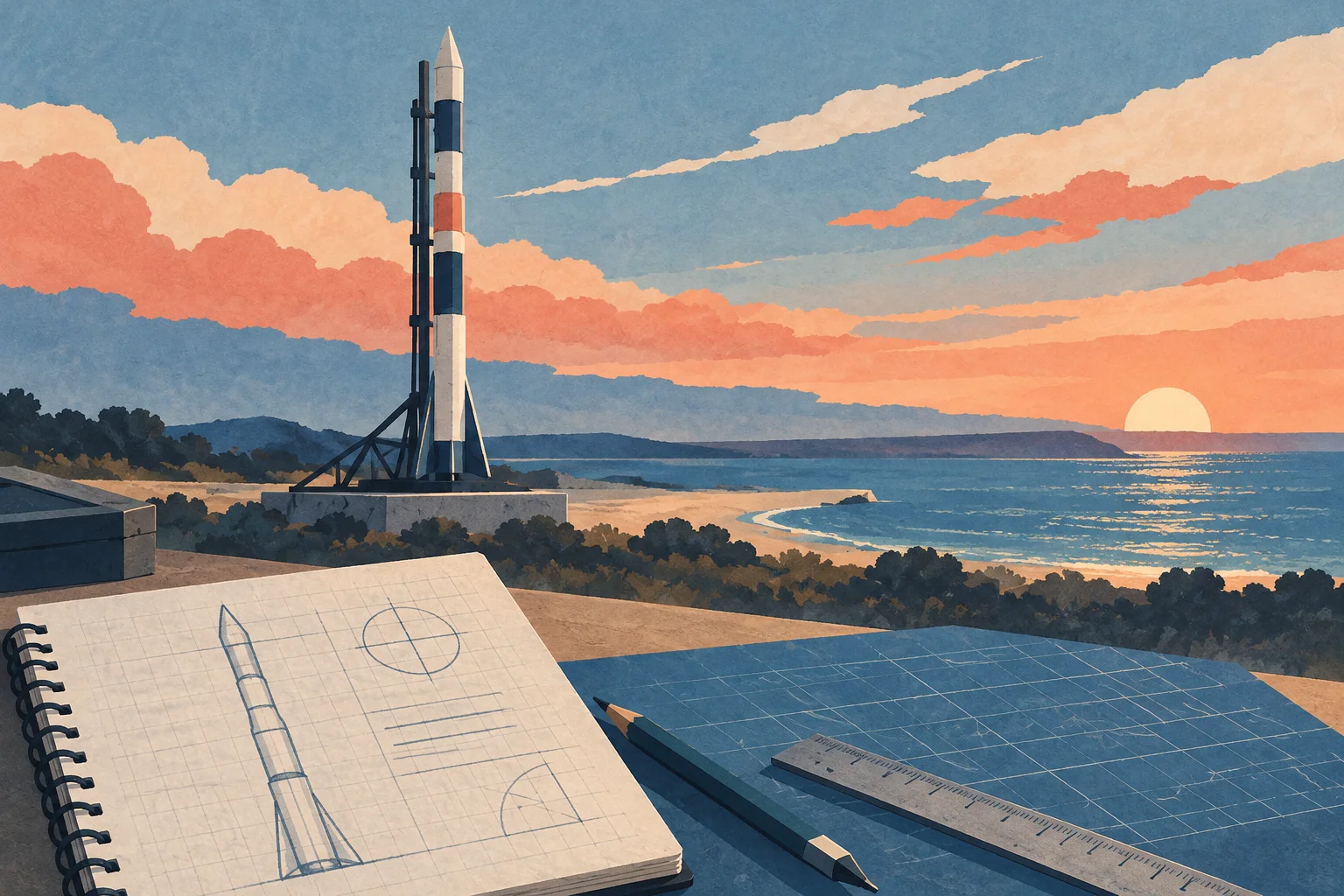
Read the story →Generated symbolic illustration of a generic research rocket at a coastal launch rail. The rocket configuration, notebook, and setting are imagined; this is not an SLV-3 photograph, historical launch, or reconstruction. Generated symbolic illustration; not documentary evidence.
When India's first SLV-3 test flight failed in 1979, a caring colleague, an honest review and a leader who took the public blame helped the team try again.
After a public failure, honest review and real support help a team try again.
In August 1979, India's first SLV-3 test rocket failed to put its payload into orbit. A. P. J. Abdul Kalam later recalled how his colleague Brahm Prakash came to sit with him and share a meal. A committee reviewed what went wrong. Kalam said his leader, Satish Dhawan, faced the press and took responsibility. In July 1980, the team's second rocket put Rohini RS-1 in orbit, and Dhawan asked Kalam to share the good news.
It is a story about how a whole team found its way back.
Read the sourced story in the in-app feed: Read the full article
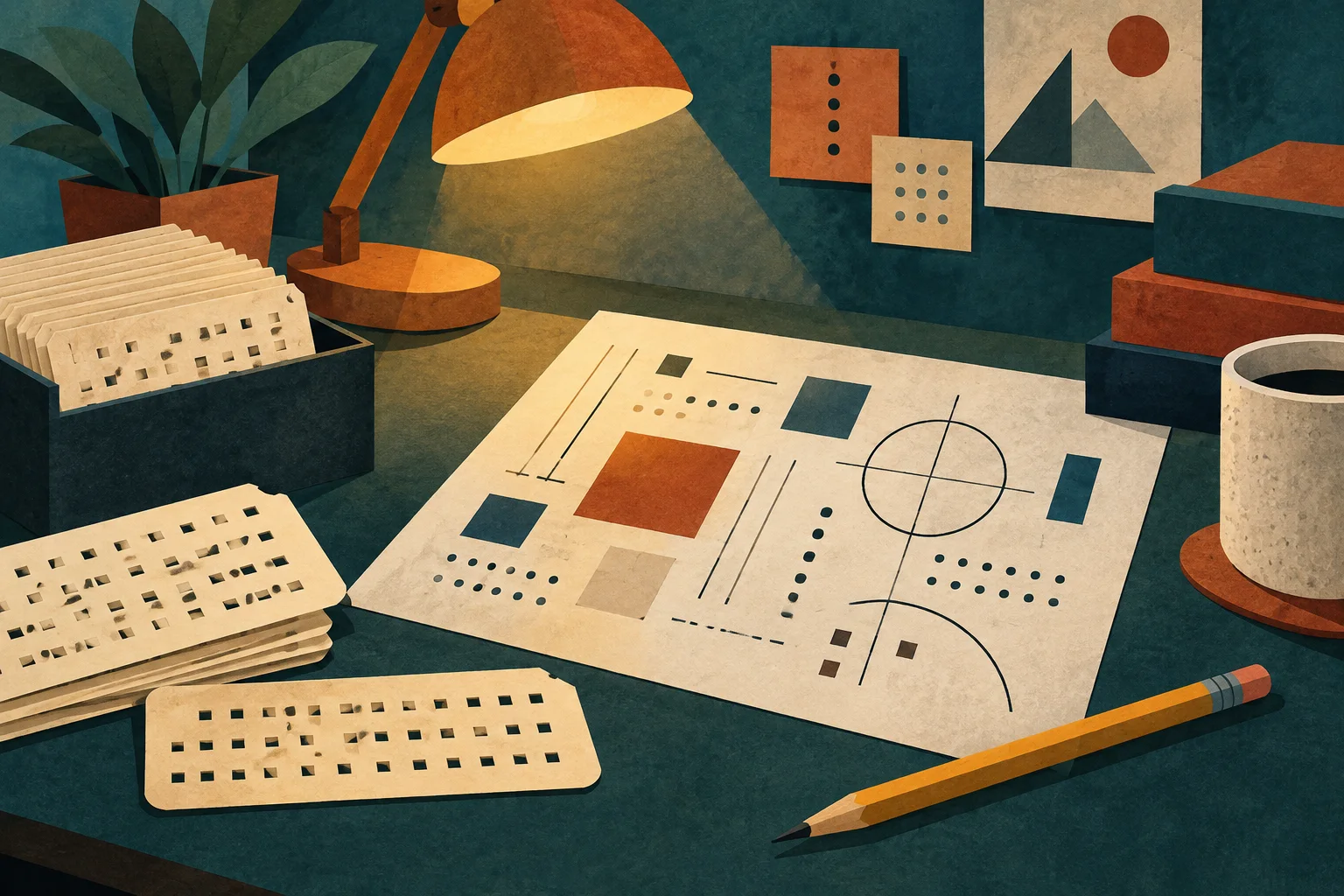
Read the story →Generated symbolic illustration in collage style of an imagined technical desk with generic punch cards and an abstract grid. It is not a historical photograph, a verified Navy work scene, an actual ship plan, or a depiction of Montague. Generated symbolic illustration; not documentary evidence.
Turned down for training, Raye Montague watched, studied at night and fixed a computer when it mattered, then helped her team produce a Navy ship draft.
When no one will teach you, you can still learn, and be ready when a chance comes.
Raye Montague started at the Navy as a clerk-typist in 1956. When she asked for computer training, her manager said no. So she watched the operators and took night classes. On October 20, 1957, the operators were away and the computer had a problem, and she fixed it. Later, Betty Holberton hired her into software work, and her mother and her team helped her meet a hard deadline.
Here is how she learned her way in, and who helped her.
Read the sourced story in the in-app feed: Read the full article