After a holiday, do not try to switch every routine back on the first morning. Spend the first day or two on the essentials that piled up while you were away, then restart one routine, the one that makes the rest of your day easier. Bring the others back one at a time over the following week or so, in an order you choose. The days you were away do not need to be made up.
Why the first day back is the wrong day to restart everything
The return from a holiday comes with its own workload: a bag to unpack, washing, an empty fridge, post, messages and often a full inbox at work. Many people also feel tired from travel, or out of step with their usual sleeping and eating times.
If you plan to restart your reading, your walk, your meal planning and your morning stretch on that same day, most of them will lose to the backlog. Then the first real day of your routines looks like a failure, and the restart starts to feel harder than it is.
A calmer approach is to treat the return as a short sequence: essentials first, then one routine, then the rest.
Choose which routine comes back first
Some routines hold others up. A regular bedtime or a planned food shop makes the next few days easier, while a hobby practice depends on those days going reasonably well. Look at your routines and ask which one, if it were running again, would make the others more likely.
| Routine type | Typical examples | Good to restart |
|---|---|---|
| Anchors | A food shop, a set wake-up, preparing tomorrow the night before | First, once the essentials are done |
| Steady routines | A daily walk, reading, tidying up after dinner | Next, once the anchor is running |
| Projects and hobbies | Learning, an instrument, a creative practice | Last, when the week has some slack |
| Shared routines | A weekly walk with a friend, a class | When the other person is also back and ready |
Your list will look different. What matters is choosing the order on purpose, rather than restarting whatever you happen to remember first.
A re-entry plan you can copy
Fill this in before you leave if you can, or on the journey home if you cannot.
Before I leave
  Where each routine stopped:   ______________________
  Reminders to pause:           ______________________
  People to tell I'm away:      ______________________
  One thing to have ready
  for the day I get back:       ______________________

Day back
  Essentials only:              unpack / food / post / messages
  Routines planned:             none

First routine back
  Routine:                      ______________________
  First occasion:               ______________________
  If that falls through:        ______________________

Bringing the rest back
  Next routine:   ____________   from about: ____________
  After that:     ____________   from about: ____________
  Still paused, to look at in my review:  ______________
The "if that falls through" line is there because the first week back is rarely smooth. Having a second option ready stops one missed occasion turning into another week off.
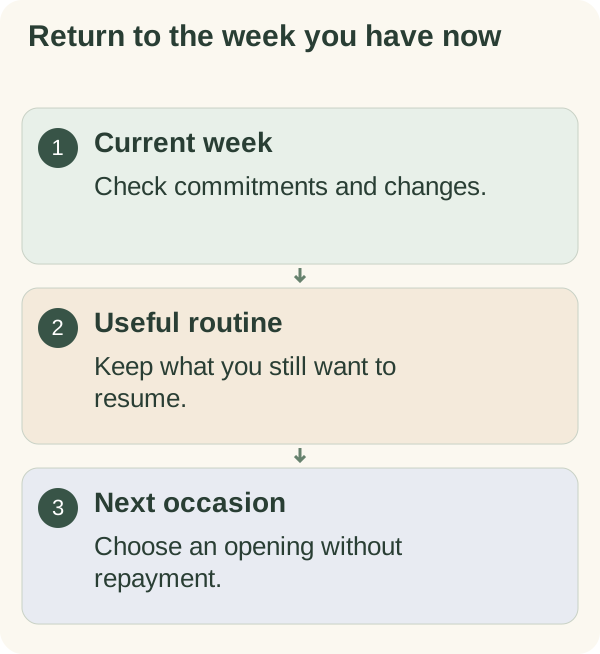
Make a return decision
- Keep:
which routines do you still want after the break?
- Check:
what is different this week, at work and at home?
- Order:
which routine comes back first, and which can wait?
- Place:
pick the first occasion for the first routine only.
- Review:
at the end of the first full week, decide when the next one returns.
Example: Sam's return from two weeks away
The example below is illustrative; the person in it is not real. Sam came back from a two-week holiday to three routines: reading before bed, an evening walk on weekdays, and a Sunday afternoon of meal planning and shopping.
Before the holiday, Sam would have tried to restart all three on the Monday. This time Sam wrote a short note on the flight home: walk first, because it got Sam out after work and made sleep easier; meal planning on the first Sunday; reading whenever it felt natural.
Monday was essentials only. Sam unpacked, bought enough food for two days and cleared post. On Tuesday Sam walked. The first Sunday back, meal planning happened as usual, which made the second week much easier. Reading returned by itself in the second week, once evenings felt normal.
What Sam changed afterwards: the note was useful, but writing it on the flight meant one reminder had already gone off at home while Sam was away. For the next trip, Sam wrote the note and paused reminders the evening before leaving, and checked the travel night checklist at the same time.
Clear what kept running while you were away
Recurring things do not know you were on holiday. Before your first routine comes back, check:
- Repeating reminders and calendar entries: delete or skip the ones that fired during the trip, and check the next ones are still right.
- Habit trackers: the days away will show as blanks. If you know a routine was not happening, that is fine to record as missed. If you do not remember, leave it. The guide on what a missing habit entry means explains the difference.
- Companion habits: if you paused habits in the Armored Kitten companion before leaving, they need to be resumed before they can take a new check-in. The habit management guide covers Pause and Resume.
- Shared arrangements: if a friend, class or group was part of a routine, check they are back too and that the old time still works for them. Send a fresh message rather than turning up and hoping.
Do not make up the days away
A holiday is a planned break, not a run of missed sessions. You do not owe extra reading, longer walks or a double meal-prep weekend for the time you were elsewhere. If you track a routine, the record can simply show that you were away.
For physical activity, start with something lighter and more familiar than where you left off, and follow advice from a qualified professional if you have one. The guide on returning to the gym after a missed week covers that case in more detail.
When the holiday was not restful
Not every holiday is a rest. You may have spent it caring for a relative, travelling for a family event, moving between places, or catching up on jobs at home. Returning to work afterwards can feel like a second, bigger push.
- If you come back more tired than you left, extend the essentials-only stage by a day or two and restart the anchor routine only.
- If the holiday changed something at home, such as a new school term, a relative staying or a new shift starting, treat the return as a change in circumstances. The guide on adjusting a routine when your working hours change helps with re-mapping.
- If you picked up an illness or injury while away, ask a doctor or suitably qualified professional before restarting physical routines, and follow their advice about when and how.
- If you come back feeling low, keep the first week small, and look after the basics before any routine. The companion's help pages include support for a difficult day if you want somewhere to start.
Return one step at a time
Coming back from a break is a natural place for Armored Kitten's idea of one manageable step at a time: one routine, one first occasion, then the next. The habits and goals path has more on keeping routines going once they are back.
Use restart after missing days to choose one next occasion without creating a backlog.
Use the "Choose a smaller return" card in the Restart and review workbook to choose the routine, current opportunity and alternative you want after the holiday.
Questions people often ask
How long does it take to get back into a routine after a holiday? It varies with the person, the length of the trip and what is waiting at home. Rather than aiming for a date, aim for the order: anchor routine first, then the others as each one settles.
Should I restart my routines on the first Monday back? Only if you have already cleared the essentials. Many people find a day of unpacking and shopping first makes the restart stick.
Is it worth keeping a small routine going during the holiday? If you enjoy it, yes. If it feels like a chore, let the holiday be a full break and plan the return instead.
What if a routine does not come back by itself? Look at it in your first weekly review. It may need a new time, a smaller version or a pause.