Go back once this week, at a time that suits the week you have now, and make that first visit lighter and shorter than you would normally plan. You do not owe the sessions you missed. After the return visit, work out what interrupted you and change that one thing, so the next busy week does not turn into two.
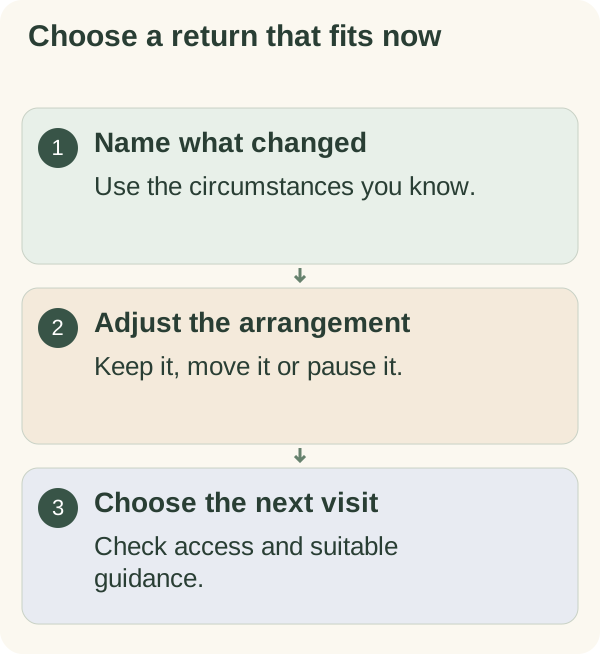
There are two different questions here: how to arrange another gym visit, and what exercise is appropriate when you return. This guide helps with the visit. A qualified professional can advise on your training, particularly when the break involved illness, injury or a change in your health.
You lost the timetable, not the habit
A week away is an ordinary interruption. Deadlines, travel, a cold or a run of bad sleep can all push visits out of a week, even for people who have trained for years.
What usually goes wrong is the story told afterwards. "I've fallen off again" turns one missed week into a reason to wait for a fresh start next Monday or next month. The longer the wait, the bigger the return feels. Treat the gap as a scheduling problem: what is the next visit that fits this week?
Why make-up sessions backfire
The tempting move is to repay the missed week with an extra visit or longer sessions. In practice that tends to cause the next miss. Make-up plans crowd a busy week, so the first one is easy to skip, and then you are two visits behind. They also make the return harder right when you are least sure of your routine, and they keep the missed week alive as a debt.
The rule is simple: no catching up. Your plan restarts from this week.
Name what actually interrupted you
Write a plain description of what happened. Work ran late. Travel changed. The old gym became inconvenient. You needed rest. Several reasons may apply, and you do not need to turn them into a judgment about your character.
If you do not know what happened, keep that uncertainty. A blank tracker entry is not evidence that you skipped a visit. The guide to missing habit entries explains why those states should remain separate.
| What happened | Keep, move or pause | A practical change |
|---|---|---|
| Illness | Pause until you have recovered | Ask a doctor if unsure when to return; plan a lighter first visit |
| A busy stretch at work | Move | Swap one long visit for a shorter one in a gap you have |
| Travel or a holiday | Pause, with a date | Put the return visit in your calendar before you leave |
| A new shift pattern | Move | Plan visits week by week from your rota |
| The gym became awkward to reach | Move, or change gym | Test the journey again at your real times |
| No clear reason | Keep | Same slot, smaller visit, bag packed the night before |
For shifts, see planning gym visits around changing shifts. If the gym itself is the problem, use the checks in choosing a gym you will actually use.
Make a return card
- What changed?
Name the practical circumstances you know about.
- What still fits?
Keep the useful parts of the old arrangement.
- What needs checking?
Include access, booking or a question for qualified staff.
- What is the next opportunity?
Choose a visit that fits your current week.
- When will you review?
Decide what would tell you the arrangement needs another change.
If travel was the obstacle, changing the day alone may not solve it. If you need a longer pause, record that decision instead of pretending the old timetable is still active. For example: "The after-work trip no longer fits my shift. Contact the gym about an introduction at a different time, then decide whether a repeat visit is practical." This is an illustrative scheduling choice, not a training programme.
Example: Maya's missed week after a work trip
An illustrative example (the person is made up): Maya usually goes on Tuesday and Saturday. A four-day work trip, then a tired weekend catching up at home, meant a full week with no visits.
Her first instinct was to go four times the following week to make up for it. Instead, she did this:
- Named the obstacle: travel, then tiredness. Nothing was wrong with her usual slots.
- Kept the slots, shrank the first visit: Tuesday as normal, but shorter, using only things her induction had shown her.
- Made Saturday conditional: she would go only if Tuesday felt fine.
- Added one rule for next time: before any trip, put the return visit in the calendar.
Tuesday went fine, and Saturday happened too. What changed for the future was the travel rule: on her next trip she had the return visit booked before she packed. She did not add any extra sessions.
A comeback week plan you can copy
Fill in the blanks and keep it somewhere you will see it. It is a scheduling template only.
| Day | Plan | Fill in |
|---|---|---|
| Day 1 | Choose the return visit and pack the bag | Return visit: day ____ time ____ |
| Day 2 or 3 | Return visit: shorter than usual, familiar things only | What I'll do: ____________ |
| Next day | Rest and notice how it felt | ____________ |
| Mid-week | Two lines: what felt fine, what was hard | ____________ |
| Later in the week | Second visit, only if the first felt fine | Yes / Not yet |
| End of week | Five-minute review: keep, move or pause? | One change: ____________ |
No row asks you to make up the missed week. If the second visit does not happen, the first still counts, and next week you plan from your normal pattern.
Ease back in on the first visit
Pick up a step or two below where you left off, not exactly where you stopped. Stick to things you already know, as your induction or a qualified professional showed you. If something hurts, stop and get advice before you carry on.
Do not assume you should repeat old loads or add sessions because you missed some. The CDC's getting-started advice recommends increasing activity gradually. It does not prescribe your return session or establish your individual readiness.
If you are uncertain about what is suitable, ask an appropriate professional rather than using a habit tracker to make that decision.
On the way in, a short line helps: "I'm doing this week's visit, not last week's." A lighter session still counts as being back.
If the week off has already turned into a month
A longer gap follows the same steps, with a few changes:
- If you are not sure what you remember from your induction, ask the gym whether you can book another introduction and treat the return as a first visit.
- If you have been ill or injured during the gap, ask a doctor or suitably qualified professional before going back, and follow their guidance.
- If your old timetable no longer matches your life, start from one visit a week and add only once that holds. The guide on starting when you keep putting it off helps here.
- If you are still paying for a gym you have stopped using, decide this week whether to return, freeze or cancel, using your contract terms.
Make the next interruption shorter
Gaps will happen again. A small plan made now keeps the next one to a single missed visit:
- If I miss a planned visit, I pick the next possible slot within a day.
- If I miss two in a row, I spend five minutes on a return card before planning anything else.
- If my week looks packed, I keep one short visit. See planning a session for a short window.
A simple record helps you spot the pattern early. See tracking gym attendance without chasing a perfect streak.
After the opportunity passes, record what you know: the visit happened, you changed the arrangement, you decided to pause or you have not reported a result. Choose the next action from that information.
The weekly review worksheet can help you compare the obstacle with a possible adjustment. You can use it without opening a companion account.
Make a restart plan for an illustrated version of the exercise. If you continue in Telegram, check the current controls and review any proposed change before confirming it. Reading this guide does not resume a paused habit or schedule a message.
The return-visit card in the gym planner has space for what changed, what needs checking and the next opportunity.
Coming back without catch-up sessions is how Armored Kitten treats every routine, from the gym to reading, across the habits and health guides; the Fitness page keeps your next visit in view.
Questions people often ask
Will I have lost my progress after one week? Rather than guess, treat the first visit back as a check-in: start a little easier and see how it feels. For specific concerns about your fitness or health, ask a suitably qualified professional.
Should I go back to exactly the same plan? Keep the parts that worked and change the part that caused the gap.
Is it worth going if I only have a short window this week? Yes. A short return visit restarts the pattern, which is the main job of the first week back.
I was ill or injured. When can I go back? That depends on you and what happened, so ask a doctor or suitably qualified professional. Once they are happy, plan a lighter return visit and follow their guidance.