Make the first visit manageable
- Step 1Check the gym’s entry process
- Step 2Choose a small visit goal
- Step 3Decide when to leave
If you keep putting off the gym, stop trying to start a routine and arrange one visit instead: a day, a time, a place and a small goal for when you get there. Then deal with the specific thing that keeps pushing the visit back. Usually that is one of a few snags, such as no clear time, not knowing what to do inside, or a plan so big it feels easier to wait until Monday. Each has a practical fix.
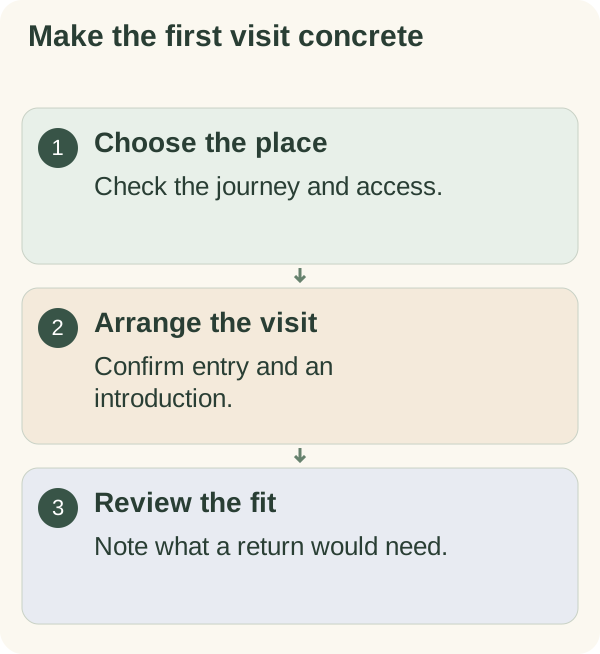
If your list currently says "start exercising," there are several decisions hiding inside it. You still need a place, an available time and a way to get there. Put those decisions on paper so you can see which one is holding things up.
Listen to the excuse you keep using
The sentence you say when you postpone is rarely about laziness. It usually names a missing decision or a worry you have not dealt with yet.
| What you tell yourself | What is often behind it | A first fix |
|---|---|---|
| "I'll start on Monday." | No specific time is booked | Put one visit in your calendar with a start time |
| "I don't know what I'd do there." | Unfamiliar equipment | Book an induction or ask staff for an introduction |
| "Everyone will be watching me." | Feeling self-conscious | Go at a quieter hour with a short plan |
| "I haven't got time." | The plan in your head is too long | Plan a short visit that fits a real gap |
| "I need the right kit first." | Waiting for things to be perfect | Check what the gym requires and use what you have |
| "I haven't picked a gym yet." | The choice feels big | Compare two options against your real week |
Fix the row that sounds most like you first. If choosing is the snag, read choosing a gym you will actually use. If going in alone is the worry, read going to the gym alone. If time is the problem, planning a session for a short window shows how to fit a visit into a gap.
Make the first visit small on purpose
A big plan is easy to postpone. A small one is harder to argue with. For the first visit, the goal is to get through the door and learn how the place works: find the changing rooms, see where things are kept, ask staff one question. If you leave after looking around, that still counts.
Write down the location and one available opportunity. Check opening hours, accessibility, orientation options and any booking requirement directly with the gym. If you have not joined, ask about visit options and membership terms before committing to a contract.
A first-visit card
- Place:
where could you realistically go?
- Opportunity:
when could a visit fit, including travel?
- Question:
what do you want staff to explain?
- Preparation:
what does this particular gym ask you to bring?
- Review:
what would make a return visit easier?
Example: Alex and three postponed starts
A fictional example, written to show the steps in practice. Alex had planned to start three times in two months.
| Attempt | The plan | What happened |
|---|---|---|
| 1 | "Start on Monday, go five times a week" | Skipped Monday after a long day, then dropped the whole plan |
| 2 | "Go after work this week" | No day chosen, so the week filled up |
| 3 | "Go Saturday morning" | Woke up unsure what to do inside, stayed home |
Looking back at the table, Alex saw three different snags: a plan that was too big, no booked time, then not knowing what to do. What Alex changed for attempt four:
- Booked an induction for Thursday at 6 p.m., at the gym by the station on the way home.
- Packed trainers, a water bottle and the membership email into the work bag on Wednesday night.
- Set the goal as "do the induction and leave", with nothing else planned.
- Wrote the script below on a phone note.
Alex went, did the induction, and booked a second short visit before leaving. Only after that did Alex start thinking about a regular timetable.
Make leaving the house the easy part
Often the hard bit is the ten minutes before you go, when you are tired and nothing is ready. Remove decisions from that moment: pack the bag the evening before (see preparing for the gym the night before), know the journey and have your entry details ready.
Check the gym's own instructions for what to bring, such as suitable clothes and required footwear. You do not need an elaborate set of accessories. For what the first time inside is usually like, see your first gym visit: what to bring and what to expect.
An induction or introduction also helps here: it gives you a set time, someone expecting you and an answer to "what would I do there?" If unfamiliar equipment is the concern, write that down as a question for qualified staff. Watching someone nearby does not establish that their technique or exercise choice is right for you.
A word-for-word script for the "I'll go tomorrow" moment
Copy this into a phone note and read it when you feel yourself backing out.
I said I'd go at ____ today.
I only have to get to the door. I can leave after looking around.
Tomorrow I'll have the same week I have today.
My bag is already packed, so going is the easy option.

If I'm really not going:
Is it because I'm ill, injured or in pain?  Yes -> I rest. That is the right call.
                                            No  -> I choose the new time right now.
New time: ____ (one replacement only, in my calendar before I put the phone down)
The last line is the key rule. One replacement, not a pile of make-up plans. If you have a health condition, or you are unwell, injured or in pain, ask a doctor or suitably qualified professional before you start.
If you keep paying but not going
It is easy to join first and then find the card keeps getting charged while the visits do not happen. Concrete steps:
- If you have not been for a month or more, ask whether the gym can book you an induction or introduction again, and go to that this week.
- If the gym is the snag, for example the journey or the crowds, test a different time once before deciding.
- If you still would not go after that, read your contract for the minimum term, notice period and how to freeze or cancel. Put the notice date in your calendar.
- If guilt about the money is what you feel each time, separate the two decisions. Decide about the membership on its terms, and decide about the next visit on your week.
Paying for something you do not use is a reason to make a decision, not a reason to feel bad.
Leave the exercise choices to the right people
This checklist helps with preparation and scheduling. It does not choose exercises, loads or training intensity. The CDC's getting-started guidance recommends beginning gradually and notes that people with chronic conditions may want advice about suitable activity from their health care provider.
Ask an appropriate professional about your own exercise needs, especially when starting after illness or injury. Preparing a visit does not require you to promise a particular workout.
If the visit moves, and after you go
Give the plan a practical alternative: contact the gym to reschedule, choose another available opportunity or pause until you know your week. Avoid turning one postponed visit into several make-up commitments.
After a visit, record a plain observation. Was travel awkward? Did the time fit? Do you still need an introduction? If a repeat makes sense, plan it before the week ends. Once two or three visits feel normal, building a gym routine around a busy schedule helps you turn them into a pattern.
You can try the free habit tracker before using a bot. Choose your own reporting days and leave planned rest available. The tracker does not prescribe how often you should exercise.
Build one small routine to turn your chosen action into a repeatable plan. If you later open Telegram, review the suggestions and the bot's actual confirmations. Following this article does not automatically create a habit or schedule a reminder.
Use the first-visit card in the gym planner to keep the location, arrival question and chosen opportunity together.
Starting smaller than feels necessary is the thread running through the habits and health guides; once the first visit is done, the Fitness page helps you plan the next one without starting over.
Questions people often ask
Should I sign up before I have been inside? Visit first, or use a day pass or trial if offered. Check the minimum term and how cancelling works before you sign.
Is morning or evening better for starting? The better time is the one you can repeat in a normal week.
What if I go once and hate it? Write down what you disliked. Crowds, the journey and not knowing what to do are fixable. If it was the activity itself, walking or home exercise are fair alternatives.
I have a health condition or an old injury. Can I still start? Ask your doctor or a suitably qualified professional what activity suits you, and tell gym staff anything they should know at the induction.