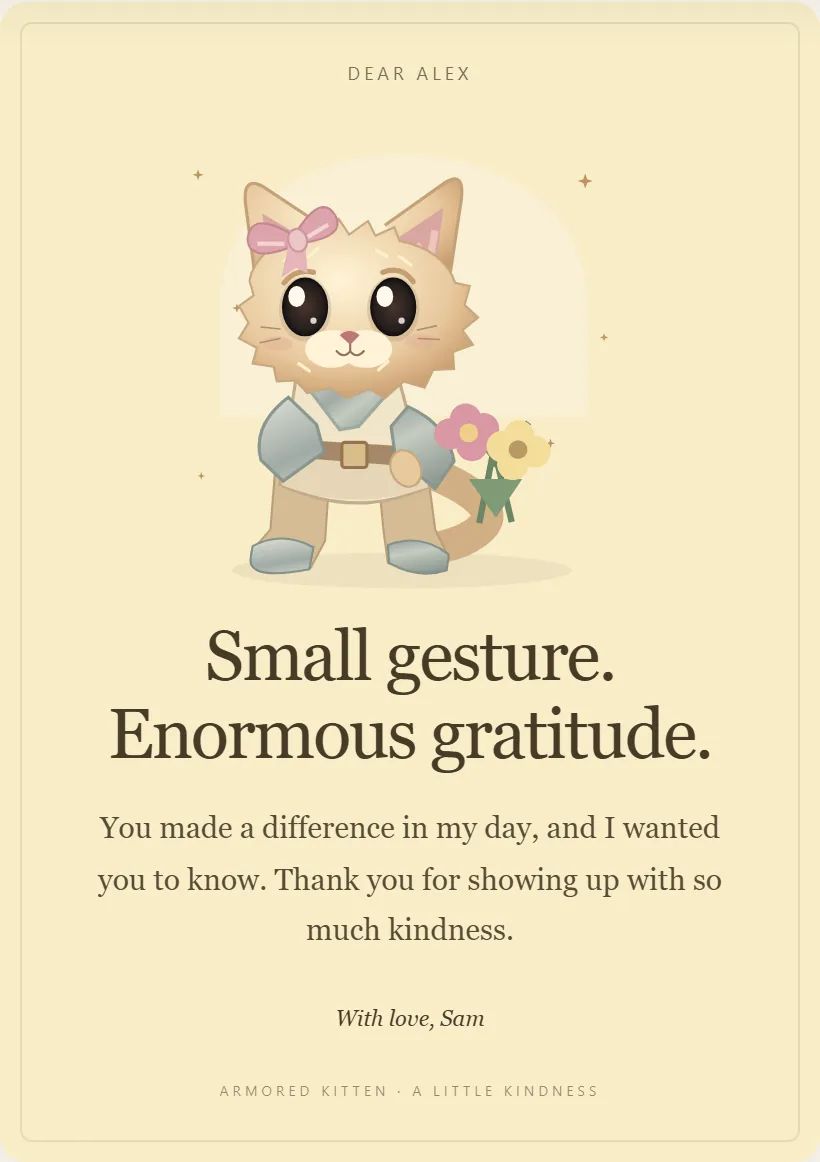
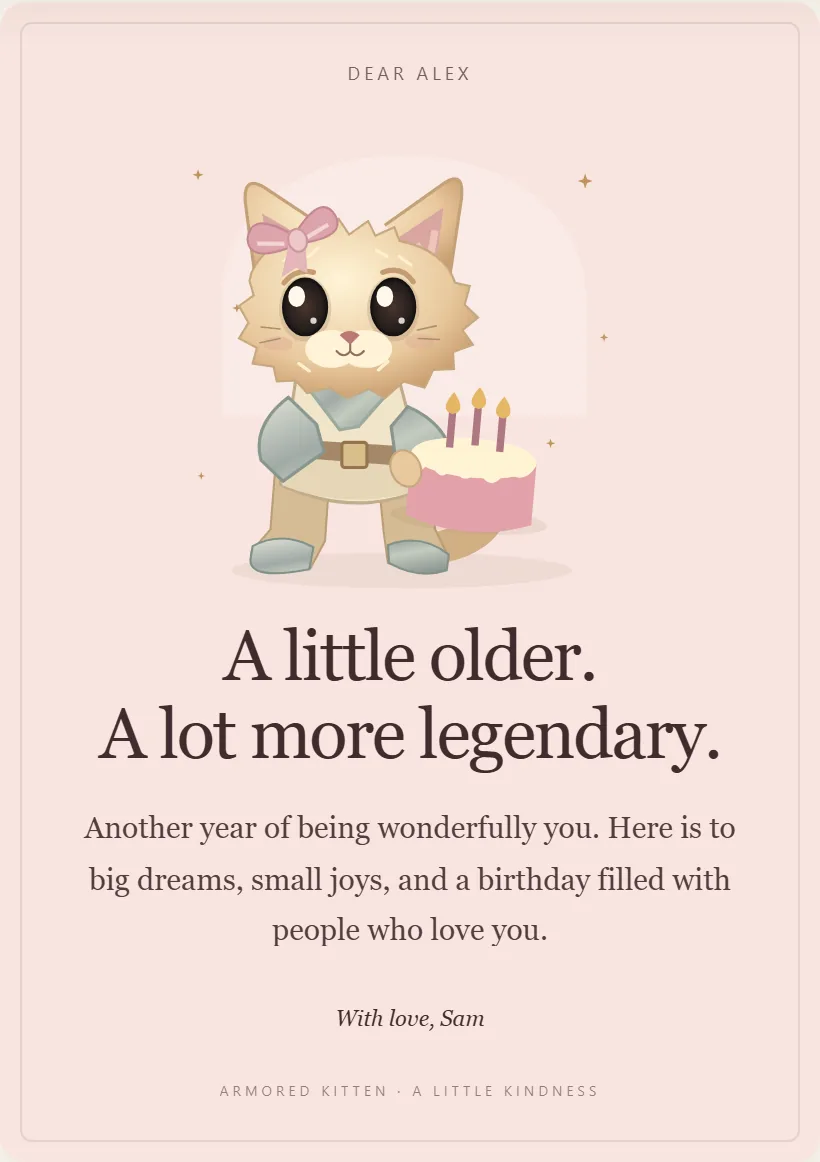
A digital red envelope is the online version of the hongbao: a New Year greeting that carries a small gift, sent through an app or a private link instead of being handed over in person. Lunar New Year 2027 begins on 6 February. You can send one through a payment app, write a personal card, or pair a card with an optional crypto red envelope where that is legal for the person receiving it. The heart of the custom doesn't change: respect, good wishes and care for family.
Below: how the tradition differs across Asia, which etiquette carries over to a screen, greetings to write, and a careful way to add a token gift.
Lunar New Year 2027: the date and the zodiac animal
Lunar New Year 2027 falls on Saturday, 6 February 2027, and it opens the Year of the Goat, also translated as the Sheep or Ram. In the traditional cycle of elements it is a Fire Goat year. The celebration traditionally runs for about 15 days and ends with the Lantern Festival.
The exact day can differ, because each country calculates the lunar calendar for its own time zone:
- China, Taiwan, Hong Kong, Malaysia and Singapore: 6 February 2027.
- Vietnam: Tết Đinh Mùi, the Year of the Goat, also begins on Saturday, 6 February 2027, with New Year's Eve on the night of 5 February.
- South Korea: Seollal falls on Sunday, 7 February 2027, with public holidays from 6 to 8 February and a substitute holiday on 9 February.
If you schedule a greeting, that one-day difference matters.
The red envelope tradition across Asia
In Chinese culture red stands for celebration and protection, and the envelope itself carries the blessing. Each community has its own name for it and its own habits.
China, Taiwan and Hong Kong: hongbao and lai see
In Mandarin the envelope is a hongbao (红包). In Cantonese, including in Hong Kong, it is lai see. According to China Highlights' guide to red envelopes, married adults and elders traditionally give to children and younger relatives, and working adults often give to their parents and grandparents too. Habits vary by family and region, so follow your own family's lead.
Vietnam: lì xì at Tết
In Vietnam, lucky money is called lì xì and is given during Tết, especially on the first morning of the new year, when children and grandchildren visit to wish their parents and grandparents well. Older family members give lì xì to younger ones as a wish for good health, happiness and a good year ahead.
Malaysia and Singapore: ang pao
In Malaysia and Singapore, the Hokkien name ang pao (also spelled ang pow or ang bao) is the everyday word. As in China, the envelopes are traditionally given by married people and elders to children and the unmarried, and they also turn up at weddings and birthdays. Malaysia adds a cross-cultural twist: Muslim families adapted the custom into green envelopes for Hari Raya, which you can read about in our guide to crypto gifting around the world.
Korea: sebaetdon at Seollal
Korea's custom looks different. On Seollal, younger family members perform sebae, a deep, formal bow to their elders, while saying a New Year wish. In return, elders offer words of blessing called deokdam and New Year money called sebaetdon, usually in an envelope. Korean families do not use the Chinese red packet for this. The money often comes in a plain or decorated envelope, and historically in a small silk pouch, so a red design is not expected.
Red envelope etiquette that carries over to digital
Most of these rules of thumb come from Chinese custom, and many people keep them even when the envelope is on a screen.
- New notes. Crisp, new banknotes show care. People often queue at banks before the holiday, and Hong Kong's monetary authority has even encouraged "good-as-new" notes and electronic lai see to cut crowding at banks.
- Even amounts. The Wikipedia overview of red envelopes notes that amounts usually end in an even digit, because odd sums are traditionally linked with funerals.
- Eight is welcome, four is avoided. The word for eight sounds like "prosper", while four (sì) sounds close to the word for death (sǐ).
- Both hands. Give and receive the envelope with both hands as a sign of respect.
- Open it later. It is polite not to open an envelope in front of the person who gave it.
How digital red envelopes took off
The digital hongbao went mainstream when WeChat launched its red envelope feature on 17 January 2014, letting people send small cash gifts into private and group chats. Alipay soon followed with its own version, and the rivalry became known as the "red envelope war".
Elsewhere, the idea spread through local apps. In Malaysia, Touch 'n Go eWallet has offered an eAngpow feature with greetings in English, Malay or Chinese. In the Philippines, GCash has run a Send Ang Pao option for Chinese New Year. Features change from year to year, so check the app you plan to use.
What these apps often leave out is the personal part: the photo, the story, the sender's voice. That's where a card comes in.
Lunar New Year greetings to write in your card
Writing a greeting in the recipient's own language is one of the most respected touches you can add. Here are common phrases with a plain English gloss:
- 新年快乐 (xīnnián kuàilè, Mandarin): "Happy New Year."
- 恭喜发财 (gōngxǐ fācái, Mandarin): "Congratulations and may you prosper." In Malaysia and Singapore it is often written Gong Xi Fa Cai, and Cantonese speakers say Kung Hei Fat Choi, with the same meaning.
- Chúc mừng năm mới (Vietnamese): "Happy New Year." Many people add an khang thịnh vượng, a wish for peace and prosperity.
- 새해 복 많이 받으세요 (saehae bok mani badeuseyo, Korean): literally "receive many blessings in the new year", the standard Seollal greeting.
These are traditional wishes for the person and their family, not about any token or amount. They read best next to something specific, such as a memory from last year's reunion or a thank-you to a grandparent.
Can a crypto red envelope work? Read this first
A crypto red envelope can be a thoughtful extra for someone curious about crypto who lives where it is allowed. It doesn't replace the custom. Check three things first: the law, the person and the meaning.
- The person. An elderly relative who has never used a wallet will probably enjoy a heartfelt card or a traditional envelope far more. For curious beginners, our guide to giving crypto to someone new to crypto explains the gentle way to do it.
- The meaning. A red envelope is a wish, not a forecast. Token values can fall, so never present a token as lucky, as a way to prosper, or as something that will grow.
A traditional cash gift, or a card on its own, is perfectly fine. The custom has never depended on technology.
How to send a digital red envelope with a personal greeting
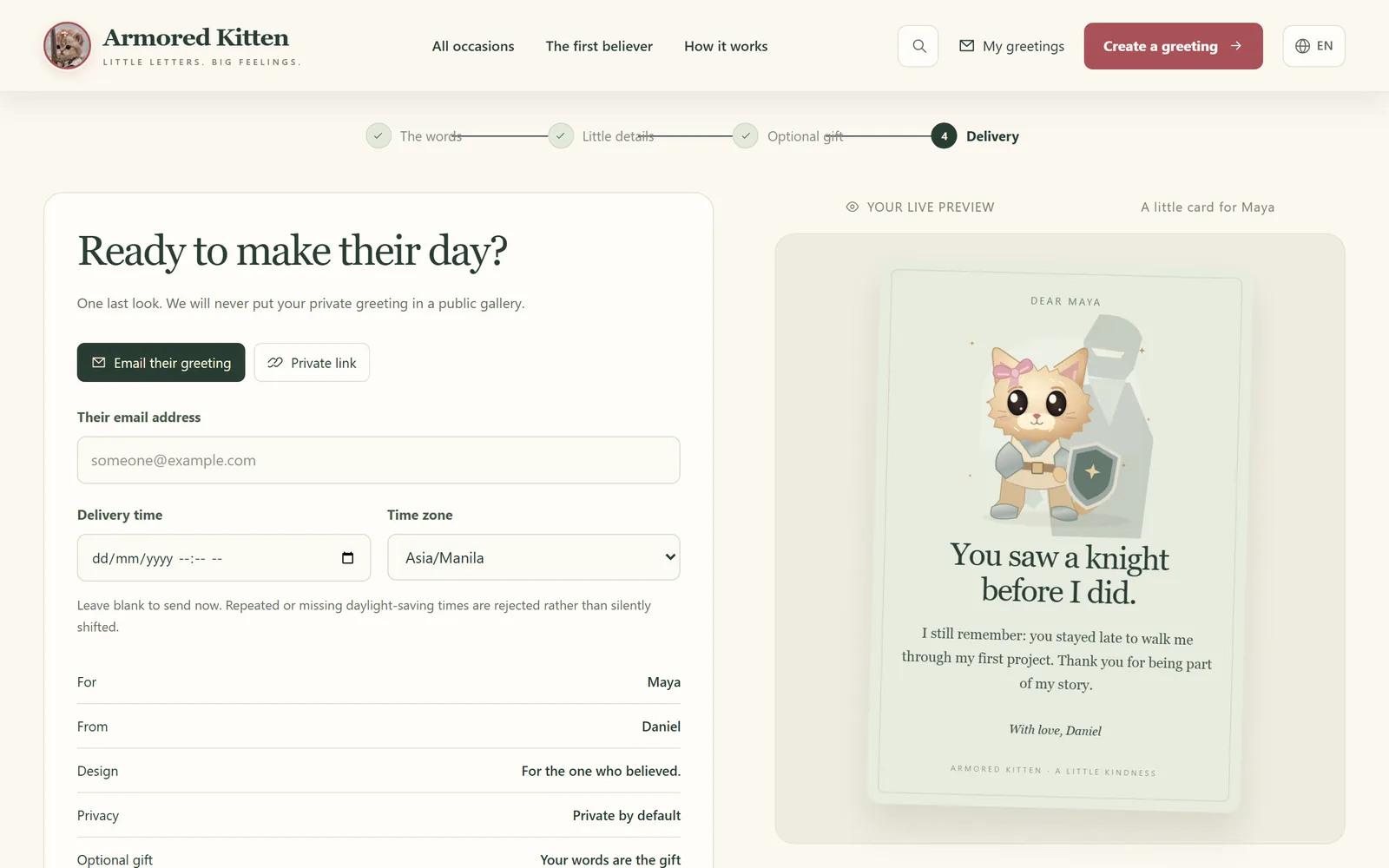
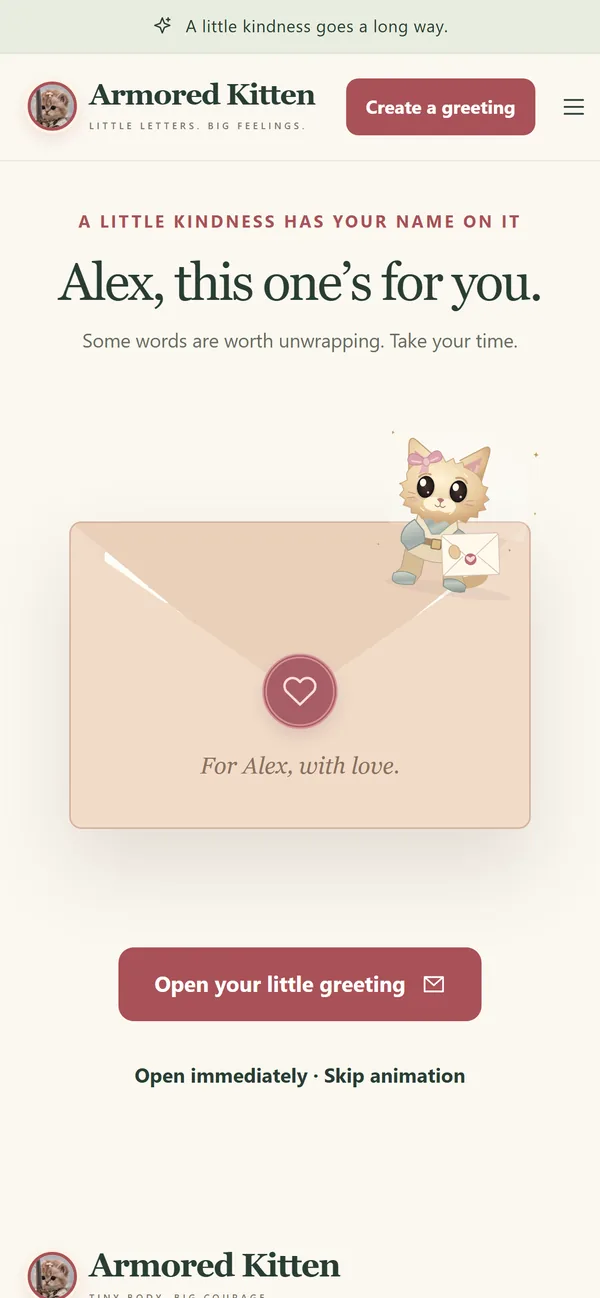
Here is a simple way to send a personal New Year greeting with Armored Kitten. The token gift is a strictly optional extra.
Sending your New Year greeting
- Open the New Year occasion.
Start with the New Year card designs. Armored Kitten has 16 occasions and 48 designs, and every word is editable.
- Write in their language.
The interface is being translated into 19 languages, and you can write your message in any language, so a grandmother in Hanoi or Seoul can read it in her own words.
- Make it yours.
Add a family photo, record a voice note of up to 20 seconds so they hear your greeting, and tuck small wishes into the tap-to-open pocket notes.
- Pick the right day.
Choose email or a private link. You can schedule a plain card, so set it for the morning of New Year's Day in their time zone, and remember that Seollal 2027 is a day later in Korea.
- Decide on a gift, or none.
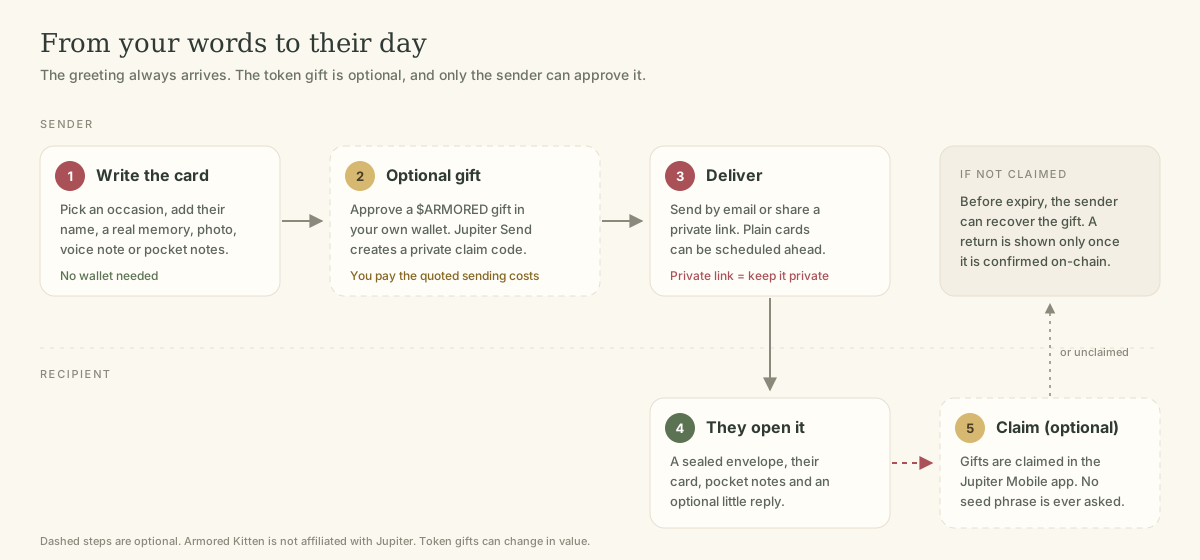
No wallet is needed to send a card. Where the feature is enabled, you can attach an optional $ARMORED token gift on Solana using Jupiter Send. Armored Kitten is not affiliated with Jupiter.
- Approve it yourself.
You approve the gift in your own wallet and pay the displayed sending costs. The recipient claims it in the Jupiter Mobile app. If you schedule a card with a token gift, you still need to approve the gift near delivery.
- Keep the link private.
A gift link is a bearer secret: whoever holds it can claim the tokens. Send it one to one, never in a family group chat. Our guide to Jupiter Send, explained covers claim windows and what happens if a gift isn't claimed.
- Follow up kindly.
A short call on New Year's Day, with an offer to help with the claim, means more than the gift itself.
Frequently asked questions
What is a digital red envelope?
It is a New Year money gift sent electronically, often with a greeting and a red envelope design, through a messaging app, an e-wallet or a private link. It follows the same spirit as a paper hongbao, lì xì or ang pao.
When is Chinese New Year 2027?
Chinese New Year 2027 is on Saturday, 6 February 2027, and it begins the Year of the Goat. Vietnam's Tết falls on the same day, while Korea's Seollal falls on 7 February.
How much should I put in a red envelope?
There is no single rule. In Chinese custom, even amounts are preferred, amounts with eight are welcome and the number four is avoided. Give what feels right for your relationship and budget, and follow your family's habits.
Do Koreans use red envelopes for Seollal?
Not usually. Sebaetdon is given after the sebae bow, often in a plain or decorated envelope rather than a red packet.
Can I send a crypto red envelope to someone in mainland China?
You should not. Crypto-related business activities are prohibited in mainland China, so send a card, a traditional gift or a legal local transfer instead.
A warm closing
The best red envelope, paper or digital, says "I thought of you" before it says anything about money. Write a few honest lines, add a familiar voice or photo, and choose a gift that suits the person and the law where they live. When you're ready, make a New Year card and send your wishes for the Year of the Goat.
Please note: this guide is general information, not financial, legal or tax advice. Crypto tokens can lose value, can be hard to sell, and transfers usually cannot be reversed. Crypto rules differ by country, and crypto activity is restricted in some places, such as mainland China. Follow the laws where you and the recipient live, only give what you are comfortable giving, and never share a seed phrase with anyone. Armored Kitten will never ask for yours.