A crypto gift card is a code or card that carries value linked to cryptocurrency. Usually it's one of two things: crypto the recipient redeems into an account, or an ordinary store gift card that you paid for with crypto. Both can make good gifts for the right person. Newer options, such as claim-link gifts or a personal greeting with an optional token gift, may suit others better.
Below, each type gets a fair hearing and a comparison by fees, privacy and ease for the recipient, so you can choose without the hype.
What is a crypto gift card?
The phrase covers two quite different things.
- Exchange crypto gift cards. The card holds crypto value, such as an amount of a particular token. The recipient redeems a code into an account on that exchange. The Binance Gift Card is a well-known example.
- Retail gift cards bought with crypto. You pay in crypto and receive an ordinary gift card for a shop, app or service. The recipient never touches crypto. Bitrefill is a well-known example; it describes itself as a store for buying gift cards, eSIMs and phone refills with crypto.
People often search for a third, newer category under the same name:
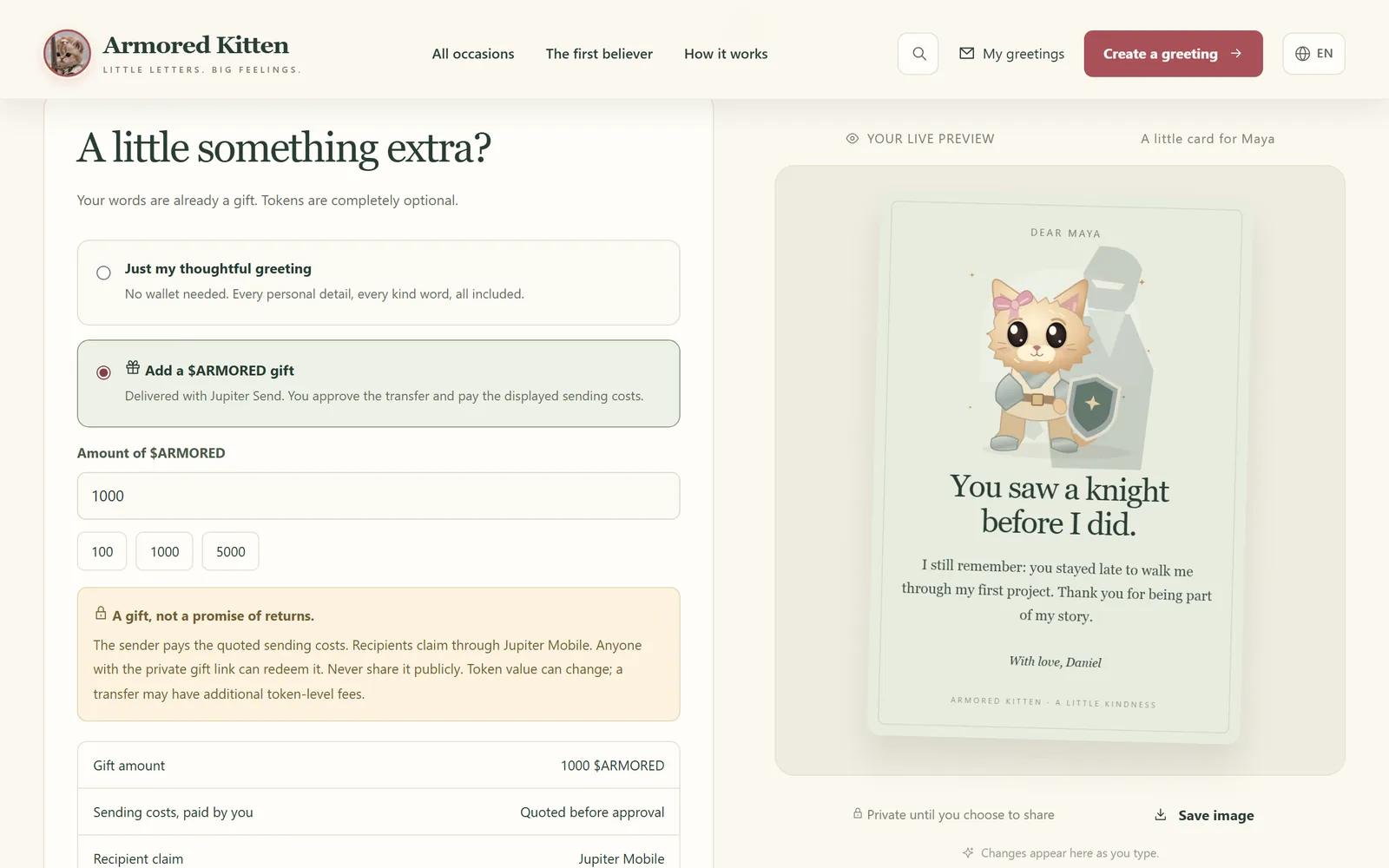
- Claim-link gifts. You lock tokens behind a private link or code, and the recipient claims them into their own wallet. On Solana, Jupiter Send works this way.
Exchange crypto gift cards: how they work
You buy or create the card inside your exchange account and share a redemption code. The recipient logs into the same exchange and redeems it.
Binance's help pages, for example, say that recipients enter a 16-character redemption code, that redemption is free of charge, and that only verified Binance users can redeem.
Good for:
- Recipients who already use that exchange.
- People who want the option to convert the gift into local currency within the exchange, where that is supported.
Think about:
- The recipient needs an account on that specific platform, often with identity verification.
- The crypto sits in an exchange account, not in a wallet the recipient controls.
- The code is like cash. Binance notes that anyone with the code can redeem it.
Retail gift cards bought with crypto
Here, crypto is how you pay, not what they receive. You choose a gift card for a supermarket, streaming service or travel site, pay with a supported cryptocurrency, and send the code.
Good for:
- Friends who have zero interest in crypto.
- Practical gifts: groceries, games, travel credit.
Think about:
- The recipient doesn't receive any crypto, so it won't introduce them to it.
- Brand availability depends on the country.
- Check the seller's current terms for fees, refunds and checkout requirements before you buy.
Claim-link gifts: crypto straight to their own wallet
A claim-link gift skips the exchange. You fund it from your own wallet, share a private link, and the recipient claims it into a self-custody wallet.
With Jupiter Send, according to Jupiter's developer documentation, you can send SOL, USDC or other Solana tokens, the recipient claims through the Jupiter Mobile app, and there are no fees to send or claim beyond network transaction fees. Unclaimed invites expire, and the tokens are designed to go back to the sender, who can also claw them back before expiry. Armored Kitten is not affiliated with Jupiter.
Good for:
- Curious friends who are open to having their own wallet.
- Senders who prefer not to route gifts through an exchange.
Think about:
- The recipient must install an app to claim.
- There is a claim deadline.
Read Jupiter Send, explained for the full picture.
A personal greeting with an optional token gift
Sometimes the point of a gift is the feeling behind it. A digital greeting with a small, optional token gift attached keeps the message first.
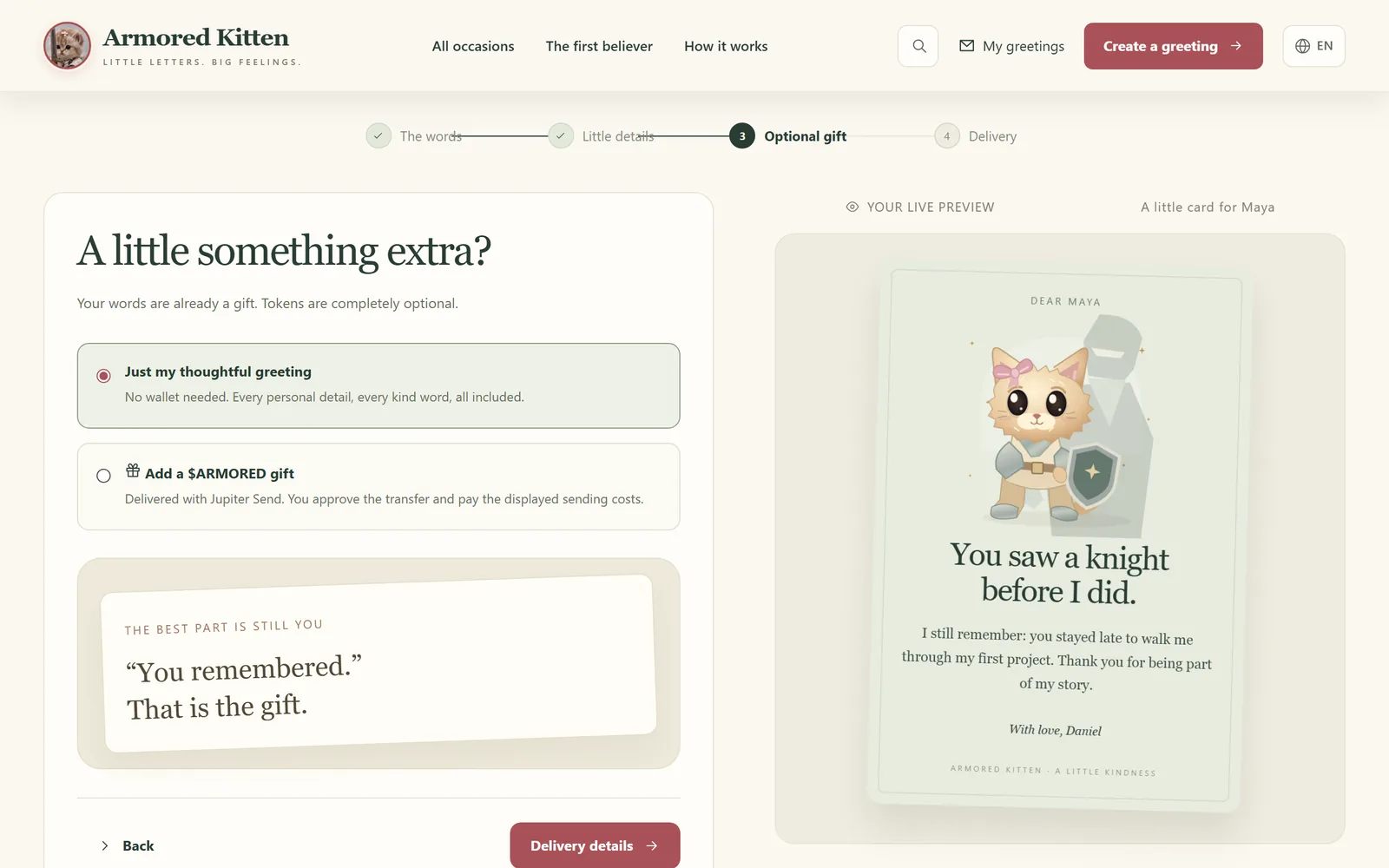
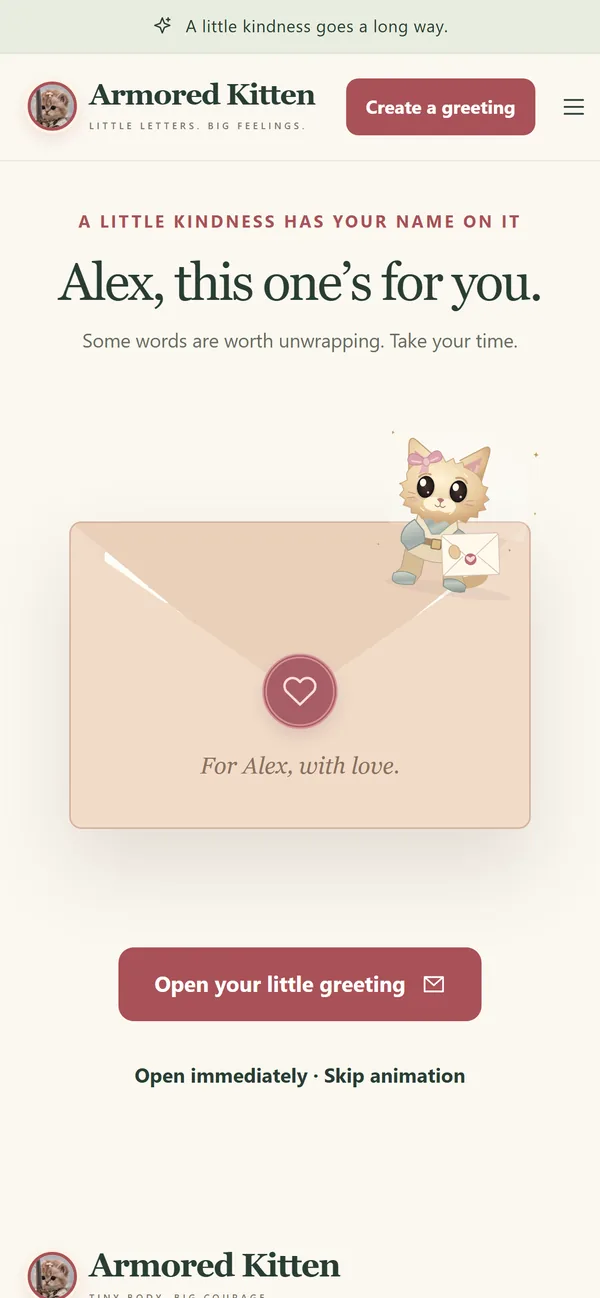
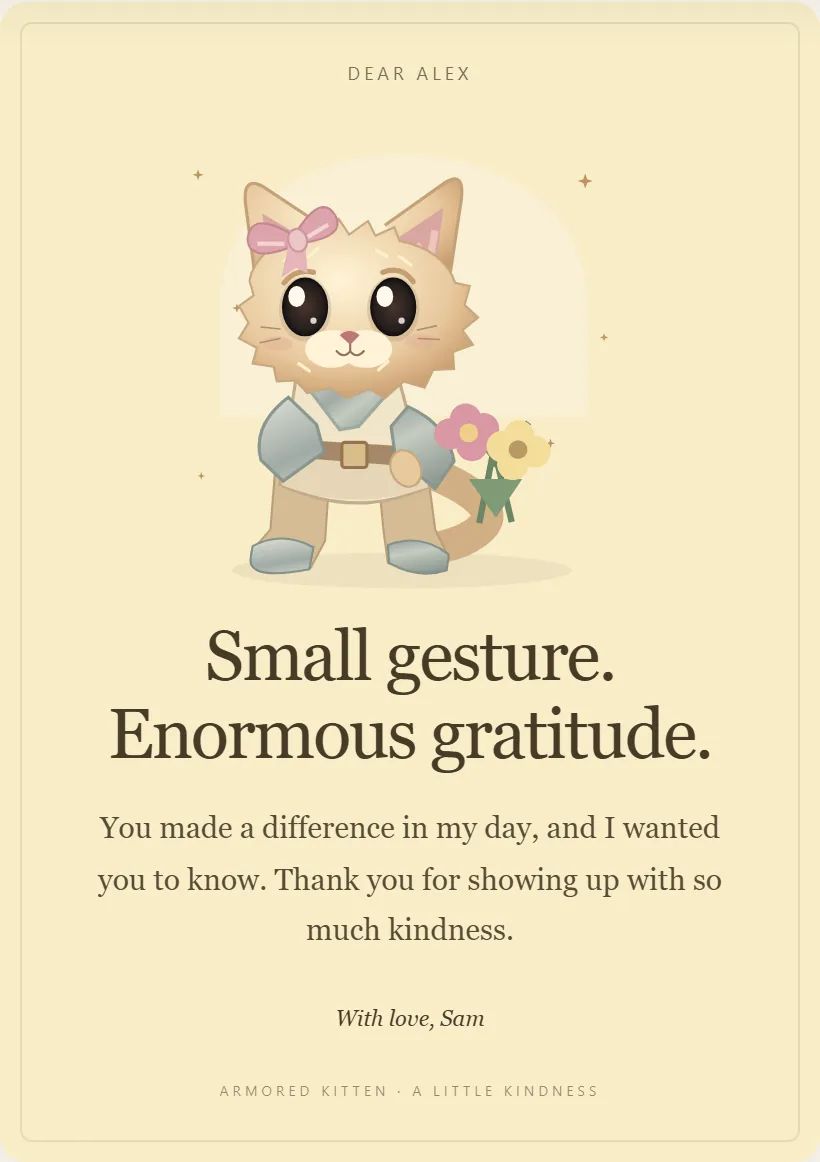
Armored Kitten works that way. You choose from 16 occasions and 48 starting designs, write your own words, and can add a photo, a voice note of up to 20 seconds, an inside joke and three tap-to-open pocket notes. Delivery is by email or private link, and no wallet is needed to make or read a card. Where enabled, you can attach an optional $ARMORED token gift created with Jupiter Send. You approve it in your own wallet and pay the displayed sending costs, and the recipient claims in Jupiter Mobile.
Good for:
- Thank-yous, milestones and "I'm proud of you" moments where the words carry the gift.
- Recipients who might enjoy the card even if they never claim the token.
Think about:
- The token gift is optional and only available where enabled.
- It is one specific token, not a choice of any coin, and its value can go down.
Comparing your options: fees, privacy and ease
Fees
- Exchange gift cards: depend on the platform. Binance says redemption itself is free; check the cost to create or buy the card.
- Retail cards bought with crypto: you pay the card price in crypto, plus any network fee from your wallet. Check the seller's terms.
- Claim-link gifts: Jupiter says there are no send or claim fees, only network transaction fees, which the sender pays.
- Greeting with optional token gift: the sender approves and pays the displayed sending costs in their own wallet.
Privacy
- Exchange gift cards: redemption usually requires a verified account, so the exchange knows who redeemed.
- Retail cards: the shop sees a normal gift card; the seller's checkout requirements vary.
- Claim-link and token gifts: no exchange account is needed, but blockchain transactions are public by design, as the FTC points out in its crypto guidance.
Ease for the recipient
- Exchange gift cards: easy if they already have that account, harder if not.
- Retail cards: the easiest of all; it works like any gift card.
- Claim-link gifts: one app install and a tap, within the claim window.
- Greeting with optional token gift: the card opens in a browser with nothing to install; claiming the token is optional.
How to choose the right crypto gift card or alternative
Choosing the right gift
- Start with the person, not the coin.
Do they use an exchange, a wallet, or neither?
- Decide whether they should receive crypto at all.
If not, a retail card or a heartfelt card on its own is kinder.
- Pick a modest amount.
Treat it as a gesture, never as an investment.
- Check the details.
For tokens, confirm the mint address; our guide on how to gift Solana tokens shows how.
- Plan how you'll share the code.
Send it privately, one to one.
- Write the message.
Even two honest sentences change how the gift feels.
If it's a thank-you, our thank-you card designs are a gentle place to start. For the bigger picture, see how to send crypto as a gift.
Frequently asked questions
Is a crypto gift card the same as a Bitcoin gift card?
Not always. A "Bitcoin gift card" usually means an exchange card holding Bitcoin, while "crypto gift card" can also mean a regular store card bought with crypto. Read what the card actually contains.
Can I give a crypto gift card to someone without an exchange account?
For exchange cards, they'll usually need to create and often verify an account to redeem. A retail card or a claim-link gift avoids that.
Are crypto gift card codes safe to post publicly?
No. Codes and claim links work like cash. Binance warns that anyone with its gift card code can redeem it, and Jupiter treats invite codes like passwords.
What happens if the recipient never redeems?
It depends on the product. Exchange and retail cards follow their own terms. With Jupiter Send, unclaimed invites expire and are designed to return to the sender, but always confirm the tokens are actually back in your wallet.
Which option is best for a crypto beginner?
Often a personal card first, with a small claim-link gift if they're curious. Our guide on giving crypto to someone new to crypto goes deeper.
The kindest choice is the one they can use
A crypto gift card is convenient for you, which doesn't always make it convenient for them. Choose the format that fits their life, keep codes private, and let your words do most of the work.
Plain-language disclaimer: this is general information, not financial advice. Crypto can lose value or be hard to sell, and transfers are usually final. Check each provider's current terms, and never share your seed phrase. Armored Kitten will never ask for it.
Armored Kitten is an independent greeting studio and is not affiliated with or endorsed by Jupiter. Token gifts are optional, can change in value, and are not investment advice. Check the rules that apply where you live.