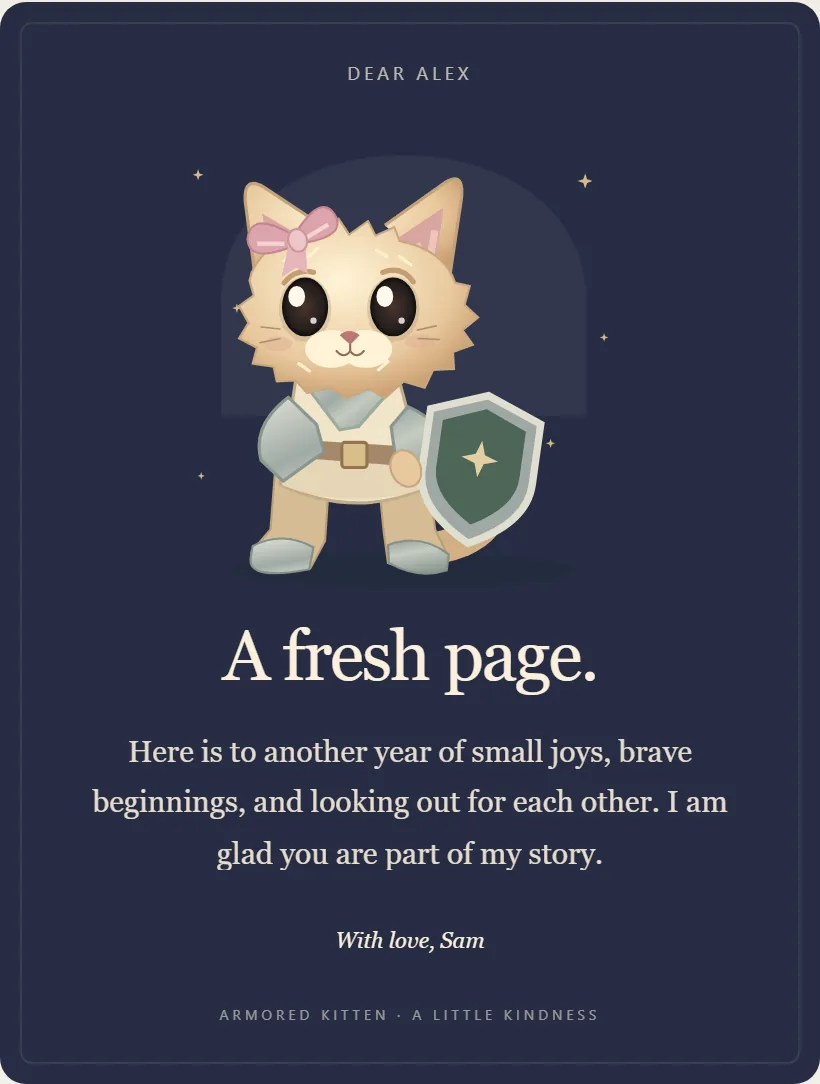
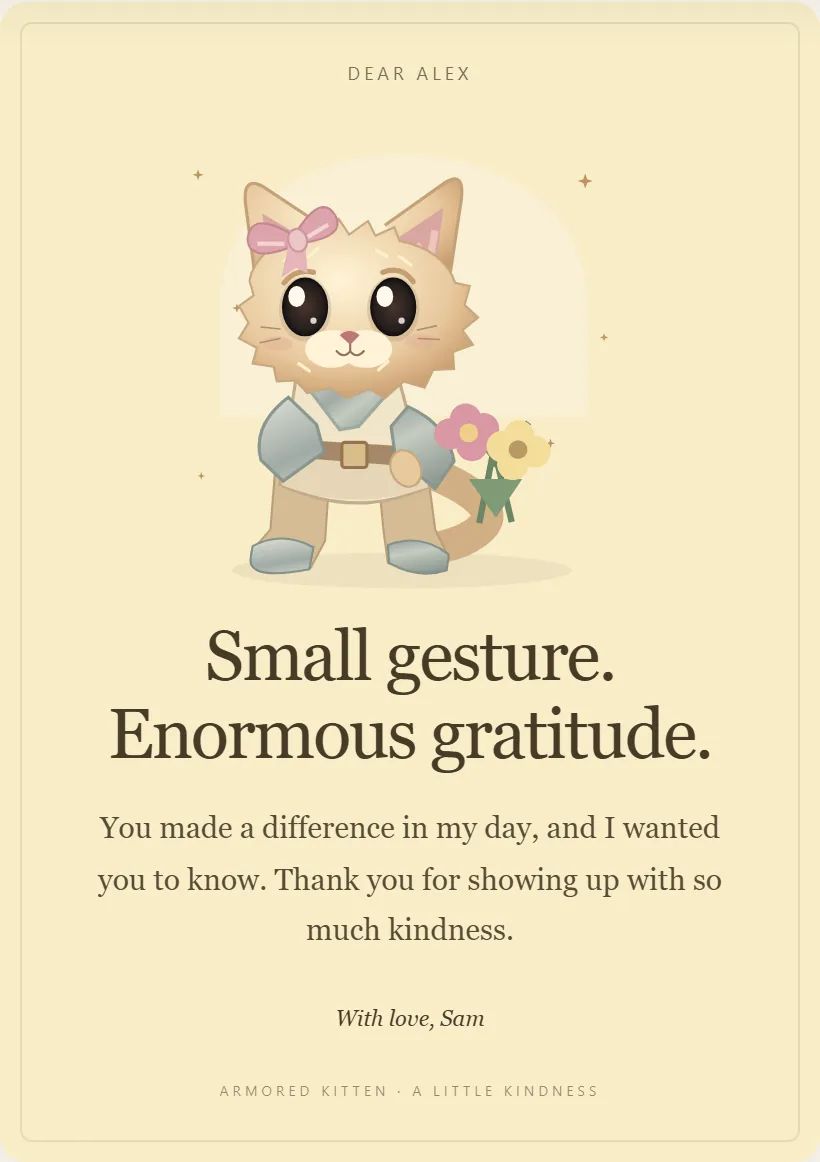
Crypto gifting around the world works best when it follows local customs instead of replacing them. Almost every culture already has a moment for giving money or small gifts, from the red envelope at Lunar New Year to the green packet at Hari Raya and the pocket money after a Bayram hand kiss. A token gift can sit inside those traditions as an optional extra, provided it is legal where the recipient lives and comes with a message that sounds like you.
This guide covers where crypto is most used today, the real gift traditions in a dozen countries and when they happen, a short note on local crypto rules for each, and a checklist for sending a respectful digital gift across borders.
Crypto gifting around the world: what the adoption data shows
Chainalysis published its 2026 Global Crypto Adoption Index on 23 September 2026. Using a new methodology, it ranks 117 countries on four measures: inflows to crypto services, domestic peer-to-peer activity, cross-border flows and on-chain balances.
The top ten countries in the 2026 edition are:
- Brazil
- United States
- Nigeria
- Japan
- South Korea
- India
- Ukraine
- Thailand
- South Africa
- Canada
Indonesia (14th), Vietnam (18th), the Philippines (19th) and Turkey (20th) also made the top 20. Chainalysis notes that Nigeria ranked first for both domestic peer-to-peer activity and cross-border flows.
A high ranking tells you crypto is widely used in a country. It doesn't tell you whether a token is the right gift for a particular person, or what the local rules allow. Those questions come first.
Gift traditions by country, and when they happen
India: Diwali and Raksha Bandhan
Diwali, the festival of lights, usually falls in October or November. In 2026 the main day of Lakshmi Puja is Sunday, 8 November. Families light lamps, share sweets and exchange gifts with relatives, friends and colleagues. Raksha Bandhan falls on the full moon of the month of Shravan, typically in August. A sister ties a rakhi, a protective thread, around her brother's wrist, and he gives her a gift in return.
If you're looking for Diwali gift ideas from abroad, a card with a family photo and a recorded greeting can travel where a box of sweets can't.
Crypto rules: India taxes income from virtual digital assets at a flat 30% and applies a 1% tax deducted at source on many transfers, rules kept in place for 2026–27.
Indonesia and Malaysia: Eid money gifts
Eid al-Fitr marks the end of Ramadan. It is called Lebaran or Idul Fitri in Indonesia and Hari Raya Aidilfitri in Malaysia. In 2027 it is expected around 9 or 10 March, depending on the moon sighting.
In Indonesia, many employees receive THR (Tunjangan Hari Raya), a religious holiday allowance from their employer. Separately, people who earn an income share angpao Lebaran, also called salam tempel: envelopes of money for children and relatives, often filled with crisp new notes.
In Malaysia the Eid money gift is duit raya, given to children and younger relatives in green packets, a colour associated with Islam. The custom is an adaptation of the Chinese red envelope.
Crypto rules: In Indonesia, supervision of crypto assets moved to the Financial Services Authority, OJK, on 10 January 2025. In Malaysia, the central bank and securities regulator have stated that digital assets are not legal tender.
Vietnam: lì xì at Tết
At Tết, the Lunar New Year, elders give lì xì, lucky money in red envelopes, to children, and grown children visit parents and grandparents on the first morning to wish them well. Tết 2027 begins on Saturday, 6 February. Our guide to the digital red envelope covers the etiquette and greetings in detail.
Crypto rules: Vietnam's Law on Digital Technology Industry, in force since 1 January 2026, recognises crypto assets, but they may not be used as a means of payment.
Philippines: pamasko and aguinaldo
The Philippine Christmas season is famously long. One of its best-loved customs is pamasko or aguinaldo, a Christmas gift, often money, that godparents (ninong and ninang) give their godchildren (inaanak). Children traditionally visit godparents and older relatives during the holidays to receive it.
Crypto rules: Under the Securities and Exchange Commission's 2025 rules, crypto platforms serving Filipinos must register, and the central bank separately supervises virtual asset service providers.

Nigeria: celebrating out loud
At weddings, birthdays and other parties, Nigerian guests have long celebrated by spraying money on the celebrants as they dance. Spraying naira notes is, however, an offence under Section 21 of the CBN Act, so many people look for other ways to show the same generosity.
Crypto rules: The Investments and Securities Act 2025 recognises digital assets as securities, and crypto platforms must register with the Securities and Exchange Commission.
Brazil: amigo secreto and the 13th salary
In December, offices, friends and families play amigo secreto, Brazil's secret-friend gift exchange, revealing who drew whom at Christmas. Many workers also receive a "13th salary" near the end of the year, which often helps pay for Christmas presents.
Crypto rules: Brazil's Central Bank issued rules for virtual asset service providers in November 2025 under Law 14,478/2022, with requirements phasing in during 2026.
Turkey: bayram harçlığı
During Ramazan Bayramı, also called Şeker Bayramı (Sugar Feast), and Kurban Bayramı, children visit elders, kiss their hands and touch them to their foreheads. In return they receive sweets and bayram harçlığı, holiday pocket money.
Crypto rules: Turkey's central bank has banned the use of crypto for payments since 30 April 2021, and since July 2024 crypto service providers have been brought under the Capital Markets Board.
Thailand: Songkran
Songkran, the Thai New Year, runs from 13 to 15 April. Beyond the famous water fights, it is a time to return home and honour elders. In the rod nam dam hua ritual, younger family members pour scented water over the hands of elders and ask for their blessing. The gift here is respect and time together more than money.
Crypto rules: Thailand's Securities and Exchange Commission banned digital assets as a means of payment from 1 April 2022, while trading through licensed operators remains permitted.
Japan: otoshidama
On New Year's Day, adult relatives give children otoshidama, money handed out in small decorated envelopes called pochibukuro. Japan celebrates the new year on 1 January, not on the lunar calendar.
Crypto rules: Crypto exchanges serving people in Japan must register with the Financial Services Agency, which has warned unregistered overseas exchanges.
South Korea: sebaetdon
At Seollal, younger family members perform sebae, a deep bow to their elders, and receive words of blessing and sebaetdon, New Year money in an envelope. Seollal 2027 falls on Sunday, 7 February, a day after Lunar New Year in China.
Crypto rules: South Korea's Virtual Asset User Protection Act came into force on 19 July 2024, focusing on protecting users of crypto platforms.
Ukraine: St Nicholas Day and Christmas
Since 2023, Ukraine officially celebrates Christmas on 25 December, and St Nicholas Day moved to 6 December. On St Nicholas morning, children traditionally find small gifts under their pillows. For friends and family living apart, a message timed for that morning can mean a great deal.
Crypto rules: Ukraine's legal framework is still taking shape. Parliament approved a virtual assets bill in first reading in September 2025, so check the current status before sending anything.
A checklist for respectful cross-border digital gifting
Before you send a gift abroad
- Confirm the date in their calendar.
Lunar and Islamic holidays move every year, Seollal can fall a day after Chinese New Year, and Eid depends on the moon sighting.
- Schedule for their morning.
Time zones can turn a New Year greeting into a late one. You can schedule a plain card; a scheduled token gift still needs your approval near delivery.
- Write in their language.
Armored Kitten's interface is being translated into 19 languages, and you can write the message itself in any language. If you're unsure of a greeting, ask a native speaker to check it.
- Match the custom.
Red suits Lunar New Year and green suits Hari Raya. A Bayram or Seollal greeting is really about respect for elders.
- Respect who gives to whom.
In many traditions, elders give to the young. A message of thanks to a grandparent may fit better than money.
- Check local crypto rules first.
Rules differ by country, and crypto activity is restricted in some places, such as mainland China. Follow local laws, and never suggest workarounds.
- Keep gift links private.
A token gift link is a bearer secret: whoever holds it can claim it. Send it one to one, never to a group chat.
- Lead with the message.
Keep any token gift modest, and never describe it as lucky, as an investment or as something that will grow.
- Follow up.
A quick call to ask whether the card arrived is part of the gift.
How Armored Kitten fits into these traditions
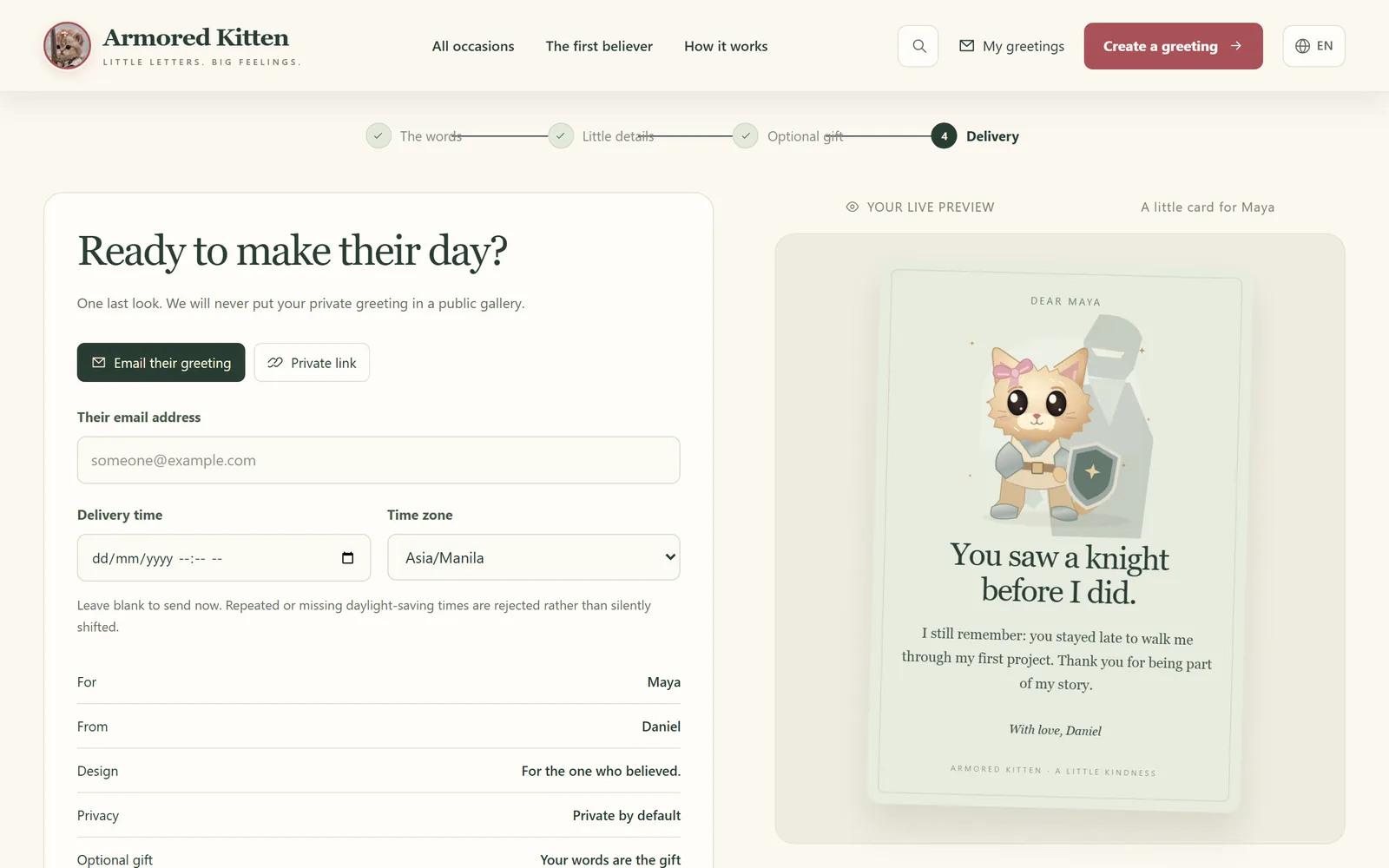
Armored Kitten is a personalised greeting-card studio with 16 occasions and 48 designs. You can edit every word, add a photo, record a voice note of up to 20 seconds and hide small messages in pocket notes. Cards go by email or private link, and no wallet is needed to send or read one.
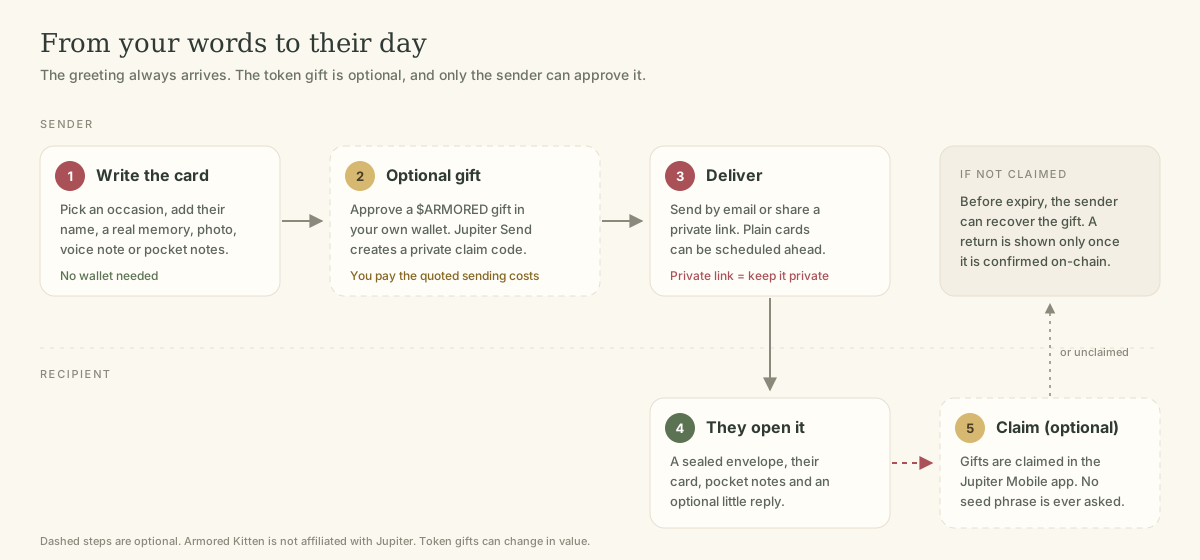
Where the feature is enabled, you can attach an optional $ARMORED token gift on Solana using Jupiter Send. You approve it in your own wallet and pay the displayed sending costs, and the recipient claims it in the Jupiter Mobile app. Armored Kitten is not affiliated with Jupiter. Our guide to Jupiter Send, explained covers how claiming works, and is gifting crypto safe? walks through the risks. A traditional cash gift, or a card alone, is always perfectly fine.
Frequently asked questions
Which countries have the highest crypto adoption in 2026?
In Chainalysis's 2026 Global Crypto Adoption Index, the top five were Brazil, the United States, Nigeria, Japan and South Korea, followed by India, Ukraine, Thailand, South Africa and Canada.
Is it legal to send crypto as a gift to someone abroad?
It depends on both countries. Crypto activity is restricted in some places, such as mainland China, and many countries limit using crypto as payment. Check local rules, and ask a qualified local adviser about tax.
What is a thoughtful Eid money gift if I live far away?
A heartfelt Eid card with a family photo or voice note, sent for the morning of Eid in their time zone, carries the spirit of duit raya or angpao Lebaran. If you add money, use a legal local method.
What are good Diwali gift ideas for someone abroad?
A personal card with shared memories, a recorded greeting in their language, or a gift delivered locally all work well. A token gift is only an option where it is legal and welcome.
Do I need a crypto wallet to send a card abroad?
No. You can make and send a card without any wallet. A wallet is only needed if you choose to attach the optional token gift, where it is enabled.
A closing thought
Every tradition in this guide is about relationships first: elders and children, godparents and godchildren, brothers and sisters, friends far apart. Start with the words, respect the custom and the law, and let any gift be the small extra. When you're ready, write a card for someone far away.
Please note: this guide is general information, not financial, legal or tax advice. Crypto tokens can lose value, can be hard to sell, and transfers usually cannot be reversed. Crypto rules differ by country and change often, and crypto activity is restricted in some places, such as mainland China. Follow the laws where you and the recipient live, only give what you are comfortable giving, and never share a seed phrase with anyone. Armored Kitten will never ask for yours.
Armored Kitten is an independent greeting studio and is not affiliated with or endorsed by Jupiter. Token gifts are optional, can change in value, and are not investment advice. Check the rules that apply where you live.