Plan from your real week
- Step 1Count cooking slots
- Step 2Pick familiar meals
- Step 3Check the cupboard and add a backup
Plan meals once a week in a short sitting, and plan fewer meals than there are evenings. Look at the calendar first, count the meals you will actually cook at home, choose them from a short list of dishes you already know, and write the shopping list straight from those choices. Keep one easy backup for the evening that goes wrong. Everything else is refinement you can add once this much holds.
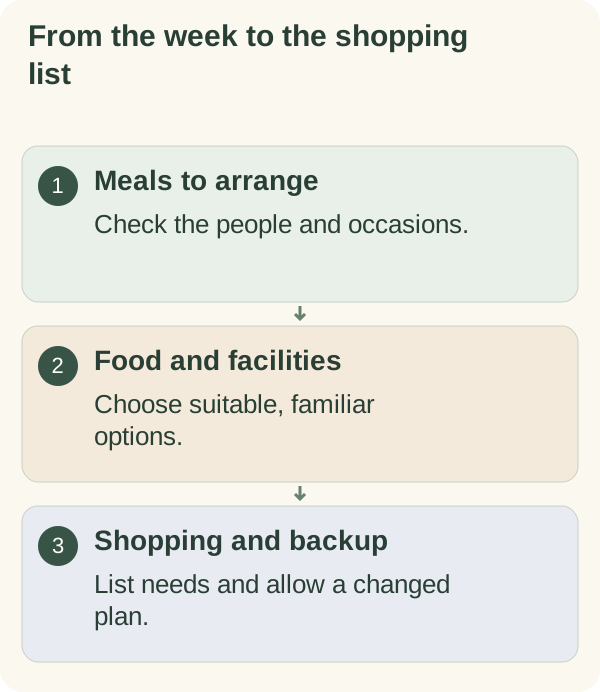
Run the planning session in the same order each week
The order matters more than the day you choose. Beginners who start with recipes tend to plan seven ambitious dinners and abandon the list by Wednesday. Starting with the calendar keeps the plan the size of the week you really have.
Run the weekly planning session
- Open the calendar.
Mark evenings out, late finishes, guests and days someone else is cooking.
- Count the meals.
Write how many meals you will make at home, and which of them fall on a short evening.
- Check the kitchen.
Look in the fridge, freezer and cupboards for anything that needs using soon.
- Pick from your short list.
Match a familiar meal to each slot, starting with whatever needs using first.
- Write the list.
Add only what those meals need and you do not already have.
- Name the backup.
Choose one meal you could still make on the worst evening of the week.
Once you have a short list of meals, the session usually fits into ten or fifteen minutes. The first one takes longer because you are building that list as you go.
Count meals before you choose them
Planning a dinner for every day sounds tidy, but it sets you up to feel behind when two plans are skipped. Counting first avoids that. A count for different kinds of week might look like this:
| What the week holds | Meals to plan from scratch | Why |
|---|---|---|
| Five ordinary evenings at home | Four | The fifth is leftovers or the backup |
| Two late finishes | Three, with the quick ones on the late days | The meal with the most steps goes on a free evening |
| An evening out and a weekend away | Two or three | A half-empty fridge before a trip is a good result |
| Guests one evening | Three, plus the guest meal | Plan the guest meal first, since it shapes the shopping |
| A week you already know will be chaotic | One or two, plus the backup | Plan by kind of evening instead of by day |
These numbers are examples, not targets. The count comes from your week, not from the number of days in it. For the chaotic weeks, the guide to home-cooked meals around an unpredictable week goes further.
Keep a short list of meals you already make
Write down six to ten meals you can cook without looking anything up. This is your rotation, and most weeks every planned meal comes from it. When you want to try something new, add one new recipe a week at most and give it an evening with time to spare.
Repeating meals does not make a plan boring. A dish you have made many times needs less shopping thought, less time and fewer decisions on a tired evening. If the same three meals keep coming back, that tells you which ones fit your life.
Next to each meal, note what it needs that you do not usually keep in. That note turns a meal choice into a shopping line in under a minute. The free meal planner works in a similar way: you type a meal idea with its ingredients after a colon, choose the days and meals you want to plan, and it builds a week and a grocery list you can copy or print.
Give preparation its own place
Some meals need a step earlier in the day or the night before, such as defrosting, soaking or a long cooking time. Write that step on the plan next to the day it must happen, not hidden inside the meal name. "Thursday: chilli" does not tell you that something has to come out of the freezer on Wednesday evening.
If you plan to eat leftovers as a second meal, decide that when you plan, and check the storage and reheating guidance for that food. The FoodSafety.gov handling guidance covers safe handling, storage and reheating. A slot on the plan does not make food keep longer than its own guidance allows.
This guide is about when and what to cook, not what to eat for your health. For allergies, a medical diet, pregnancy or worries about eating, ask a doctor or registered dietitian what your plan needs to include.
Example: Alex's first three weeks
Here is a made-up example to show how it can work. Alex shares a flat, cooks for one most evenings and had never planned meals before. The first attempt was seven new recipes found online and a long shopping list. By Thursday two dishes had not been made and some vegetables had to go in the bin.
In the second week Alex started from the calendar. Two evenings were already taken by a work dinner and a friend's birthday. That left five, so Alex planned three meals from scratch, cooked a double batch of one to eat again two days later, and kept pasta with a jar of sauce as the backup. The shopping list was about half the length.
In the third week Alex looked back first. One problem kept appearing: the curry night failed because the chicken was still frozen. The change that stuck was a line on the plan for the evening before: "take the chicken out of the freezer". Alex now plans in the same order every Sunday afternoon, just before the weekly shop, and it takes about ten minutes.
A planning card you can copy
Copy this into a note or print it, and fill it in at the start of each week.
WEEK OF: __________

Evenings out or not cooking: ______________________
Late finishes (quick meals only): __________________
Meals to plan from scratch: ____

Needs using first (fridge or freezer):
- ______________________

PLAN
Day ____  Meal: ______________  Step the day before: ______
Day ____  Meal: ______________  Step the day before: ______
Day ____  Meal: ______________  Step the day before: ______
Day ____  Meal: ______________  Step the day before: ______

Backup meal for the worst evening: ______________

SHOPPING (only what the plan needs and the kitchen lacks)
- ______________________

From last week, keep / change: ______________________
When one plan has to suit different needs
Most beginner advice assumes one household eating one meal at one time. Real weeks are messier, and these situations are where plans usually break.
- If you live alone and food spoils before you finish it, choose meals that share ingredients, and cook once to eat the same meal on a second day where its storage guidance allows. Buying the smaller pack is fine even when the large one looks more efficient.
- If people in your home eat at different times, plan the meal rather than the sitting. Pick dishes that can be kept back for a later eater, and agree who puts the food away.
- If someone has an allergy or a medical diet, their requirements come first and are set by their doctor or dietitian, not by a planning card. Check labels each time you buy, because recipes and ingredients change.
- If one person will not eat the planned meal, keep a shared base and let people add to it, rather than cooking two separate dinners every night.
- If someone else does the shopping, write the list clearly enough that they do not have to guess. The guide to making a grocery list part of your week covers that handover.
Look back at last week, then plan
Before planning, spend two minutes on last week. Which meals happened? Which were swapped for the backup? Which preparation step was forgotten? Change one thing, such as moving a longer meal to a freer day or dropping a dish nobody enjoyed, then plan the new week.
The weekly review gives you a short structure for that check, and the food-decision card in the Small healthy routine worksheet sits well beside your plan and shopping list. If the week already looks too full to cook much at all, plan an overwhelming day first and decide which evenings can hold cooking.
Planning a few dinners ahead is one of the smallest ways to look after yourself and the people you feed, because the decision is made once, calmly, instead of every tired evening. It sits with the other routines on the habits and goals path. If finding a planning slot at the weekend is the hard part, preparing for the week without spending Sunday planning shows how to spread the work out.
Questions people often ask
How many meals should a beginner plan? Fewer than there are evenings. Count the meals you will actually cook at home, plan most of them, and leave one evening for leftovers or the backup.
Do I need to plan breakfast and lunch as well? Not at first. Start with the meal that causes the most trouble, which for most people is dinner, and add others only once that plan holds for a few weeks.
What if I do not follow the plan exactly? Swap meals between days whenever you like. The plan is a list of meals you have the food for, not a timetable. When you look back, notice why the swap happened.
Which day is best for planning? The day before you usually shop or order. A plan only helps if the list it produces reaches the shop.