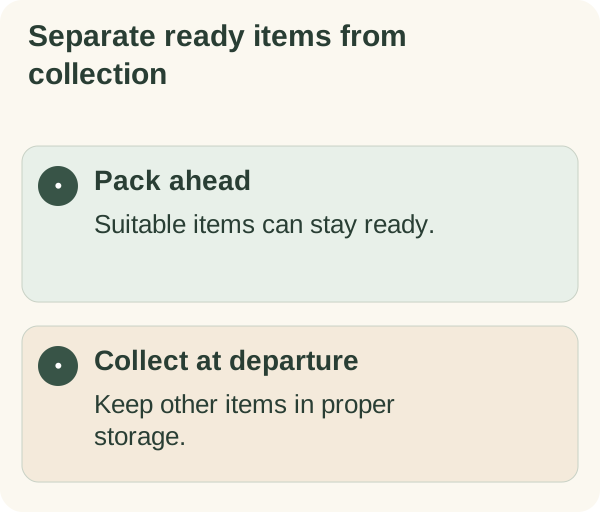
Split what you carry into three groups: things that live in the bag permanently, things you pack the night before for that particular day, and things you collect at the door because they have to stay in the fridge, on charge or somewhere safe overnight. Walk through tomorrow in order to fill the second group, put a reminder for the third where you cannot miss it, and restock the first group as soon as you get home. Most forgotten items come from skipping that last step.
Packing lists online tend to be long and specific to one activity, usually hiking. An ordinary active day is different: a walk to work, a class at lunchtime, a match after work, then dinner somewhere else. The kit is small, but it changes from day to day, and the problem is remembering rather than knowing what to bring.
Walk through tomorrow in order
Before packing anything, run through the day from leaving the house to getting back. For each part, ask what you need there and what you need for the part that follows. The commitment after the activity is the one people forget: clean clothes for the office, something presentable for dinner, a bag for wet kit.
Check any instructions you have been given for the place you are going. A pool, a class or a club may have its own rules about what to bring, what to wear or how to book. Read the actual booking message or venue page instead of assuming it works like the last one.
Separate what you need from what is nice to have. Forgetting your headphones is annoying; forgetting your key card or a shoe is what stops the day.
Sort everything into three groups
Once you know the day, each item goes into one of three groups. Here is how a typical active day might divide, though your own kit will be different:
| Lives in the bag | Packed the night before | Collected at the door |
|---|---|---|
| Water bottle | Today's change of clothes | Lunch or snacks from the fridge |
| Small towel | Shoes for this activity | Phone and charger |
| Padlock or locker coin | Anything the booking asks for | Keys, wallet or travel card |
| Spare socks | Clothes for the evening plan | Medicines you carry, stored as the label says |
| Plasters and a hair tie | Weather layer, after checking the forecast | Anything valuable you do not leave in a bag overnight |
| A plastic bag for wet kit | Membership card, if you keep it at home | A shared item someone else is using tonight |
The first column is packed once and restocked; you do not think about it each day. The second is tonight's job. The third stays where it belongs until you leave, because some things should not sit in a bag by the door overnight. If you carry medicines, store them as the label or your pharmacist says, and keep a private note of them rather than a visible one.
Pack for tomorrow in five minutes
- Run through the day.
Name each place you will be and what comes after the activity.
- Check the instructions.
Re-read any booking message or venue rules for tomorrow.
- Check the bag kit.
Open the bag and confirm the permanent items are still there.
- Pack tonight's items.
Add clothes, shoes and anything specific to tomorrow.
- Set the door cue.
List the collect-at-the-door items on a card you will touch as you leave.
Put the door cue where you cannot miss it
The cue for the third group belongs at the point where you leave: on the door handle, on the keys, or on top of the bag itself. Keep the doorway clear and do not leave valuables or the bag somewhere visible from outside.
Your private note can name items specifically. If the reminder is somewhere others can see, such as a shared noticeboard, keep it general: "Check the fridge and charger before you go" does the job without listing your medicines or your plans.
If the day changes after you pack, change the note too. A bag packed for yesterday's plan can be worse than an empty one, because it looks ready.
Unpack on the way in
This is the step most packing lists leave out, and it is the reason the same items keep going missing. When you get home, empty the bag before you sit down. Wet or used things go to the wash or to dry, and anything from the first group that ran out or got used goes back in or onto the shopping list. It takes two minutes while you still remember that the plasters ran out.
If you only do one thing from this page, make it this. A bag restocked at night needs only the second and third groups the next evening.
Example: Alex's busy Thursday
Illustrative example only; this is not a real person's story. On Thursdays Alex walks to work, plays football with friends straight after, then goes to a friend's for dinner. For weeks something went wrong each Thursday: no shin pads one week, no clean top for dinner the next, and once the house keys stayed on the kitchen table.
Alex wrote out the day in order and saw that the list had only ever covered football. Dinner, and the walk home after dark, had never been on it. Alex set up a bag with the permanent kit (bottle, towel, a spare pair of socks, a bag for muddy boots), packed the football kit and a clean top on Wednesday evening, and hung a tag on the bag reading "keys, phone, lunch".
The first Thursday went smoothly apart from a flat phone battery on the walk home. Alex added "charge phone" to Wednesday evening, not to the bag list, because it was about timing rather than packing. The unpack step took longer to stick, but once the muddy boots stopped sitting in the bag until the next week, the rest followed.
A checklist card you can copy
Copy this onto a card kept in the bag or a note on your phone.
TOMORROW
Places, in order: ____________ > ____________ > ____________
After the activity I need: ____________
Booking or venue rules checked: yes / no
Forecast checked: yes / no

LIVES IN THE BAG (check weekly)
[ ] ____________  [ ] ____________  [ ] ____________

PACK TONIGHT
[ ] ____________  [ ] ____________  [ ] ____________

COLLECT AT THE DOOR
[ ] ____________  [ ] ____________  [ ] ____________

WHEN I GET HOME
[ ] Wash and dry   [ ] Restock the bag   [ ] Add used-up items to the list
When the day does not start or end at home
Most packing advice assumes you leave from home and come straight back. Plenty of active days do not work like that.
- If you are starting from someone else's place, pack the whole day the evening before, including the third group, since you will not pass your own fridge or charger. Choose kit that is fine out of a fridge for the day, or leave it out.
- If there are two activities in one day, pack them as two small bags inside one, or list them in time order on the card, so you do not unpack the first activity's things to reach the second.
- If a shared item is in use, such as a bike lock or a child's swimming bag, agree the evening before who will take it. Two people each assuming the other has it is how it gets left behind.
- If the activity is cancelled, take its items out of the bag that evening. If something replaces it, check that activity's own requirements before reusing the old list.
- If you have a health condition that affects what you need to carry, follow the advice of your doctor or the professional who manages it, and keep that item in the third group so it is checked every time.
Review what went missing, not the whole list
After a day where something was forgotten, change one thing: move the item to a different group, move the cue, or move the packing earlier. A longer list rarely helps. The aim is a system where the forgotten item is impossible to miss next time.
If the night before is where things slip, wind down for the evening helps you set out what tomorrow needs before you put the day away, and when the morning comes you can start a task with the door check as the first step. For gym days specifically, preparing for the gym the night before covers the booking and kit in more detail. Write the one preparation action you want to repeat in the routine worksheet, and keep the packing list itself where you will use it.
A packed bag is a quiet way of making tomorrow easier for yourself, which is what the routines on the habits and goals path are for: one small, practical step that means the active part of the day actually happens.
Questions people often ask
Should I keep a bag permanently packed? Yes, for the items you need every time. It cuts the nightly job down to the things that change. Restock it when you get home, not the next evening.
Why not put everything by the door? Some things should not sit out overnight: food that needs the fridge, phones that need charging and valuables. A note by the door is safer than the items themselves.
What if I always forget the same item? Move it into a different group. If it is something you use every time, it belongs in the bag permanently; if it has to be collected, put it on the door cue.
Do I need a different list for each activity? Only for the second group. The permanent kit and the door items are usually the same whatever the activity.