A shorter to-do list needs more than fewer words: name the time available, the priority and the first visible action. This worked example turns an overflowing afternoon list into a plan with a clear stopping point.
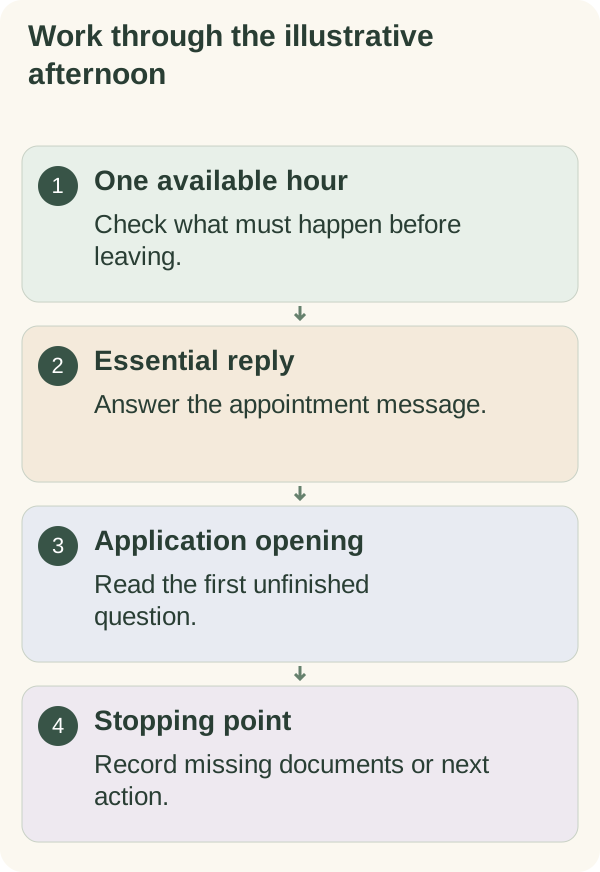
Here is a worked example you can adapt. It is an illustration, not a customer story or evidence of a productivity result.
Check the actual afternoon
Suppose there is one hour before you need to leave. The application is due tomorrow; the kitchen can wait. One reply concerns today's appointment, while the others have no immediate deadline.
The smaller plan becomes: answer the appointment message, then open the application and identify the remaining questions. The kitchen moves to a separate list. “Start exercising” needs its own choice of action and schedule another time.
Find the first visible move
“Work on the application” can still feel vague. Try “open the saved form and read the first unfinished question.” After that, decide whether to answer it, find a document or ask someone for information.
Do not mark the whole application done because you chose an opening move. Choosing, doing and reporting are different parts of the process.
Write down what enough means
For this afternoon, enough might be the essential reply and a list of the missing documents. If the work takes longer, record where you stopped. Tomorrow's first action then has a clear starting point.
Try the daily priority planner, use the illustrated small-plan exercise, or read the Telegram daily planning guide if you want to keep the list in your private chat.