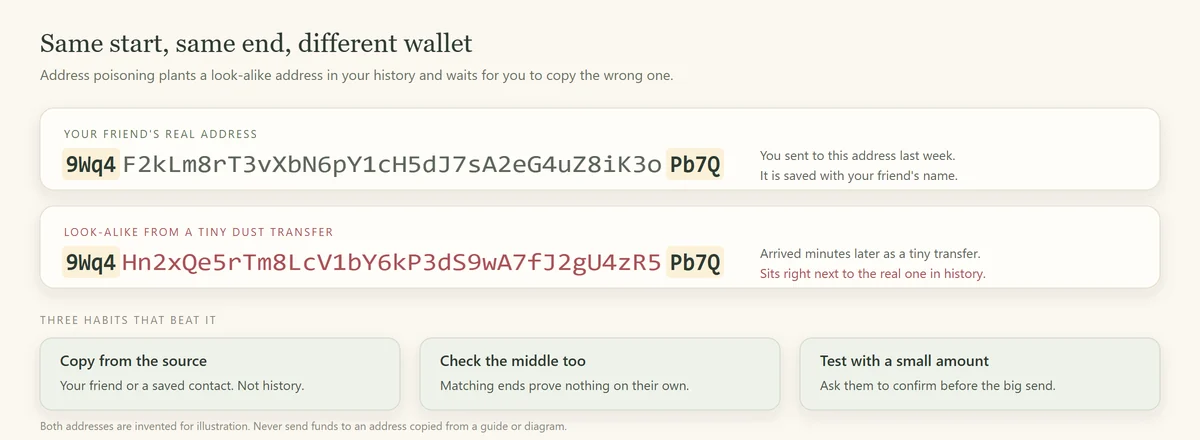
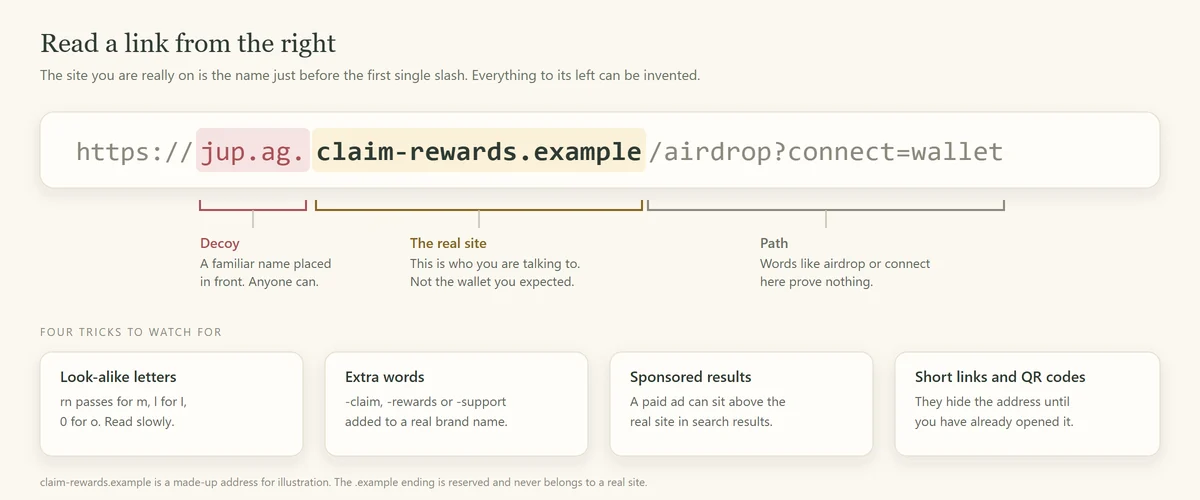
The most expensive crypto scams usually start with a friendly message, not a hack. Someone poses as support, a celebrity, a project admin, a recruiter or a new friend, builds just enough trust, and then asks you to send crypto, share a code or open a link. The fix is the same every time: take the decision out of the conversation and check it yourself, through a channel you already trust.
The money involved is large. The FBI's 2025 Internet Crime Report recorded about $11.4 billion in reported crypto-related losses, and crypto investment fraud alone accounted for $7.2 billion, the largest loss category in the report.
Below are the scripts scammers use most, the warning signs they share, and what to do when a conversation starts to feel off.
Why social scams work so well
These scams don't need you to make a technical mistake. They need you to trust the wrong person for a few minutes. Scammers borrow trust from somewhere else: a familiar logo, a verified-looking badge, a shared hobby, a romance, or the stress of a problem you're trying to fix.
Then they add pressure. A deadline, a fee that must be paid now, a secret you shouldn't share with family, or a chance that "won't come again". Pressure is the giveaway. Real opportunities and real support can wait while you check.
Fake support agents
You ask a question in a project's Discord, a Telegram group or under a wallet's post on X. Within minutes a "support agent" or "moderator" sends you a DM. They have the right logo, maybe a ticket number, and they're very responsive.
Then comes the ask: a link to a "support form" that wants your seed phrase, a screen-share so they can "walk you through it", a transaction to "resync" your wallet, or a remote-access app.
Impersonators of people you trust
Scammers copy the names and photos of project founders, influencers, exchange staff and even your friends. A hacked friend's account is especially convincing: it's the real profile, with your real chat history, asking for "a quick loan in USDC" or sharing an "amazing airdrop".
The defence is a second channel. Call your friend, or message them on a different app you already use together. For public figures and projects, check the official website for the account handles they actually use, then look for the same announcement there.
Government impersonation happens too. The FTC notes that scammers pose as government agencies, businesses and celebrities to get people to pay in crypto. No government agency will demand crypto to settle a fine, fix a tax issue or protect your account.
Romance and long-con investment scams
This is the slowest scam and often the most painful. It starts as a wrong-number text, a dating match or a friendly contact in a hobby group. For weeks the conversation is warm and personal, with no talk of money.
Eventually, they mention how well they're doing with crypto trading and offer to show you. They point you to a platform or app that looks professional and shows your deposit growing fast. You may even be allowed to withdraw a small amount, which builds trust. When you try to take out more, there are "taxes", "release fees" or "verification deposits" to pay first. The balance was never real.
The FBI calls this confidence-enabled cryptocurrency investment fraud. It is widely known by the slang term pig butchering, because the victim is "fattened up" with trust before the losses begin. Warning signs:
- Someone you've never met in person brings up crypto investing.
- They avoid video calls, or always have a reason the camera doesn't work.
- The trading platform is one you'd never heard of, found through them, not through your own research.
- Profits look steady and high, with no losing weeks.
- Withdrawals need a fee or deposit first.
- They ask you to keep it secret from friends and family.
Giveaway and "doubling" scams
"To celebrate our launch, send any amount to this address and we'll send back double." These posts often use deepfake videos of famous people, fake livestreams or hijacked accounts with large followings. The FTC has long warned about scammers who pretend to be celebrities and promise to multiply any crypto you send. The FTC is clear that only scammers guarantee profits or big returns. A real giveaway never asks you to send something first.
Job and task scams
A recruiter messages you about easy remote work: rate products, "boost" apps or complete orders online, paid in crypto. At first you earn small amounts. Then you're told to deposit your own crypto to qualify for bigger tasks or release your earnings. The FTC describes the turn exactly: at some point the scammer tells you to deposit your own money, usually in crypto. The deposits never come back. A real job never asks you to pay to get paid.
Recovery scams
After a loss, many victims post about it publicly. That's when the second wave arrives: "blockchain investigators", "certified recovery agents" or fake law firms promising to trace and return the funds. Some even claim to work with the police, and the FBI has warned about fictitious law firms targeting crypto scam victims. They ask for an upfront fee, a percentage in advance or access to your wallet.
No one can reverse a blockchain transaction for a fee. The FBI is explicit that law enforcement does not charge victims a fee for investigating crimes, and the FTC's advice on recovery offers is simply don't pay upfront. If an exchange can freeze stolen funds, it will tell you through its own support channel after you report it.
The common thread
Every script above ends in one of a few asks. Learn these and you can spot a new scam you've never seen before:
- Send crypto first to receive something.
- Share a secret: your seed phrase, a gift link, a one-time code or a password.
- Open a link or install an app they provide.
- Approve a transaction in your wallet to "verify", "sync" or "unlock".
- Keep it quiet and act quickly.
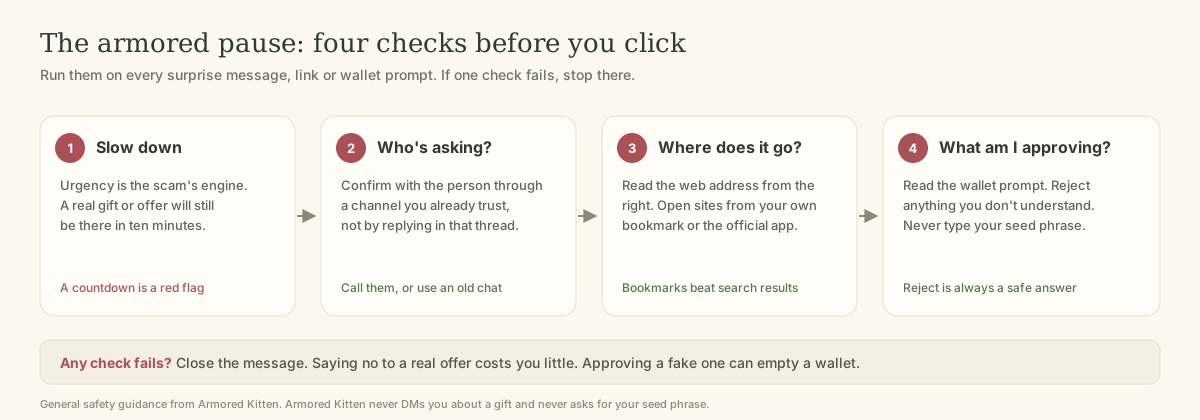
What to do when a conversation feels off
When something feels off
- Stop replying.
You don't owe a stranger an explanation. Silence costs you nothing.
- Verify independently.
Find the person, company or project through its official website or a contact you already had, and ask there.
- Don't send, sign or share anything
while you check: no funds, no fees, no seed phrase, no codes, no screen-sharing.
- Talk to someone you trust.
Describe the situation out loud. It's harder for a scam to survive a second opinion.
- Report and block.
Report the account to the platform. If you lost money, report it to IC3 and ReportFraud.ftc.gov in the US, Report Fraud in the UK, or your national fraud service elsewhere.
How to protect a friend who is new to crypto
If you've introduced someone to crypto, you're part of their armor. A few things help:
- Agree that you will never ask them for crypto, codes or their seed phrase in a message. If "you" ever do, it isn't you.
- Tell them to call you before approving anything they don't understand.
- Share this guide, and our field guide to crypto scams for beginners.
- Be someone they can admit a mistake to without embarrassment. People hide losses when they feel ashamed, and that delay helps scammers.
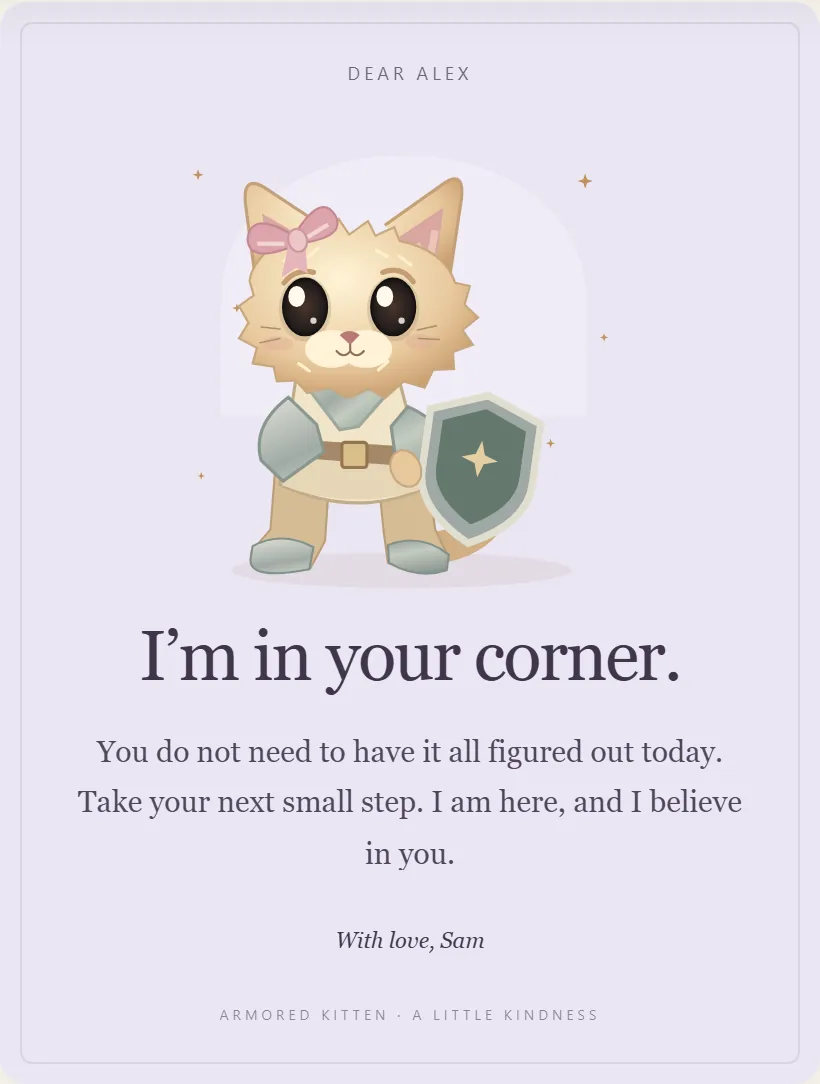
Sending a personal card is a good moment to set that up. A line like "I'll never ask you for crypto or codes, so if a message from me ever does, it's fake" is a small gift that might matter more than the token. Our guide on giving crypto to someone new to crypto has more gentle ideas.
How to recognise a real Armored Kitten greeting
- It comes from someone you know, by email or a private link they shared.
- It opens on armoredkitten.stonkbuilder.com and shows who sent it before anything else.
- It never asks you for a seed phrase, a password or a payment.
- If there's a token gift, it's claimed in the Jupiter Mobile app. Armored Kitten is not affiliated with Jupiter.
- We never DM anyone about a gift on Telegram, Discord or X.
If you're unsure, ask the sender directly before you open or claim anything. A real friend will be glad you checked.
Frequently asked questions
How can I tell if a crypto support agent is fake?
If they contacted you first, assume they're fake. Real support works through the official app or help centre, and it never asks for your seed phrase, a payment or remote access.
What is a pig butchering scam?
It's a long-con investment scam. A scammer builds a friendship or romance over weeks, then steers the victim to a fake trading platform that shows false profits until the victim tries to withdraw.
Are crypto giveaways on X real?
Giveaways that ask you to send crypto first are always scams, even when they appear on verified accounts or in livestreams with famous faces.
Can a recovery company get my stolen crypto back?
Be very wary. Blockchain transactions can't be reversed for a fee, and firms that contact you after a loss are often scammers. Report the theft to the authorities and to any exchange the funds went to.
My friend's account asked me for crypto. What should I do?
Contact your friend another way, such as a phone call. Hacked accounts are commonly used to ask contacts for money or to share scam links.
Trust people, verify requests
You don't have to be suspicious of everyone in crypto. Most people in a community are there for the same reasons you are. Just keep the money decisions out of the chat window: check claims yourself, never pay to receive, and never share a secret. For links and seed phrases specifically, read how to spot a crypto phishing link and seed phrase scams.
Plain-language disclaimer: this guide is general safety information, not legal or financial advice. If you have lost money, contact your local police or fraud reporting service. Armored Kitten never asks for your seed phrase.
Armored Kitten is an independent greeting studio and is not affiliated with or endorsed by Jupiter. Token gifts are optional, can change in value, and are not investment advice. Check the rules that apply where you live.